Introduction: Who Was Mary Magdalene in the Bible?
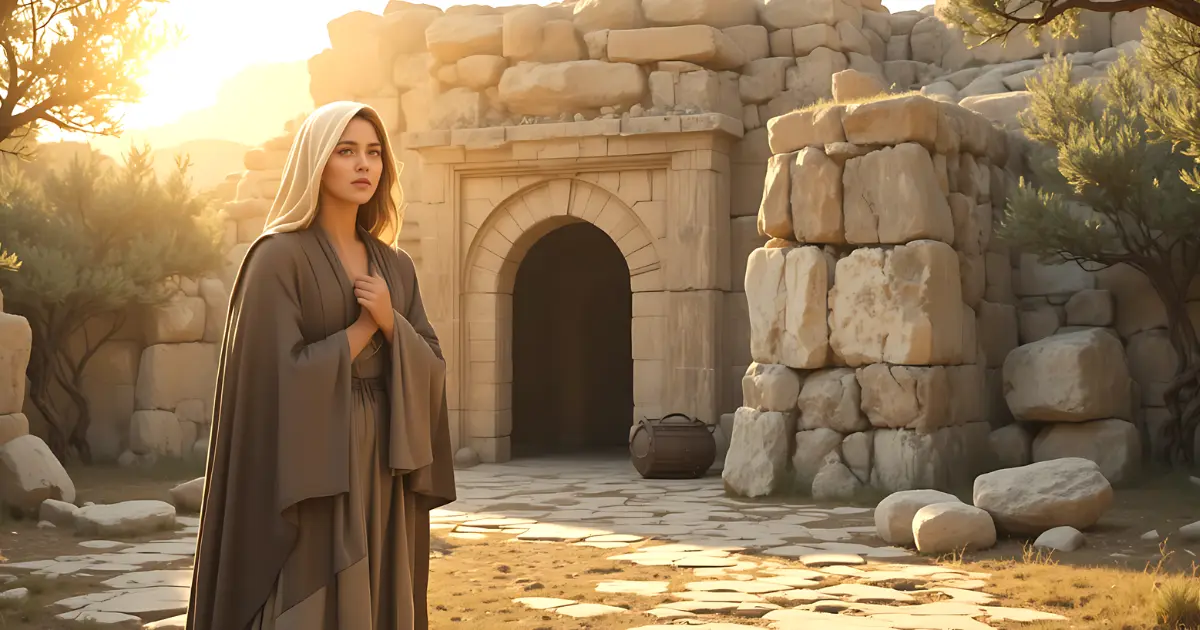
Mary Magdalene of the Bible was a woman who followed Jesus during His ministry after He freed her from seven demons. Luke 8:2 identifies her as Mary, called Magdalene, and places her among the women who traveled with Jesus and supported His ministry. She remained present through His crucifixion and burial and later came to the tomb on the morning of His resurrection.
In John 20, Jesus appeared to her and told her to go to His disciples. Mary then reported what she had seen, making her the first witness to the resurrection recorded in John’s Gospel.
The Mary Magdalene story in Scripture matters because it shows a woman whose life became closely connected with Jesus’ ministry, death, and resurrection. As we examine her story, we’ll stay with what the Bible actually says and separate Scripture from later traditions. It also places her among the important women of the Bible and the wider list of women whose stories point to God’s work through ordinary people.
Quick Facts About Mary Magdalene
| Fact | Biblical Detail |
|---|---|
| Name | Mary Magdalene, also called Mary of Magdala |
| Home | Magdala, a town in Galilee |
| First mention | Mary Magdalene first mentioned in the Bible appears in Luke 8:2 |
| Known for | Following Jesus and supporting His ministry |
| Role | A Mary Magdalene disciple and faithful follower among the women who traveled with Jesus |
| Key Gospels | Matthew, Mark, Luke, and John |
| Resurrection role | A key witness connected with the Mary Magdalene resurrection account |
| Biblical setting | The New Testament, especially the Gospel accounts |
| Scripture reference | Luke 8:1 to 3 |
Luke 8:1-3 introduces Mary among the women who accompanied Jesus and helped support His ministry. Her story places her among the Biblical Women and women of Scripture whose lives appear within the story of Jesus and His ministry.
For related studies, see Anna (Prophetess) and Apphia, two other women whose brief biblical accounts still provide insightful perspectives on faith and service.
The Meaning of Mary Magdalene’s Name
Mary of Magdala refers to Mary by the place connected with her identity. Magdala was a town in Galilee, near the western shore of the Sea of Galilee. The name “Magdalene” therefore serves as a geographical identifier rather than a family surname in the biblical text.
So, what does Magdalene mean in the Bible? It indicates her relationship with Magdala and helps to distinguish her from other ladies of the same name. When asking where Mary Magdalene was from, her name provides that clue. This distinction is especially helpful when studying Mary Magdalene and Mary of Bethany, as well as Mary, the mother of Jesus.
Like Mary Magdalene, Atarah is identified within a specific family and place, showing how biblical names and relationships can provide important context. Bathsheba is another example of a woman whose identity becomes clearer when we consider her place in the biblical narrative. This information is useful for studying Women in the New Testament and for careful Scripture study.
The World Mary Magdalene Lived In
Galilee was the setting for much of Jesus’ public ministry, with towns and villages surrounding the Sea of Galilee. On its western bank was the Jewish town of Magdala, famed for fishing and Jewish community life. Archaeological remains, including a synagogue, ritual baths, and a marketplace, provide a glimpse into the setting of first century Judaism.
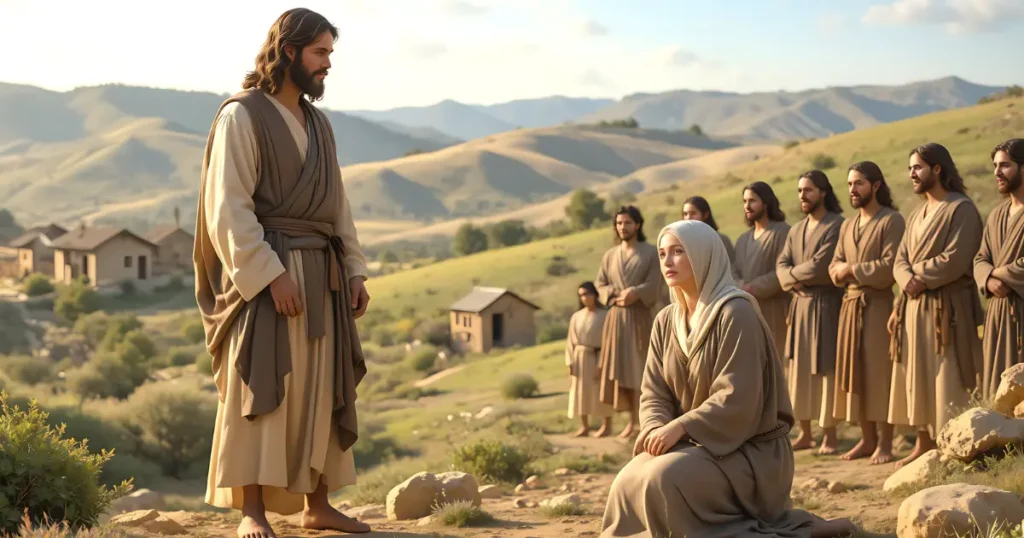
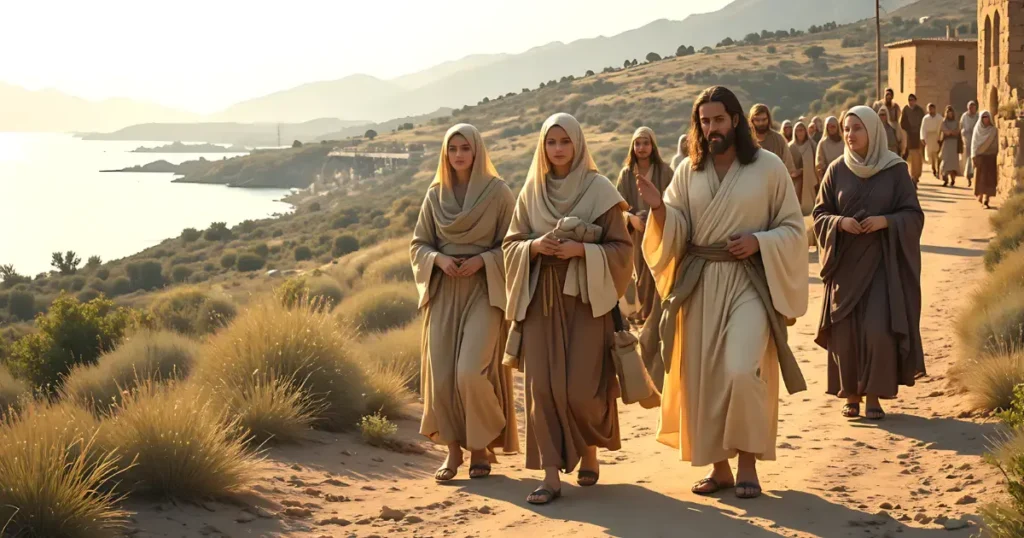
The Gospels also show women who traveled with Jesus as part of His wider ministry community. Luke names Mary Magdalene, Joanna, Susanna, and other women who helped support Jesus and His followers from their own resources.
This detail gives important context when studying women who supported Jesus’ ministry. The broader Gospel setting also helps us understand the world shared by women such as Candace and Chloe, whose brief accounts also place women within the wider story of God’s work.
Where Mary Magdalene First Appears in Scripture
Luke 8:1-3 gives the clearest early introduction to Mary Magdalene in the Gospel story. Jesus was traveling through towns and villages, proclaiming the kingdom of God, while His disciples traveled with Him. Luke then names several women who had been healed, including Mary Magdalene, Joanna, and Susanna.
Luke 8:2 specifically says that seven demons had gone out from Mary. This is the biblical basis for the phrase “Mary Magdalene, seven demons,” and it shows what Scripture means when it describes the seven demons Mary Magdalene experienced.
Luke does not explain what those demons were or why Mary had them. We should not use this verse to claim that she had a particular illness, committed a certain sin, or had a specific past that Scripture never describes. The Scripture merely states that Jesus healed Mary Magdalene and that she journeyed with him afterward.
Luke also says that these women supported Jesus and the Twelve with their own resources. This gives important context for Mary Magdalene’s healing and for her life before following Jesus, while also adding another significant part to the story of women in the Bible and the broader story of women in Jesus’ ministry.
How Mary Magdalene Followed and Served Jesus
Luke 8:1 to 3 shows that Mary Magdalene followed Jesus as He traveled through Galilee, proclaiming the kingdom of God. She was part of a group of healed women who provided for Jesus and His disciples and supported themselves from their own resources. This gives a fuller picture of Mary Magdalene, a follower of Jesus, rather than limiting her story to the resurrection accounts.
Luke does not give Mary an official title or place her among the Twelve. Still, her presence among these women shows that Mary Magdalene served Jesus in a practical and committed way. Mark 15:40-41 confirms that Mary Magdalene was among the women who had followed Jesus in Galilee and had cared for Him.
Her example adds depth to the women disciples of Jesus and female disciples in the Bible. It also shows that Mary Magdalene supported Jesus’ ministry through faithful service. Her story belongs naturally within a wider Bible Study, alongside women such as Elizabeth and Gomer in the Bible.
What Mary Magdalene Witnessed at the Cross and Burial
Her Presence at Jesus’ Crucifixion
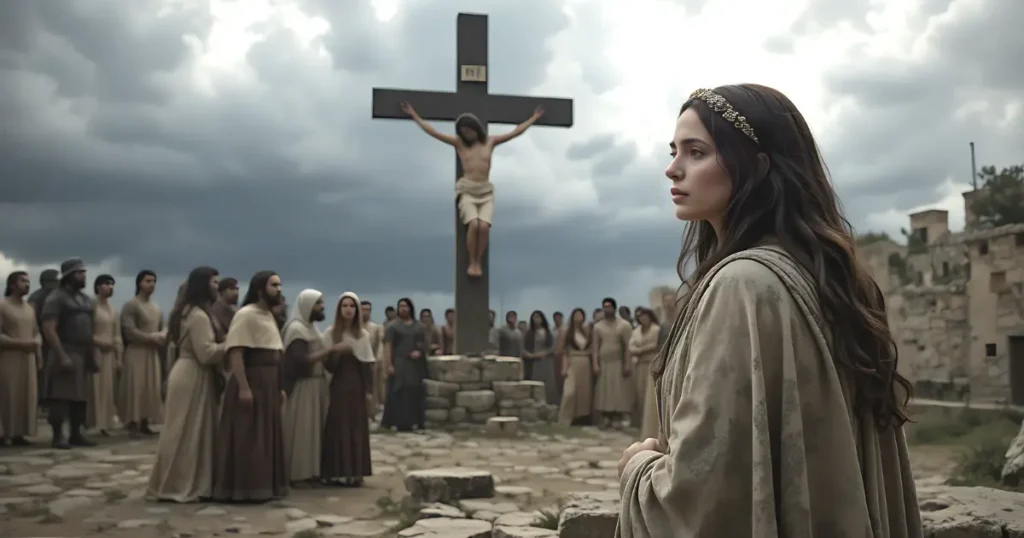
Mary Magdalene at Jesus’ crucifixion is clearly recorded in the Gospel accounts. Matthew 27:55-56 names Mary Magdalene among the women watching from a distance, while Mark 15:40 also identifies her as one of the women who were present.
Her presence shows that Mary Magdalene at the cross remained near the events surrounding Jesus’ death. The Gospel accounts therefore establish that Mary Magdalene witnessed the crucifixion, giving her firsthand knowledge of what happened before His burial.
Her Witness at Jesus’ Burial
Matthew 27:61 says Mary Magdalene and the other Mary were sitting opposite the tomb, while Mark 15:47 says Mary Magdalene saw where Jesus was laid. This means Mary Magdalene witnessed Jesus’ burial and knew the location of the tomb. That detail becomes important because Mary Magdalene at Jesus’ tomb the next morning was not visiting an unknown place.
She had already seen where Jesus was laid. Mary Magdalene was there at the burial and thus had a direct link between the death of Jesus, His burial, and the events that followed.
This careful witness role also helps distinguish Mary’s account from other women in Scripture, including Mary, the mother of Jesus, and Martha in the Bible.
How Mary Magdalene Became the First Witness to the Resurrection
Mary Magdalene Arrives at the Empty Tomb
On resurrection morning, Mary Magdalene’s empty tomb became the beginning of an event she could not yet understand. John 20:1 says she came to the tomb while it was still dark and saw that the stone had been removed. Her first thought was that someone had taken Jesus’ body. She ran and told Peter and the other disciple, and they went out and saw.
They entered the tomb and saw the burial cloths, but they did not yet understand from Scripture that Jesus had risen. This account answers where in the Bible the story of Mary Magdalene is most fully described, especially in John 20.
Jesus Appears to Mary Magdalene
Mary remained near the tomb after Peter and the other disciple left. She wept and looked inside, where she saw two angels sitting where Jesus’ body had been. Then she turned and saw Jesus standing there, but she did not know it was Jesus. When Jesus called her by name, “Mary,” she recognized Him. This moment is the heart of the account of how Jesus appeared to Mary Magdalene.
The scene shows that the risen Jesus was not simply an idea or a message to Mary. She saw Him face to face; she heard His voice, and she knew Him. When Mary Magdalene sees the risen Jesus, she recognizes Him as He calls her by name.
John 20:16 is the key Bible verse about Jesus meeting Mary Magdalene, and it records the first appearance of the risen Jesus to her. This is why Mary Magdalene being the first to see Jesus after the resurrection is such an important part of her biblical story.
Mary Takes the Resurrection News to the Disciples
Jesus then told Mary to go to His brothers and share what He had told her. Mary obeyed and went to the disciples, saying that she had seen the Lord and reporting His message. In this way, Mary Magdalene tells the disciples what she had personally witnessed.
Her testimony became an important part of the resurrection accounts, making her a Mary Magdalene resurrection witness and a first witness of the risen Christ in John’s Gospel. In her message, there was no hearsay. It was her own resurrection testimony: she had seen the risen Jesus. The later phrase “apostle to the apostles” describes this role, but it is not a title Scripture gives her.
Mary’s place in this story also connects naturally with other women who encountered Jesus, including Pilate’s wife and Salome.
Was Mary Magdalene a Prostitute? What Scripture Actually Says
Mary Magdalene as a Prostitute? No. The Bible never describes Mary Magdalene that way. Luke 8:2 says that seven demons had gone out from her, but it does not connect her with sexual immorality or call her a sinful woman. The account does not provide any details about her experience with the demons.
The confusion partly comes from Luke 7, which tells of an unnamed woman described as having lived a sinful life. Luke does not name her as Mary Magdalene, and the line appears just before Luke introduces Mary Magdalene in chapter 8. These are two separate accounts, so Mary Magdalene and the sinful woman should not automatically be treated as the same person.
The Mary Magdalene prostitute myth became established through later Christian tradition, particularly the merging of different women named in the Gospels. Yale Bible Study notes that this confusion goes back centuries and also distinguishes Mary Magdalene from other women named Mary. Does the Bible say that Mary Magdalene was a prostitute? It doesn’t. A careful reading of Scripture keeps her identity separate from the unnamed woman in Luke 7.
Was Mary Magdalene the Same as Mary of Bethany?
Mary of Bethany is clearly identified as the sister of Martha and Lazarus. The canonical Gospels never call her Mary Magdalene. Mary Magdalene and Mary of Bethany are therefore best understood as two different women. Their shared first name does not make them the same person. Scripture gives each woman her identity and place in the Gospel accounts.
This distinction also helps when studying Women in Genesis and Women in the Old Testament, where different women with similar names or family connections also need to be identified carefully.
What We Know About Her Life Beyond the Gospels
When asking what we know about Mary Magdalene, the honest answer is that Scripture leaves many personal details unknown. The Bible does not tell us how old Mary Magdalene was, name her parents, mention children, or identify a husband for her. It also does not answer whether Mary Magdalene ever married.
After the resurrection accounts, Scripture gives no detailed biography of her later years. Therefore, the Bible does not provide certain answers to questions about how Mary Magdalene died and what happened to her after the resurrection.
Later Christian traditions offer different accounts of her life, travels, and death, but these traditions should not be presented as biblical facts. Yale Bible Study notes the long history of traditions surrounding Mary Magdalene and the difficulty of separating later stories from the Gospel accounts.
This restraint matters. Scripture gives us enough to understand Mary’s important role without inventing details about the parts of her life God did not record. Her story, like those of Sheerah and Sarah, reminds us to value what Scripture says while being honest about what it leaves unsaid.
What the Gospel of Mary Says, and Why It Is Not Scripture
The Gospel of Mary Magdalene is an early Christian writing that exists outside the canonical New Testament. The Gospel of Mary is not one of the 4 canonical gospels (Matthew, Mark, Luke, and John). Its existence also does not establish that Mary Magdalene wrote it.
So, did Mary Magdalene write the Gospel of Mary? The text itself does not provide enough evidence to make that claim with certainty. The Gospel of Mary in the Bible is not part of Scripture for the same reason, nor is it recognized as part of the New Testament canon.
For Christian faith and Christian living, the key distinction is simple: the Gospel of Mary is a historical early Christian text, while the four canonical Gospels form the New Testament accounts used as Scripture.
This distinction keeps later writings in their proper place without confusing them with the biblical story. Similar care is helpful when studying lesser known women such as Shiphrah.
Why Her Story Still Matters for Christians Today
Mary Magdalene’s story offers practical lessons that remain meaningful for Christians today. One of the clearest characteristics of Mary Magdalene in the Bible is her faithfulness. She remained connected to Jesus through His death, even when the disciples faced fear and uncertainty. Mary Magdalene’s gestures at the tomb also reveal her dedication during a time of agonizing bereavement.
Her story also offers hope. What appeared to be the end became the setting for the resurrection. Mary Magdalene’s faith showed itself in her staying near the tomb, in her listening to Jesus, and in her response when he called her name. Her witness, Mary Magdalene, also shows the courage to share what she had personally seen.
Another lesson is restoration. Scripture does not define Mary by her earlier suffering. Jesus’ work in her life became part of her story, but it did not become the end of it. Mary Magdalene’s faithfulness and testimony show how God can give a person a meaningful place in His work.
So, what Christians can learn from Mary Magdalene is simple: remain faithful, hold on to hope, and be willing to speak truthfully about what God has done. She is an example of a biblical woman of faith.
Her story also sits naturally beside the accounts of Miriam and Susanna, each showing faithfulness in a different setting.
Frequently Asked Questions About Mary Magdalene
Why did Mary Magdalene not recognize Jesus at first?
John 20 says Mary initially saw Jesus but thought He was the gardener. The passage does not give a detailed reason for why she did not recognize Him immediately. She is recognized when Jesus calls her name. When He says, “Mary,” she turns toward Him and recognizes Him. The moment shows the personal nature of their encounter. Mary Magdalene recognizes Jesus when He calls her, and Jesus calls Mary by name before she understands who is standing before her.
What does “Rabboni” mean when Mary meets Jesus?
Mary responds to Jesus with “Rabboni,” a form of address meaning “Teacher.” John explains its meaning directly in the text. Her response follows the moment when she recognizes Jesus, showing that she now understands who is speaking to her. Mary Magdalene Rabboni therefore marks an important moment of recognition. The meaning of Rabboni is given as “Teacher,” connecting Mary’s response with her recognition of the risen Jesus.
Why were women the first witnesses of Jesus’ resurrection?
The Gospel accounts place women among the first people who came to the tomb and encountered the evidence of Jesus’ resurrection. Mary Magdalene has a particularly clear role in John’s account because Jesus appeared to her and sent her to tell His disciples. The Bible does not give a separate explanation for why God chose women for these first resurrection encounters. It just records what happened. Thus, the women, as witnesses to Jesus’ resurrection, are an integral aspect of the Gospel story. The ladies at the tomb have a prominent role in the resurrection accounts. Mary Magdalene’s testimony makes her the first resurrection witness in the Bible.
Final Thoughts on Mary Magdalene’s Story
Mary Magdalene’s story presents a woman who remained a faithful follower of Jesus and became a witness to His resurrection. Scripture gives us enough to understand her important place in the Gospel accounts without filling the unknown parts of her life with later speculation.
For Mary Magdalene in the Bible, the most important moment remains her encounter with the risen Jesus and the message He gave her to share with His disciples. Her example is a reminder to Christians that faithful testimony is to be close to Christ, trusting his word and sharing what we know to be true. If you want to read more entries about Women of the Bible, check out our other stories of biblical women.










1 thought on “Who Was Mary Magdalene in the Bible? The First Witness to the Resurrection”