Introduction: Who Was Martha in the Bible?
Martha in the Bible was the sister of Mary and Lazarus who lived in Bethany, a village near Jerusalem. Who was Martha in the Bible? She was a woman who welcomed Jesus into her home, served Him, experienced deep grief, and openly declared her faith in Him. Her story appears in three important Gospel accounts: Luke 10:38-42, John 11:1-44, and John 12:1-8.
Martha of Bethany is often remembered for her busy service in Luke 10. Yet John 11 reveals a deeper side of her faith. Her relationship with Jesus included hospitality, honest words, sorrow, hope, and a powerful confession that He is the Messiah and Son of God. Her story adds an important voice to the broader story of women of Scripture.
Quick Facts About Martha and Her Family
Martha of Bethany was part of a close family that became known for its friendship with Jesus. The Gospels tell Martha’s story in three accounts, giving us a clear picture of her family, faith, service, and relationship with Jesus.
| Fact | Details |
|---|---|
| Name | Martha |
| Location | Bethany |
| Family | Sister of Mary of Bethany and Lazarus |
| Key passages | Luke 10:38 to 42, John 11:1 to 44, John 12:1 to 8 |
| Known for | Hospitality, service, honest conversation with Jesus, and faith |
| Important relationship | Jesus loved Martha, Mary, and Lazarus |
| Defining statement | She confessed that Jesus is the Christ and Son of God |
| Main themes | Faith, service, grief, hope, and discipleship |
John 11:5 says, “Now Jesus loved Martha and her sister and Lazarus” (NIV).
This simple statement matters. This shows that Martha was not just a supporting role in the story. Scripture clearly shows her relationship with Jesus.
As one of the Women in the New Testament, Martha’s life connects everyday service with deep faith. Her home in Bethany became a place where Jesus was welcomed, and her words in John 11 show that her faith went far beyond what we see in Luke 10.
What the Bible Says About Martha’s Life and Background
Scripture gives us a simple but meaningful picture of Martha’s life. She lived in Bethany with her sister, Mary of Bethany, and her brother, Lazarus. Their household had a close relationship with Jesus, and their home became a place where He was welcomed. Luke 10:38 says Martha welcomed Jesus into her house, showing her willingness to offer hospitality.
Bethany was located about two miles east of Jerusalem. In the New Testament world, welcoming guests into the home was an important part of hospitality. Martha’s welcome of Jesus fits naturally within that setting. The Biblical Archaeology Society also discusses Bethany’s location and the hospitality connected with Martha’s home.
The Bible does not tell us whether Martha was married, what work she did, or how wealthy her household was. Those details should not be presented as facts. For a careful Bible study, it’s important to separate what Scripture says from later traditions or assumptions about women in the Bible.
Martha’s role in the Bible becomes clearer through her actions and conversations with Jesus. Her story also reminds us that women such as Mary Magdalene and Mary, the mother of Jesus, appear in Scripture with distinct stories and roles.
Martha Welcomed Jesus but Struggled With Distraction

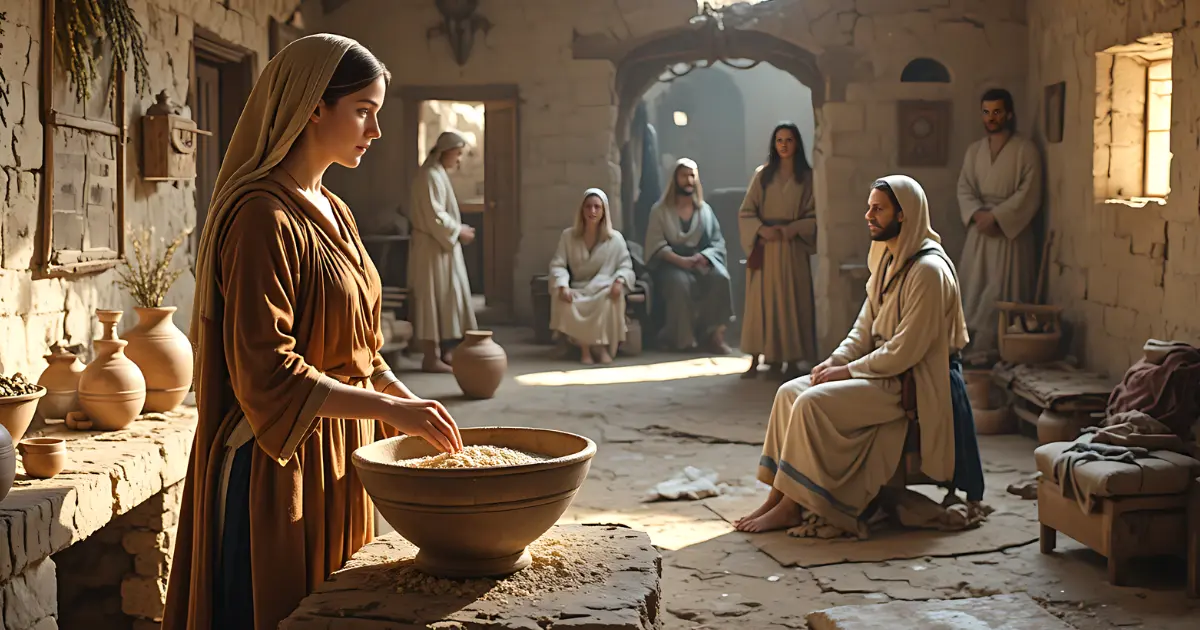
In Luke 10, Jesus entered Martha’s home while traveling with His disciples. Martha welcomed Him, and her response showed genuine hospitality. But her service turned into frustration as she got busy with the preparations. Luke says she became distracted by everything she had to do and eventually asked Jesus to tell Mary to help her.
Why Martha Became Frustrated With Mary
Mary sat at Jesus’ feet, listening to Him teach, while Martha handled the work of welcoming their guests. Martha wasn’t wrong to serve. In fact, Martha’s hospitality helped make her home welcoming to Jesus. The problem was that the work had begun to consume her attention and peace.
She came to Jesus and said, “Lord, don’t you care that my sister has left me to do the work by myself?” (Luke 10:40, NIV).
Her words reveal frustration, but not laziness, selfishness, or a lack of faith. She was carrying a real responsibility, yet worry had begun to shape how she saw the situation.
What Jesus Meant by “Martha, Martha”
Jesus answered, “Martha, Martha, you are worried and upset about many things” (Luke 10:41, NIV).
The repeated use of her name makes His response personal. It wasn’t a harsh rejection of Martha’s service or a statement that hospitality didn’t matter. The setting itself reflects the importance of welcoming guests in the ancient world.
Jesus was pointing Martha toward a deeper priority. Her service had become mixed with worry and distraction. Mary had chosen to sit at Jesus’ feet and listen, something Jesus called “the better” choice.
So Luke 10:38-42 isn’t simply a story about “good Mary” and “bad Martha.”
It teaches that even faithful work can pull our attention away from Jesus when worry takes control. Christian faith calls us to serve, but also to stop, listen, and remember why we serve in the first place.
Martha’s Faith Shines Through Her Grief
The story of Martha in John 11 gives us a deeper view of her faith. Lazarus became seriously ill, so Martha and Mary sent word to Jesus. Yet Jesus delayed His arrival. By the time He reached Bethany, Lazarus had died and had been in the tomb for four days. John also makes clear that Jesus loved Martha, Mary, and Lazarus.
Martha Meets Jesus After Lazarus Dies
And when Martha heard that Jesus was coming, she went out to meet him. Her first words were honest:
“Lord, if you had been here, my brother would not have died” (John 11:21, NIV).
She was grieving, and she didn’t understand why Jesus had not come sooner.
Yet Martha didn’t turn away from Him. She added,
“But I know that even now God will give you whatever you ask” (John 11:22, NIV).
Her words show that pain and trust can exist together. Like Hannah, who brought her deep sorrow before God, Martha brought her grief directly to Jesus.
Her response also reminds us of women such as Puah, whose faith led her to act courageously in the face of fear. Martha’s faith looked different, but she also turned toward God when circumstances were painful and confusing.
Martha Confesses Jesus as the Christ
Jesus told Martha, “Your brother will rise again” (John 11:23, NIV).
Martha understood this as the future resurrection, saying she knew Lazarus would rise at the last day. Then Jesus revealed something greater:
“I am the resurrection and the life” (John 11:25, NIV). He asked Martha whether she believed this.
Martha answered, “Yes, Lord. “I believe that you are the Messiah, the Son of God” (John 11:27, NIV).
This is the strongest moment in Martha’s confession of faith. The Biblical Archaeology Society also points to this confession as an important part of Martha’s development as a follower of Jesus.
John 11 changes the way we should read Martha. She was not merely the woman who became lost in home tasks. She was also a grieving sister who met Jesus with honest words and made a clear confession about who He is. Her response can be considered alongside other faithful women in Scripture, including Deborah, whose story also shows a woman responding to God with courage and conviction.
What Happened When Jesus Raised Lazarus?
The raising of Lazarus gave Martha and Lazarus a powerful place in Jesus’ story. Martha had already heard Jesus call himself the resurrection and the life. Now she was about to see His words followed by a miracle.
At the tomb, Jesus ordered the stone to be removed. Martha raised a practical concern about the condition of Lazarus’s body, but Jesus reminded her to believe and told her she would see God’s glory. Then Jesus called Lazarus out of the tomb, and Lazarus came out alive (John 11:38-44, NIV).
For Martha, this wasn’t simply an extraordinary event. It provided visible meaning to what Jesus had told her about resurrection and life. Her relationship with Martha and Jesus had been one of service, frustration, anguish, and confession. Now her belief was met with a firsthand display of His power.
Her story also fits the wider story of women in the Bible, where women such as Keturah and Hagar experienced God’s work in very different circumstances. Martha’s experience reminds us that faith doesn’t always remove difficult questions. Sometimes it means trusting Jesus until we see what He is doing.
Martha Continued Serving Jesus in Bethany

Before Passover, Jesus returned to Bethany, where they held a dinner in His honor. Lazarus ate with Him, and Mary of Bethany anointed Jesus with expensive perfume. John 12:1-2 then gives a simple detail: “Martha served” (NIV).
This brief scene adds an important piece to Martha’s story. Martha’s service was part of who she was. She welcomed guests and helped care for those around her. But unlike Luke 10, we don’t see her complaining that Mary wasn’t helping or asking Jesus to intervene.
That quiet difference matters. Scripture doesn’t say Martha stopped serving. Instead, her service appears alongside Mary’s act of devotion and Lazarus’s presence at the table. There was room for both service and worship.
For women in Genesis and women throughout Scripture, faithful service can take many forms. Martha reminds us that Christian faith isn’t about choosing between serving Jesus and sitting with Him. We need a heart willing to serve and a heart attentive to Him.
What Martha’s Story Teaches Us About Faith
Martha’s life gives us practical lessons about faith, service, grief, and spiritual priorities. Her story doesn’t tell us to stop serving or avoid responsibility. Instead, it shows us how worry can affect our best work and how faith can remain steady during painful moments. These lessons from Martha still speak to everyday Christian living and discipleship.
Serving Jesus Should Not Replace Listening to Him
Service matters. Martha’s willingness to serve Jesus was not wrong. The problem came when her work left her worried, upset, and distracted. Jesus reminded her what mattered most. We can serve at church, help our families, or care for others while still making time to listen to Christ. Faithful service should grow from our relationship with Him, not slowly replace it.
Faith Can Survive Questions and Grief
Martha didn’t hide her disappointment when Lazarus died. She told Jesus that she wished He had come sooner, yet she continued talking with Him and trusted Him. Her story shows that faith doesn’t require us to pretend that grief doesn’t hurt. We can bring honest questions to Jesus while holding on to what we know about Him. Martha’s grief and trust existed together.
A Busy Life Still Needs the Right Focus
Modern life can make Martha’s struggle feel familiar. Work, family needs, church responsibilities, and daily pressure can fill every hour. But Christian service is healthier when it flows from time spent with Christ. The goal isn’t to choose between serving and listening, both matter. The goal is to keep Jesus at the center of both.
These lessons fit within the broader list of women in the Bible, where Martha stands as an example of a woman who expressed her faith through both words and actions.
Questions Readers Still Ask About Martha
Was Martha married in the Bible?
The Bible does not say whether Martha was married. Scripture tells us that she lived in Bethany with Mary and Lazarus, but it gives no information about a husband. Any claim about her marital status should therefore be treated as speculation or later tradition, not biblical fact.
What happened to Martha after Jesus died?
The New Testament is unclear about Martha’s life after Jesus’ death and resurrection. Later Christian traditions offer different accounts of what happened to her, but these traditions are not part of Scripture. We can confidently say what the Gospels record about Martha, but we shouldn’t present details about her later life as biblical history.
Did Jesus love Martha as much as Mary?
Yes. John 11:5 states plainly, “Now Jesus loved Martha and her sister and Lazarus” (NIV). The verse names Martha first and directly includes her among those Jesus loved. Luke 10 shows Jesus correcting Martha’s anxious distraction, but it does not say that He loved Mary more than her. The passage is about Martha’s priorities in that moment, not a comparison of Jesus’ love for the two sisters.
Final Thought on Martha’s Faith and Legacy
Martha in the Bible was much more than the “busy sister.” She welcomed Jesus, served Him, faced deep grief, spoke honestly with Him, confessed Him as the Christ, and witnessed Lazarus restored to life. Her story brings together faith, service, discipleship, and a close relationship with Jesus.
Martha’s life shows us that serving others isn’t the problem. The deeper question is where our hearts are focused while we serve. Jesus didn’t ask Martha to stop caring or serving. He called her to put Him first. Her story invites us to serve with willing hands while keeping our hearts attentive to Christ.
For more Scripture based stories and lessons, explore our other Women of the Bible posts.