

An Introduction to Esther in the Bible
Esther in the Bible was a Jewish orphan named Hadassah who became Queen Esther, the queen of Persia. God used her courage, wisdom, and willingness to risk her life to save the Jewish people from destruction. Her story, recorded in the Book of Esther, shows how God’s providence works even when His name is not directly mentioned.
Among the women of the Bible, Esther stands out as a faithful leader whose influence changed the course of history. If you’ve ever wondered who was Esther in the Bible, her account answers that question through a remarkable journey from an ordinary young woman to a queen with an extraordinary purpose. The Book of Esther never records the name of God, but His hand is apparent throughout the book, guiding the events for the protection of His covenant people.
In this study, you’ll learn about Esther’s background, the meaning of her name, her rise to the Persian throne, the plot that threatened the Jews, and the lasting lessons her life offers for Christian faith today. You’ll also see why her story remains one of the most powerful examples in any list of women in the Bible, reminding believers that God often works behind the scenes to accomplish His perfect plan.
Quick Facts About Queen Esther
| Fact | Details |
|---|---|
| Hebrew Name | Hadassah (meaning “myrtle”) |
| Persian Name | Esther (commonly understood to mean “star”) |
| Father | Abihail (Esther 2:15) |
| Guardian | Mordecai (her cousin and guardian) |
| Husband | King Ahasuerus (commonly identified as Xerxes I) |
| Home | Susa (the citadel of the Persian Empire) |
| Biblical Book | Book of Esther |
| Time Period | Persian Empire, approximately 483 to 473 BC |
| Main Opponent | Haman the Agagite |
| Key Bible Chapters | Esther 1 through 10 (especially chapters 2, 4, 5, 7, 8, 9, and 10) |
| Greatest Accomplishment | Risked her life to save the Jewish people from Haman’s decree of destruction |
| Feast Associated With Her Story | Feast of Purim |
What Does Esther’s Name Reveal About Her Identity?
The meaning of Esther in the Bible begins with her two names, each reflecting a different part of her life. Her Hebrew name Hadassah means “myrtle,” a fragrant evergreen plant that symbolizes peace, beauty, and faithfulness.
The Esther name’s meaning is commonly connected to the Persian word for “star,” though some scholars also note a possible link to the Persian goddess Ishtar. In Scripture, she is introduced as Hadassah, then identified as Esther after entering the Persian royal court (Esther 2:7).
Having both Hadassah and Esther as names reflected her life among the Jewish exiles in Persia. Like many Jews living outside their homeland, she carried both a Hebrew identity and a Persian public name. And that didn’t change who she was.
Instead, it shows how God worked through an ordinary young woman living in a foreign land to accomplish His purpose. Among the biblical women and women of Scripture, Esther reminds us that our surroundings do not determine our identity. God knows His people and can utilize them wherever they are.
If you enjoy studying the women of the Bible, you may also like reading about Jezebel, whose life shows the danger of rejecting God’s ways, and Jochebed, the courageous mother of Moses whose faith helped preserve Israel’s future. Together with Esther, these women reveal very different responses to God’s calling and provide valuable lessons for believers today.
Understanding the World Esther Lived In
The Persian Empire Under King Ahasuerus
The events of Esther took place during the Persian Empire, one of the largest empires of the ancient world. The king called Ahasuerus in the Bible is widely identified with Xerxes I, who ruled from about 486 to 465 BC. His royal capital was Susa, a magnificent city where government officials, military leaders, and nobles gathered to conduct the empire’s affairs. The Book of Esther opens in this setting, showing both the wealth and authority of the Persian throne.
Many Jews were still living in Jewish exile decades after the Babylonian captivity. Although some had returned to Jerusalem, many families remained scattered throughout the Persian Empire. Esther and Mordecai are part of this Jewish community.
Their story reminds readers that God continued caring for His covenant people even while they lived far from their homeland. This historical setting is essential for understanding why Esther’s actions affected not just one family, but the future of the entire Jewish nation.
Royal Customs That Shape Esther’s Story
The Persian court followed strict traditions that influenced nearly every event in Esther’s life. Kings displayed their wealth through lavish royal banquets, invited officials from across the empire, and ruled by formal decrees that became binding under Persian law. Once a royal law was issued, it could not be simply canceled. That is why Haman’s decree was such a serious threat and why a second decree was needed to protect the Jews.
Another important custom involved approaching the king. No one, not even the queen, could enter the king’s presence without permission unless the king extended his golden scepter.
Esther knowingly risked her life when she appeared before Ahasuerus without being summoned, making her courage even more remarkable. Understanding these Persian customs helps readers appreciate the tension throughout the Book of Esther and see why every decision carried enormous consequences.
As you continue this scripture study of Women in the Old Testament, you may also enjoy reading about Hannah, whose faithful prayers changed Israel’s history, and Vashti, the queen whose refusal to obey the king set the stage for Esther’s rise to the throne. Their stories show how God can work through very different circumstances to accomplish His purposes.
Esther in the Bible, From Orphan to Queen and Deliverer
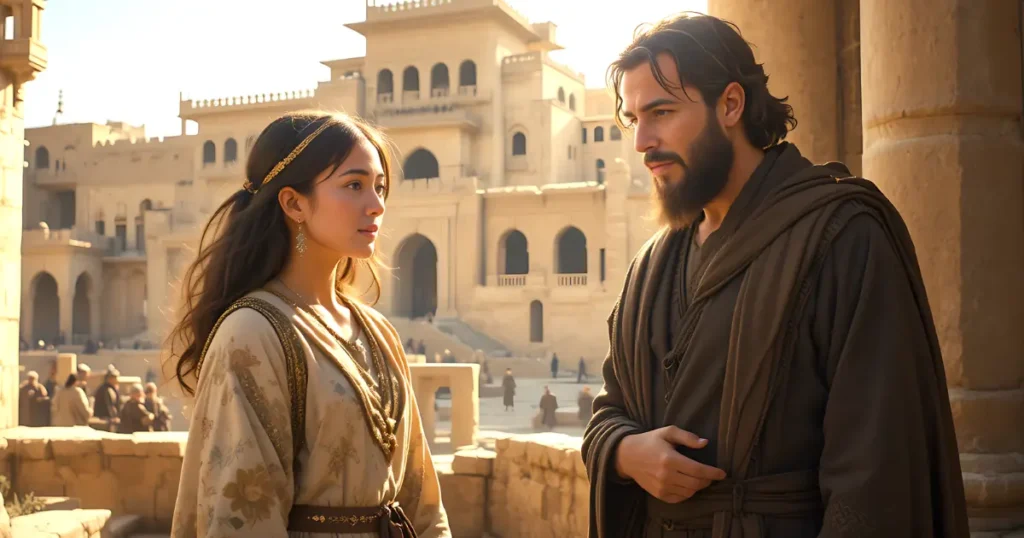
Mordecai Raises Esther After Her Parents Die
The Esther in the Bible story begins with loss. Esther, whose Hebrew name was Hadassah, was the daughter of Abihail. After both of her parents died, she was raised by her cousin Mordecai, who treated her as his own daughter (Esther 2:7). Growing up as a Jewish orphan in the Persian Empire was not easy, but Mordecai gave her a stable home and taught her the faith of her people.
When the king’s officials gathered young women for the royal palace, Esther obeyed Mordecai’s guidance and did not reveal that she was Jewish (Esther 2:10). His wisdom and care prepared her for a role neither of them could have imagined.
Esther Is Chosen to Become Queen
The path to the throne began after Queen Vashti refused King Ahasuerus’ command during a royal banquet (Esther 1). As a result, she was removed as queen, and a search began for a new queen throughout the empire.
Esther was taken to the palace along with many other young women. During months of preparation, she earned the respect of those who cared for her, especially Hegai, the keeper of the women. Rather than seeking recognition, Esther demonstrated humility and wisdom. When she finally appeared before the king, he favored her above all the others and placed the royal crown on her head (Esther 2:17).
Not long afterward, Mordecai uncovered a plot by Bigthan and Teresh to assassinate the king. The conspiracy was recorded in the royal chronicles, although Mordecai received no immediate reward. This seemingly little event will later become a major turning point in the story of Esther.
Haman’s Plot Threatens the Jewish People
The crisis began when Haman, the king’s highest official, demanded that everyone bow before him. Mordecai refused because of his convictions. Enraged, Haman decided not only to punish Mordecai but also to destroy every Jew throughout the empire.
Haman persuaded the king to approve a royal decree ordering the devastation of the Jewish people on a set day. Copies of the proclamation were circulated across the Persian Empire, leaving the Jews in fear and mourning.
When Mordecai learned of the order, he urged Esther to use her position as queen. His renowned remarks remain in our ears even today:
“And who knows but that you have come to your royal position for such a time as this?” (Esther 4:14, NIV)
Mordecai told Esther that her position in the palace could be part of God’s larger plan, but God’s name is never used in the narrative.
Esther Risks Her Life Before the King
Esther understood the danger before her. Under Persian law, anyone who came to the king without an invitation could be put to death unless the king extended the royal scepter.
Before taking action, Esther called for three days of fasting. She asked Mordecai and the Jews in Susa to fast with her while she and her attendants did the same (Esther 4:16). Although the text does not directly mention prayer, fasting throughout Scripture is closely connected with seeking God’s help and guidance.
Then Esther declared:
“If I perish, I perish.” (Esther 4:16, NIV)
These words reveal her willingness to risk everything for her people. The monarch extended the golden scepter when she entered the throne room, saving her life and making her plan possible.
Esther’s Wise Plan Saves Her People
Esther did not ask immediately but invited the king and Haman to a banquet. At the first meal, she invited them to a second banquet, building anticipation while events unfolded behind the scenes.
That night, the king could not sleep. As the royal records were read, he discovered that Mordecai had never been rewarded for exposing the assassination plot. Haman, expecting to receive honor himself, was instead ordered to lead Mordecai through the city in a public celebration.
At the second banquet, Esther revealed that she was Jewish and exposed Haman’s plan to destroy her people. The king responded with rage, and Haman was executed on the identical gallows he had set for Mordecai. Although the original decree could not be canceled, the king issued another decree allowing the Jews to defend themselves. God brought a remarkable reversal, turning certain destruction into Jewish deliverance.
Purim Becomes a Lasting Memorial
The Jews defeated those who sought to destroy them and experienced great joy instead of sorrow. To remember this deliverance, Mordecai and Esther established the Feast of Purim, an annual celebration recorded in Esther 9. The festival communicated to future generations that God kept His people in unforeseen situations and with faithful courage.
The Queen Esther story remains one of the clearest examples of God’s providence in the Old Testament. Esther in the Bible shows that one faithful person, willing to act at the right time, can influence the course of history. Her account continues to be one of the most inspiring examples in the story of women in the Bible and an essential character study for every believer.
As you explore more women whom God used in extraordinary ways, consider reading about Ruth, whose loyal faith became part of the family line of King David and Jesus Christ, and Rahab, whose courageous trust in God transformed her life and secured a place in the Messiah’s genealogy. Together with Esther, these women demonstrate that God works through people from very different backgrounds to accomplish His redemptive plan.
Why God Is Never Mentioned in the Book of Esther
One of the most unique features of the Book of Esther is “why God is never mentioned in Esther.” Unlike many other books of the Bible, there are no direct references to God, prayer, worship, or miracles. But this stillness did not mean God was absent. Instead, the book points readers to God’s providence, showing how He faithfully directs events without dramatic signs or spoken messages.
Throughout Esther’s story, a series of events fits together with remarkable precision. Esther becomes queen at the right time. Mordecai uncovers a plot against the king, but his reward is delayed until the exact moment it is needed. The king experiences a sleepless night just before Haman’s plan reaches its peak.
These moments show God’s unseen hand operating behind the scenes of commonplace occurrences. The book teaches that God’s unseen providence often operates quietly, accomplishing His purposes even when people cannot immediately recognize His work.
This theme also highlights divine sovereignty. Human leaders make decisions, enemies form plans, and unexpected events unfold, yet God’s greater purpose continues without interruption. The Jewish people’s survival testifies that God’s covenant promises are secure even when His action is not.
For many believers, Esther provides reassurance that God is still at work during seasons when He seems silent. The Book of Esther encourages readers to trust His character rather than depend only on visible signs, knowing that His plans often unfold through everyday events.
If you enjoy studying Biblical Women, you may also appreciate the account of Deborah, whose leadership openly displayed God’s guidance, and the collection of Women in Genesis, whose lives reveal God’s faithfulness from the very beginning of Scripture. Together, these accounts show different ways God works throughout the Bible while fulfilling His unchanging purposes.
Why Esther Remains One of the Bible’s Greatest Women of Faith
Esther holds a unique place among the women of the Bible because her life helped preserve the people through whom God would continue His covenant promises. Her account reaches far beyond one generation.
Esther’s role in redemptive history reminds readers that God’s plan to bring the Messiah into the world continued through the preservation of the Jewish nation. For this reason, she is remembered as a true biblical heroine, a courageous woman of faith, and one of the most influential Old Testament women.
Esther’s legacy in Christianity is not based on royal status but on faithful obedience during a time of great uncertainty. Her story inspires believers to trust that God is always working, even when His presence is not always readily apparent. It also reminds Christians that courage and knowledge often go together in serving God’s goals.
Purim, explained for Christians, is not a required Christian celebration, but it offers an important reminder of God’s faithfulness to His covenant people. The annual Jewish festival commemorates God’s preservation of Israel, while Christians can see it as another testimony to God’s unchanging character and His commitment to fulfilling every promise He has made.
Whether read during personal devotion or Bible Study, Esther continues to strengthen Christian faith by pointing believers to God’s faithful care across generations. Her life is a testimony that one person wholly devoted to the purposes of God can make an impact that lasts well beyond their own lifespan.
As you continue exploring the women of Scripture, you may also enjoy reading about Eve, whose account begins the Bible’s story of humanity, and Athaliah, whose reign highlights the consequences of rejecting God’s ways. Together with Esther, these studies provide a fuller picture of God’s work through very different women in biblical history.
What Can We Learn From Esther’s Example Today?
Courage When Faith Requires Risk
One of the greatest lessons from Esther is that faith sometimes requires courage before the outcome is known. Following God may involve difficult conversations, standing for truth, or making unpopular choices. Biblical fearlessness is not the absence of fear. It is choosing to do what is right while trusting that God is in control. God may use ordinary believers to accomplish God’s plan in meaningful ways, at home, in business, or in your community.
Wisdom Before Taking Action
Another important life lesson from Esther is the value of wisdom. Quick decisions aren’t always the best decisions. Prayerful thinking, careful planning, and seeking godly counsel often lead to better choices. This kind of faithful leadership reflects maturity and humility. It reminds us that serving others well is as vital as making the right decision. These skills are still important for Christian leadership today.
Trusting God Even When He Seems Silent
There are seasons when God appears quiet, yet His silence does not mean He has stopped working. Trusting God’s timing is trusting that He is reliable even if His plans are not clear immediately. As we continue to obey Him, He can guide our steps in ways we may only understand later.
As you continue studying Scripture, consider reading about Mary Magdalene, whose faithful devotion to Jesus made her the first witness of His resurrection, and Apphia, whose quiet example of service encouraged the early church. Along with other Women in the New Testament and the women in Jesus’ ministry, they show that God continues to work through faithful people in every generation.
Frequently Asked Questions About Queen Esther
Was Esther’s marriage part of God’s plan?
The Bible does not directly say that God commanded Esther’s marriage to King Ahasuerus. But Scripture says that God used her position as queen to safeguard the Jewish people. Her life demonstrates that God can accomplish His purposes through difficult and unexpected circumstances, even when people cannot see His plan at the time.
Why do Christians still study Esther if God’s name never appears?
Christians study Esther because her account reveals God’s faithfulness, courage in the face of danger, wise leadership, and trust during uncertain times. The Book of Esther encourages believers to remain faithful, knowing that God is always working for His purposes, even when life seems confusing or difficult.
How does Esther’s story encourage believers facing fear today?
Esther reminds believers that fear does not have to control their decisions. When facing uncertainty, Christians can seek God’s wisdom, act with courage, and trust Him with the outcome. Her example encourages us to remain faithful and obedient, believing that God can use ordinary people to make an extraordinary difference.
Final Thoughts on Esther in the Bible
Esther in the Bible remains one of the clearest examples of how God faithfully preserves His people and fulfills His purposes across generations. From her quiet beginnings to her place as queen, her account points readers to God’s constant care, even when His work is not immediately visible. The Book of Esther still inspires believers to trust the Lord’s faithfulness and remember that His plans will never fail.
If you have not read the Book of Esther recently, take time to read all ten chapters together. Seeing the complete account helps you appreciate how every event fits into God’s greater purpose.
If you enjoy studying the women in Scripture, explore more character studies on our Women of the Bible website. Each account offers a deeper understanding of God’s work through ordinary people whose lives continue to encourage believers today.