

Introduction: Who Was Mary the Mother of Jesus?
Mary the mother of Jesus, was a Jewish woman from Nazareth who was picked by God to give birth to the promised Messiah. According to Luke 1:26-38, she was a virgin pledged to Joseph, a descendant of David. The angel Gabriel informed that she would conceive through the Holy Spirit, and she accepted God’s plan with remarkable faith and humility.
Mary of Nazareth stands at the center of some of the most important events in the New Testament. Her story moves from a small village in Galilee to Bethlehem, from her visit with Elizabeth to the wedding at Cana, from the crucifixion of her Son to the gathering of believers in Acts 1:14. Her life connects prophecy, the Davidic line, and the arrival of the Messiah, the Son of God.
This article examines Mary in the Bible by focusing first on what Scripture clearly says. It then identifies later Christian traditions separately so readers can distinguish biblical evidence from beliefs that developed after the New Testament period. Mary also holds an important place among the women of Scripture and within any comprehensive list of women in the Bible.
Quick Facts About Mary’s Life and Biblical Role
If you’re looking for a summary, these facts provide a clear overview of Mary’s story in the Bible. While many traditions developed over the centuries, this character study focuses only on information that Scripture directly supports. Some specifics, such as her age and the circumstances of her death, are not documented in the Bible.
| Quick Fact | Biblical Information |
|---|---|
| Name | Mary, also called Mariam in some New Testament passages |
| Home | Nazareth in Galilee |
| Husband | Joseph |
| Son | Jesus |
| Relative named in Scripture | Elizabeth |
| Major biblical books | Matthew, Mark, Luke, John, and Acts |
| Major events | The Annunciation, the Magnificat, Jesus’ birth, Cana, the crucifixion, and the early church |
| Final biblical appearance | Praying with the disciples and other believers in Acts 1:14 |
| Exact age | Not given in Scripture |
| Death | Not recorded in Scripture |
The account of Mary, the mother of Jesus, stretches from the opening chapters of the Gospels to the beginning of the early Church. Mary of Nazareth remains one of the most recognized women in the New Testament because her life is closely connected to every stage of Jesus’ earthly ministry.
What Scripture Tells Us About Mary’s Background
Her Home in Nazareth and Her Betrothal to Joseph
Luke 1:26-27 places Mary of Nazareth in a small town in Galilee before Jesus’ birth. The passage also says she was pledged to marry Joseph, who belonged to the house of David.
In first century Jewish culture, betrothal was much more serious than a modern engagement. A couple was legally married even if they had not yet started living together as husband and wife. Breaking that agreement usually required a formal divorce.
Mary’s and Joseph’s relationship helps readers understand the difficult situation they faced after Gabriel’s announcement. Many readers also ask, “How old was Mary when she had Jesus?” The Bible doesn’t provide her age, so any specific number remains an estimate rather than a biblical fact.
What We Know About Her Family and Lineage
Luke 1:36 identifies Elizabeth as Mary’s relative, although the exact family connection isn’t explained. This relationship becomes important because Elizabeth’s miraculous pregnancy confirmed God’s message to Mary and strengthened her faith.
Many readers ask, “What tribe was Mary the mother of Jesus, from?” Scripture doesn’t answer that question directly. Some academics associate her with the tribe of Judah; others suggest Elizabeth’s association with a priestly family of the tribe of Levi. The Bible never gives a simple statement identifying Mary’s tribe, so it’s important not to present one interpretation as settled fact.
What Scripture does emphasize is the Davidic line through Joseph. This connection supported the fulfillment of Old Testament prophecies concerning the coming Messiah. Scripture presents Mary primarily as the woman God chose to bring Jesus into the world, not as a figure whose tribal identity takes center stage.
If you’re interested in other women who appear in the Gospels, consider reading about Mary of Bethany and Martha, two important women in the New Testament whose stories also reveal faithful discipleship.
Why God Chose Mary for This Calling
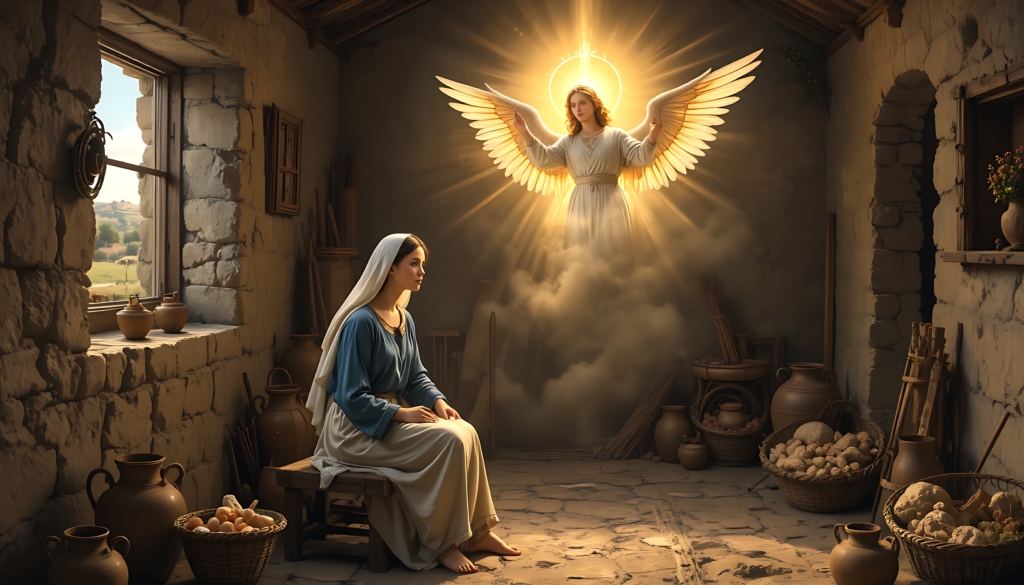
Gabriel’s Announcement and Mary’s Response
One of the most common questions readers ask is why God chose Mary. The Bible doesn’t say that she was selected because of social status, wealth, or personal influence. Instead, Luke’s Gospel points readers to God’s grace and His plan to bring the promised Messiah into the world.
In Luke 1:30-38, the angel Gabriel told Mary not to be afraid because she had discovered favor with God. He said that she would give birth to Jesus, who would sit on David’s throne and rule forever. Gabriel also explained that the Holy Spirit would bring about this miraculous birth, and the child would be called the Son of God.
But Mary wouldn’t give in. She asked how the miracle would happen because she was a virgin, then listened to God’s answer. This passage gives the clearest biblical answer to the question, Why was Mary chosen to be the mother of Jesus?. The focus remains on God’s purpose rather than human speculation (Luke 1:26-38).
Her Willingness to Trust God
Mary’s response in Luke 1:38 reveals the heart of her character:
“I am the Lord’s servant. May your word to me be fulfilled.”
She didn’t know everything that would happen in the years ahead. She couldn’t see Bethlehem, the cross, or the resurrection. Yet Mary, the mother of Jesus, accepted God’s call with humility and trust.
Mary’s faith, Mary’s qualities, and Mary’s obedience continue to inspire many Christians today. Like Miriam, Pilate’s wife, and Huldah are faithful biblical women who responded to God’s direction with a willing heart.
Mary’s Story From Nazareth to the Birth of Jesus
Mary Visits Elizabeth and Sings the Magnificat
After receiving Gabriel’s message, Mary traveled to visit Elizabeth, who was also undergoing a miraculous pregnancy. According to Luke 1:41-45, Elizabeth was filled with the Holy Spirit and blessed Mary for believing God’s promise.
Mary responded with a song of praise known as the Magnificat (Luke 1:46-55). In this beautiful passage, Mary celebrates God’s mercy, faithfulness, and power. Her words reveal the depth of Mary’s faith and provide an important example for any scripture study focused on trust and worship.
Bethlehem, Jesus’ Birth, and the Early Years
The Roman census demanded Mary and Joseph travel to Bethlehem, the city of David. Jesus’ birth there matched Old Testament expectations that the promised King would come from King David’s hometown.
Luke 2 records the virgin birth, one of the most important events in Christian belief. Angels declared the good news to shepherds, who hurried to see the newborn child. Mary listened to their tale and thought in silence about all that had happened.
Luke 2:19 says, “But Mary treasured up all these things and pondered them in her heart” (NIV).
Later, Mary and Joseph presented Jesus at the Temple, where Simeon recognized Him as the promised Messiah. Simeon also warned Mary that painful days lay ahead. Soon after the family escaped to Egypt to avoid Herod, they went back to Nazareth. This period of Mary’s life highlights both her devotion and the unfolding of God’s redemptive plan within the Christian faith.
Jesus in the Temple and the Years in Nazareth
The next major event appears when Jesus was twelve years old. After a Passover visit to Jerusalem, Mary and Joseph realized He was missing and searched for Him for three days before finding Him in the Temple (Luke 2:41-52).
This account shows Mary and Jesus in a very real situation. Mary’s anxiety reflects her experience as a mother, and Luke again notes that she treasured these events in her heart. This scene remains one of the most influential moments in the story of women in the Bible, much like the faithful examples of Hannah and Deborah.
How Mary Appears During Jesus’ Ministry
Her Role at the Wedding in Cana
John 2 records one of the most well-known moments at Cana, where a wedding celebration faced an unexpected problem after the wine ran out. Mary at Cana noticed the situation and brought it to Jesus’ attention.
Although she never told Him exactly what to do, her words to the servants revealed her trust: “Do whatever he tells you” (John 2:5, NIV).
This account focuses not on Mary’s authority but on Jesus’ first public sign. He turned water into wine and showed His glory, leading His disciples to believe in Him (John 2:1-11). At the same time, this incident gives us a rare insight into Mary and Jesus as mother and Son. Mary recognized a need, trusted Jesus completely, and pointed others toward Him rather than toward herself.
Her Relationship With Jesus During His Ministry
The Gospels mention Jesus’ mother a few times during His public career. In passages such as Mark 3:31-35, Jesus expanded the definition of family by teaching that those who do God’s will are part of His spiritual family.
This teaching didn’t diminish Mary’s relationship with Jesus. Instead, it emphasized that faith and obedience unite all believers. Mary, Jesus’ mother, is described in the Bible as a parent and disciple who obeyed God’s plan throughout her life.
Readers who enjoy comparing the lives of faithful women may also find meaningful connections with Esther and Ruth, although their stories take place among the Women in the Old Testament rather than in the New Testament era.
Mary at the Cross and in the Early Church
Her Presence at the Crucifixion
The Gospel of John makes it clear that Mary at the cross was not a later tradition but a recorded historical event. John 19:25 states that Jesus’ mother stood near Him during the crucifixion, alongside several other women.
As He hung on the cross, Jesus said to His mother and the disciple whom He loved:
“Woman, here is your son,” and to the disciple, “Here is your mother” (John 19:26-27, NIV).
This brief exchange carries enormous emotional weight. Mary and Jesus had shared the journey from Bethlehem to Calvary, and now she witnessed His suffering and death. Scripture doesn’t describe her private thoughts, so it’s best to remain close to the biblical text rather than speculate about her feelings.
Her Place Among the Believers in Acts
Mary’s biblical story doesn’t end at the cross. After Jesus’ resurrection and ascension, she appears again among his followers in Jerusalem.
Acts 1:14 says, “They all joined together constantly in prayer, along with the women and Mary the mother of Jesus, and with his brothers” (NIV).
This final reference to Mary in Acts presents her as an active member of the believing community. She prayed alongside the disciples and participated in the church’s earliest days. Her last appearance in Scripture is one of faith, perseverance, and fellowship.
Readers interested in faithful women who supported God’s work may also enjoy the stories of Anna (Prophetess) and Apphia, two women whose lives also intersected with important moments in God’s unfolding plan.
What the Bible Reveals About Mary’s Character

Faith That Responded to God’s Call
One of the strongest examples of Mary’s faith appears in Luke 1:38. After hearing Gabriel’s message, Mary didn’t have all the answers about the future. Yet she chose to trust God. Her response reminds believers that faith doesn’t require complete understanding. It requires a willing heart that keeps obeying even when the path ahead isn’t completely clear.
Humility That Gave God the Glory
Mary’s song of praise, known as the Magnificat, never places the spotlight on herself. Instead, she extols the goodness, might, and fidelity of God. Mary’s humility is evident in Luke 1:46-55 because she continually points to what God has done rather than to her role in His plan.
Courage That Accepted Personal Cost
Accepting God’s calling carried a real personal cost. Mary faced questions, uncertainty, and the possibility of public misunderstanding. Scripture doesn’t describe every challenge she experienced, but it does show Mary’s remarkable courage in accepting an assignment that would entirely change her life. Perhaps her experience helps explain why God chose Mary, because her response reflected trust and surrender.
Perseverance Through Suffering
Simeon’s prophecy in Luke 2:35 warned that sorrow would one day touch Mary’s life. Years later, she stood beside Jesus in his last hours. This connection reveals some of Mary’s qualities, including endurance and unwavering devotion. Mary’s strength didn’t come from avoiding suffering. It came from being faithful through it all.
For readers interested in other faithful women who responded to God’s calling, Women in Genesis offers additional examples of trust, perseverance, and obedience throughout Scripture.
What We Know About Mary’s Family and Later Life
Did Mary and Joseph Have Other Children?
One of the most frequently asked questions is whether Mary and Joseph had other children. The Gospels mention several family members.
Matthew 13:55 asks, “Isn’t this the carpenter’s son? Isn’t his mother’s name Mary, and aren’t his brothers James, Joseph, Simon, and Judas?” (NIV).
Mark 6:3 includes the same four names and also refers to Jesus’ sisters, although they aren’t identified individually.
These passages form the biblical basis for discussions about Mary’s children and Jesus’ brothers and sisters. However, Christians have understood these verses differently for centuries. Some interpret the references as evidence that Mary and Joseph had additional children after Jesus’ birth. Others believe the terms could refer to relatives or extended family members.
The key is to distinguish what the Bible explicitly says from how later traditions interpret those statements. Scripture tells us about Jesus’ brothers and sisters, but it doesn’t detail every family relationship.
How Did Mary the Mother of Jesus Die?
The direct answer to the question, “How did Mary the mother of Jesus die?” is simple: Scripture does not tell us. Mary’s final biblical appearance is in Acts 1:14, where she is gathered with the disciples and other believers in prayer after Jesus’ ascension.
Many readers also ask, What happened to Mary after Jesus died? Several Christian traditions describe her later years and offer different accounts of her death and final resting place. The New Testament does not confirm these details. For that reason, they shouldn’t be presented as biblical fact. A careful study of Scripture requires a clear distinction between the Bible’s testimony and later traditions.
Questions about Mary’s family continue to interest readers because they connect to broader discussions about women in the Bible, family life, and the historical setting of the New Testament. Similar family themes also appear in the stories of Adah (Wife of Lamech) and Atarah.
What Mary’s Life Teaches Christians Today
The lessons from Mary’s life remain deeply relevant because they are rooted in real experiences rather than ideal circumstances. Her story reminds us that faith often begins with an unexpected calling. God’s invitation may not come with all the answers, yet He still asks His people to trust Him.
One of Mary’s clearest lessons is that obedience doesn’t require complete understanding. Mary accepted God’s plan without knowing every challenge that lay ahead. Her humility kept the focus on God, while her perseverance carried her through both joyful and painful seasons.
Mary’s example of faith also shows that a person can play an important role in God’s work without seeking recognition. Throughout the Gospels, she consistently pointed toward Jesus.
Readers who enjoy studying women in Jesus and other faithful women in Scripture may also appreciate related studies on Mary Magdalene and Sarah. Their stories, like Mary’s, still provide insightful perspectives on Christian living.
Frequently Asked Questions About Mary’s Life and Faith
What was Mary’s full name?
The New Testament identifies Mary as Mary or Mariam, which is the Greek form of the Hebrew name Miriam. However, Scripture never gives Mary, the mother of Jesus, a full name. Unlike modern naming practices, people in the New Testament were often identified by their family relationships or hometown. So, if you ask readers what Mary’s full name was, the scriptural answer is just Mary, perhaps Mary of Nazareth.
Why is Mary called blessed?
Many people ask, “Why is Mary called blessed?” Luke 1:42 and 45 answer that question. Elizabeth blessed Mary because God chose her and because she believed His promise. In the Bible, the title “Blessed Virgin Mary” reflects God’s favor and Mary’s faith. Later titles developed through Christian tradition, but Scripture provides the clearest explanation.
What does Mary’s story say to women who feel unseen?
Mary, a woman of faith, reminds us that God sees people the world often overlooks. In Luke 1:48, Mary recognized that God had noticed her humble position. Mary’s story shows that God can work through ordinary people. Mary’s faith still encourages believers to trust God’s plan, even when they feel unseen.
Final Thought: A Faith That Points to Jesus
Mary the mother of Jesus, remains one of the most important women in Scripture, not because she sought attention, but because she trusted God and followed His calling. She accepted a difficult assignment, treasured God’s work in her heart, endured seasons of suffering, and continued serving alongside other believers.
Her story always leads back to Jesus and His mission to save the world. Mary’s faith reminds us that we don’t need to see the entire path before taking the next faithful step.
Mary’s journey is one of many powerful stories found in Scripture. Take a look at our other Women of the Bible articles to continue your study.