Introduction: Who Was Mary of Bethany?
Mary of Bethany was the sister of Martha and Lazarus, and her family lived in Bethany near Jerusalem. She appears most clearly in Luke 10 and John 11-12. She is remembered for listening to Jesus, grieving before Him after Lazarus died, and anointing His feet with expensive perfume.
The Mary of Bethany story is much bigger than the familiar picture of her sitting at Jesus’ feet. In Luke 10, she listens to Jesus. In John 11, while grieving her brother, she shows faith during suffering. In John 12, she anoints Jesus, expressing her devotion and worship. Her story adds a meaningful voice to the women of Scripture, showing how listening, faith, and worship can shape a life devoted to Christ. As we explore Mary of Bethany in the Bible, we can see why her example still matters today.
Quick Facts About Her Family, Home, and Faith
| Fact | Details |
|---|---|
| Name | Mary |
| Known as | Mary of Bethany |
| Family | Martha and Lazarus |
| Home | Bethany |
| Relationship to Jesus | Friend and devoted follower |
| Main passages | Luke 10:38 to 42; John 11:1 to 44; John 12:1 to 8 |
| Known for | Sitting at Jesus’ feet and anointing His feet with expensive perfume |
Mary of Bethany and Martha were sisters, while Mary of Bethany and Lazarus were siblings who shared a home in Bethany. John clearly identifies all three as living there. Their relationship with Mary of Bethany and Jesus also stands out in John’s Gospel, where Jesus cares deeply for this family.
In the Bible, Bethany serves as the setting for some of Mary’s most important moments of listening, faith, and worship. This family account also gives readers a valuable glimpse into the lives of women in the New Testament and the different ways they followed Jesus.
Her Life in Bethany and Relationship With Jesus

A Family Jesus Loved
Mary, Martha, and Lazarus were siblings who lived together in Bethany. Their home was a place of close relationship with Jesus. John makes this personal when he says, “Jesus loved Martha and her sister and Lazarus” (John 11:5, NIV). The relationship between Mary of Bethany and Lazarus becomes especially important when Lazarus becomes sick and dies.
The relationship between Mary of Bethany and Martha also shapes Mary’s story, particularly in Luke 10. Like other women in the Bible, Mary shows that faith can be seen through ordinary family life. Her relationship with Jesus was personal, trusting, and rooted in Scripture study.
Why Bethany Matters to Her Story
Bethany in the Bible was a village near Jerusalem and became an important setting in the final period of Jesus’ earthly ministry. For Mary, it was more than the place her family lived. It was where she listened to Jesus, experienced deep grief, witnessed the raising of Lazarus, and later honored Jesus with costly perfume.
These moments make Bethany, near Jerusalem, an important part of this character study. The setting helps us understand why Mary’s story is closely connected with some of the most significant events recorded near the end of Jesus’ earthly ministry.
Her story also belongs alongside other faithful women in the New Testament, including Mary Magdalene and Mary the Mother of Jesus.
Mary Sat at Jesus’ Feet and Chose to Listen
What Happened in Luke 10?
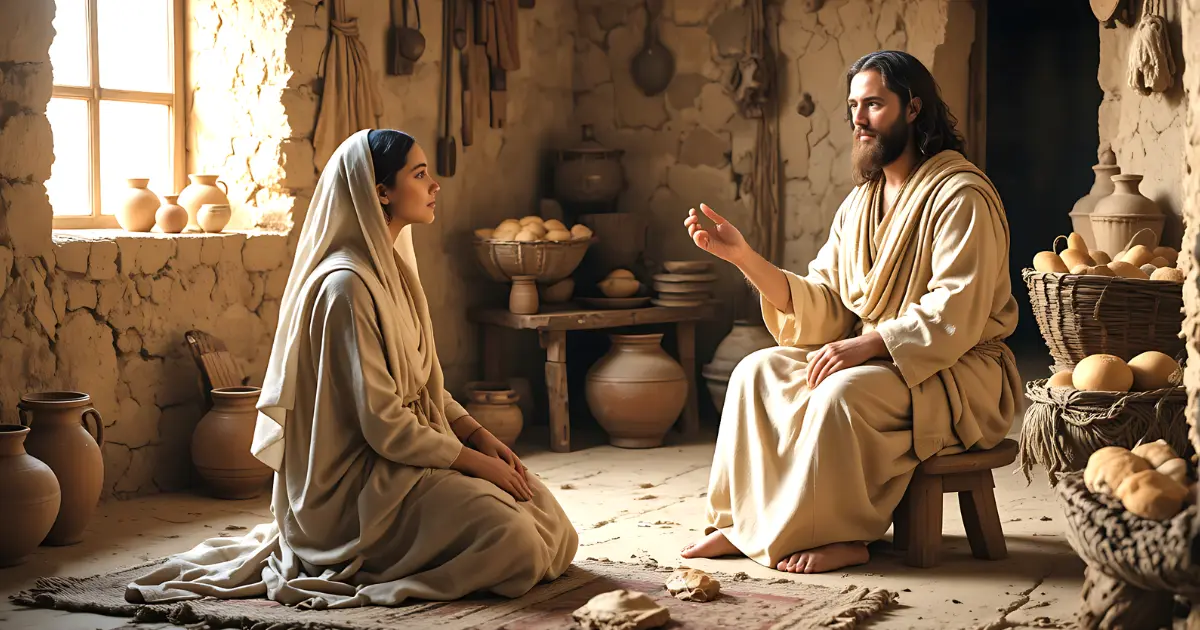
When Jesus entered Mary and Martha’s home, Martha became busy preparing and serving, while Mary sat at Jesus’ feet and listened to His teaching (Luke 10:38-40). This was more than simply sitting in the same room. Mary took the posture of a learner and gave Jesus her attention.
When Martha asked Jesus to tell Mary to help her, He answered with care but defended Mary’s choice. The Mary of Bethany account in Luke 10 shows a clear difference between serving while distracted and giving Jesus focused attention. Mary listened to Jesus, decided to stay with Him, and accepted what He was teaching.
What Did Jesus Mean by “The Better Part”?
Jesus told Martha, “Mary has chosen what is better, and it will not be taken away from her” (Luke 10:42, NIV). Mary chose the better part because she prioritized listening to Jesus rather than letting her many tasks pull her attention away from Him. Jesus wasn’t saying that serving others was wrong. His concern was Martha’s anxious and troubled focus, not her desire to serve.
So, why did Jesus praise Mary? The passage makes the answer clear. Mary recognized the value of listening to Jesus’ teaching and chose to receive His words. What did Jesus mean by the better part? He pointed to the lasting value of being attentive to Him. The lesson isn’t that action is unimportant. It is that faithful service flows from first hearing and receiving Jesus’ words.
Mary’s posture offers a simple picture of discipleship, much like the different examples found among women of Scripture.
Mary Faced Grief When Lazarus Died
Mary Meets Jesus in Her Grief
Lazarus became sick and died before Jesus arrived in Bethany. Martha met Jesus first, but when He called for Mary, she went to Him. In John 11, Mary of Bethany falls at Jesus’ feet and says,
“Lord, if you had been here, my brother would not have died” (John 11:32, NIV).
Her words reveal deep pain, but they also show that she still turned to Jesus in her sorrow. Mary and Lazarus shared a close family bond, so his death brought real grief. When Mary falls at Jesus’ feet, she doesn’t hide her pain. Her trust in Jesus doesn’t remove her questions or sorrow. This is an important part of Mary of Bethany’s faith, because she brings her grief directly to Him.
Jesus Responds to Her Sorrow
Jesus saw Mary and the mourners weeping, and He was deeply moved by what He witnessed. John records that Jesus then wept (John 11:33-35). His response shows that He wasn’t distant from Mary’s suffering. In the relationship between Jesus and Mary of Bethany, there was real compassion and concern. Jesus knew what He was about to do, yet He still entered into the sorrow surrounding Lazarus’ death.
He then called Lazarus from the tomb, raising him (John 11:38–44). Mary’s experience shows that faith during suffering doesn’t mean pretending everything is fine. She grieved honestly while bringing her pain to Jesus, and Jesus met her there.
A Simple Lesson From Mary’s Grief
Mary’s faith wasn’t a life without pain. She mourned Lazarus and spoke honestly to Jesus, showing that grief and trust can exist together. Her story gives Biblical Women and every Christian a clear example of bringing sorrow to Christ.

Mary Anointed Jesus With Expensive Perfume
What Mary Did at Bethany
Six days before Passover, Jesus was hosted for a dinner in Bethany. Martha served, but there was Lazarus. Mary then took about a pint of pure nard, an expensive perfume, and poured it on Jesus’ feet. She wiped His feet with her hair, and the house was loaded with the fragrance of the perfume (John 12:1-3, NIV).
This scene gives us the clearest picture of Mary anointing Jesus in Scripture. John specifically identifies her as the woman who took the perfume and anointed Jesus’ feet. God is in the details. Mary wiped Jesus’ feet with her hair, using something costly and personal to honor Him. John 12 presents this act as an open expression of devotion.
Why Her Act Was So Significant
The perfume Mary used was costly, making her action an example of costly worship. Judas Iscariot objected, arguing that the perfume could have been sold and the money given to the poor (John 12:4-6). Jesus, however, defended Mary and told Judas to leave her alone. He explained that she had kept the perfume for the day of His burial (John 12:7).
The passage doesn’t say Mary understood every detail of what was about to happen, so we shouldn’t assume she did. What we can see clearly is Mary of Bethany (John 12) expressing deep devotion and worship toward Jesus. Jesus connected her action with His burial, giving her act a significance she may not have fully understood at the time.
Unlike the broader phrase “woman who anointed Jesus,” John names Mary directly. Her worship was personal, generous, and costly. Her example can also sit naturally within the larger stories of Women in Genesis and Women in the Old Testament, where women respond to God through faith and faithful action.
Was Mary of Bethany the Same as Mary Magdalene?
What Scripture Actually Identifies
Scripture presents Mary of Bethany vs. Mary Magdalene as two distinct women. Mary of Bethany was the sister of Martha and Lazarus and was connected with Bethany. She appears in Luke 10 and John 11 and 12, including the account where she anoints Jesus. Mary Magdalene is associated with Magdala and appears prominently in the accounts of Jesus’ crucifixion and resurrection.
| Mary of Bethany | Mary Magdalene |
|---|---|
| Sister of Martha and Lazarus | Associated with Magdala |
| Connected with Bethany | Prominent in Jesus’ ministry and resurrection accounts |
| Appears in Luke 10 and John 11 to 12 | Appears in the Gospel resurrection accounts |
| Anoints Jesus in John 12 | Witnesses Jesus’ crucifixion and resurrection |
Why the Two Women Have Been Confused
Is Mary Magdalene Mary of Bethany? Scripture does not explicitly identify them as the same woman. Several women in the New Testament were named Mary, which can make the Gospel accounts difficult to follow. Later Christian tradition sometimes connected Mary of Bethany and Mary Magdalene, and some traditions also connected one of them with the woman who anointed Jesus in Luke 7.
However, these identifications go beyond what the Gospel writers directly state. It is better to read Scripture with Mary Magdalene and Mary of Bethany apart. The same care helps us understand the different women in Jesus’ ministry without combining their stories.
What Her Story Teaches Us About Faith and Devotion
Make Time to Listen to Jesus
Luke 10 shows the value of sitting at Jesus’ feet and giving Him our attention. Mary’s choice reminds us that listening to Jesus should be a real part of our daily lives. Before rushing into every task, we can pause, open Scripture, and make time to hear what Christ is teaching us.
Bring Your Grief to Christ
John 11 shows that faith doesn’t erase grief. Mary brought her sorrow over Lazarus directly to Jesus. Her example encourages us to keep trusting Jesus in our grief, even when we don’t understand what He is doing. Faith in suffering may mean tears, questions, and honest prayer.
Let Love Shape Your Worship
In John 12, Mary’s costly gift showed the depth of her devotion to Jesus. Her example of costly worship reminds us that true worship is more than words. Devotion to Christ can shape how we use our time, resources, attention, and gifts. Christian living begins with a heart that values Jesus above what it gives up.
Quiet Faith Can Still Leave a Lasting Witness
Mary wasn’t presented as a public leader, yet her actions became part of the Gospel story. Her example shows that women disciples of Jesus don’t need a public platform for their faith to matter. A faithful woman in the Bible can make a lasting impression through simple acts of trust, love, and worship. Her life remains an example of faith for Christians today.
Frequently Asked Questions About Her Story
Why is Mary of Bethany’s story important to Christians today?
Her story brings together several parts of faithful living: listening to Jesus, bringing grief to Him, trusting Him during suffering, and worshiping Him with devotion. Her life shows that faith isn’t limited to one kind of response. Sometimes faith means sitting quietly, sometimes it means grieving honestly, and sometimes it means giving generously to Christ.
What does Mary of Bethany’s worship teach us about giving to Jesus?
Mary’s perfume was costly, personal, and freely given. Her worship reminds Christians that giving to Jesus is not simply about the quantity we give. It can involve something precious to us, given with love and devotion. Her example encourages us to consider whether our time, resources, attention, and gifts reflect how much we value Christ.
What does Mary of Bethany show us about being a woman of faith?
Mary shows that faithful discipleship doesn’t require a public position or a prominent role. Her actions were recorded because they reflected trust, love, and devotion to Jesus. Her story adds an important example to the Women of the Bible, showing how a woman’s quiet faith can have a lasting place in God’s story.
Final Thought: What We Can Remember From Mary
Mary’s story reminds us that faith can be quiet without being weak. She listened to Jesus, brought her grief to Him, trusted Him through loss, and worshiped Him with what was precious to her. Her life shows that following Christ isn’t always about being seen. Sometimes it’s about choosing Him in quiet moments, trusting Him through painful seasons, and giving Him our best.
Mary of Bethany is one beautiful example among the many women in the Bible whose faith still speaks to us today. If her story encouraged you, read more stories of the Women of the Bible and discover how other women trusted God, followed His calling, and remained faithful through their circumstances.
Which part of Mary’s faith do you most want to live out today?