

Who Was Tabitha in the Bible?
Tabitha in the Bible, also called “Dorcas.” She was a faithful disciple living in Joppa, mentioned in Acts 9. She was known for helping widows and people experiencing poverty through acts of charity. After she died, the Apostle Peter prayed, and God raised her back to life, leading many people to believe in Jesus.
People are often surprised by how simple yet powerful Tabitha’s story is when they ask, “Who was she in the Bible?” She wasn’t a queen or a prophet. She was a woman who quietly and practically served others, and God used her life in a big way.
Tabitha, also known as Dorcas, stands out among the women of the Bible as one of the few women directly called a disciple. That alone places her in a unique position among the women in the Bible. Her story shows that real faith is not just about words. It is about action, care, and consistency.
Tabitha’s story matters because it brings faith down to everyday life. She shows us what faith and action look like in the Bible. She had faith in Jesus. She helped others around her, especially widows who were generally ignored.
She is also one of the few Women in Scripture who are explicitly called disciples, highlighting her deep commitment. Her life shows real kindness and charity, just like the Bible says. When Peter raised her from the dead, it wasn’t just a miracle. It strengthened the faith of early believers and helped spread the message of Jesus.
Her story reminds us that small acts of kindness can carry eternal impact.
Facts About Tabitha (Dorcas)
Tabitha Dorcas is one of the most practical and inspiring women in the Bible, known for her quiet service and strong faith. Here are the key facts that help you understand her life at a glance:
- Name meaning: Tabitha (Aramaic) and Dorcas (Greek) both mean “gazelle,” often linked with grace and kindness
- Location: She lived in Joppa, a busy port city, in the early church
- Known for: Acts of charity, especially making garments for widows and those in need
- Key passage: Her story is found in Acts of the Apostles 9:36–42
- Role: She is called a disciple, one of the few women given this title
- Miracle: After her death, God raised her back to life through the Apostle Peter
The account of Dorcas Tabitha in the Bible reveals a woman whose daily actions had a greater impact than her words. She didn’t lead from a stage, but her service made a deep impact on her community and the early church.
You may want to read this post: Who Was Lydia in the Bible? Her Story and Role
Meaning of the Name Tabitha (Dorcas) in the Bible
If you’re wondering what Tabitha means in the Bible? Her name gives a beautiful clue about her life. The name “Tabitha” comes from Aramaic, while “Dorcas” is the Greek version of the same name. Both mean “gazelle.”
In Scripture, a gazelle often points to grace, gentleness, and beauty in movement. This interpretation aligns closely with the meaning of Dorcas in the Bible, not just in words but in how she lived. Tabitha was very kind and caring, especially toward widows and anyone in need.
You may want to check out this post: Who Was Phoebe in the Bible? Her Role in Romans 16 Explained
Among female Bible characters, her name stands out because it matches her character so well. She had a name that meant something. She lived it out daily through service and compassion.
This connection between her name and her actions reminds us of something simple but powerful. In the Bible, names often reflect identity. Tabitha’s life shows that true grace is not just how someone appears but how they treat others in real, everyday moments.
You may want to check out this post: Who Was Mary Magdalene in the Bible? First Witness of the Resurrection
The Story of Tabitha in the Bible
The story of Tabitha in the Bible takes place in Joppa, a coastal city where early believers were growing in faith. Tabitha, also called Dorcas, was known for her daily acts of kindness. She made garments and cared for widows, meeting real needs in her community.
Her life was simple but meaningful. She didn’t preach sermons. She served people. And that made her deeply loved.
Then suddenly, everything changed. Tabitha became sick and died. Her body was prepared and placed in an upper room, as was the custom.
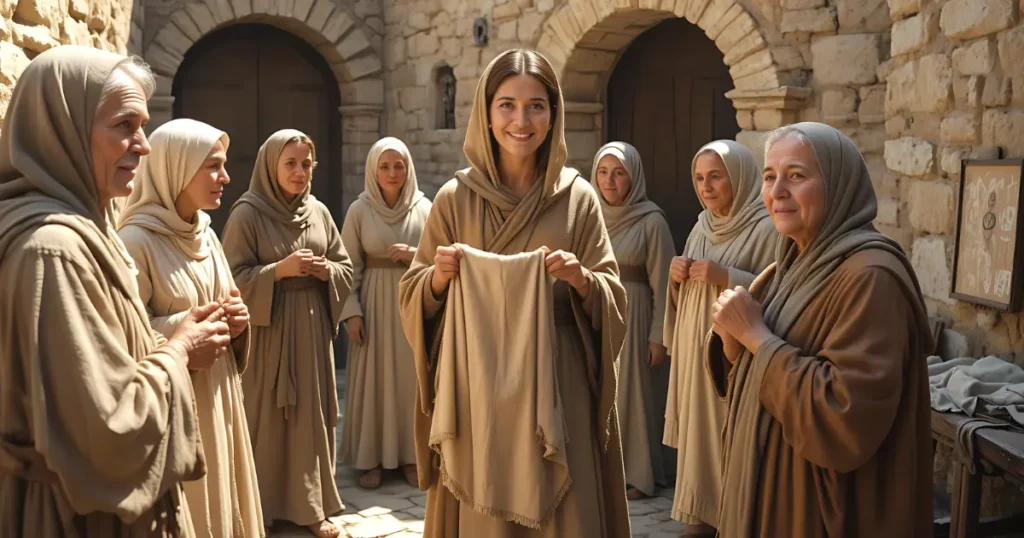
The believers in Joppa were heartbroken. Widows gathered, crying and holding the garments she had made for them. These weren’t just clothes. They were proof of her love and care.
You may want to read this post: Who Was Elizabeth in the Bible? Her Story and Role
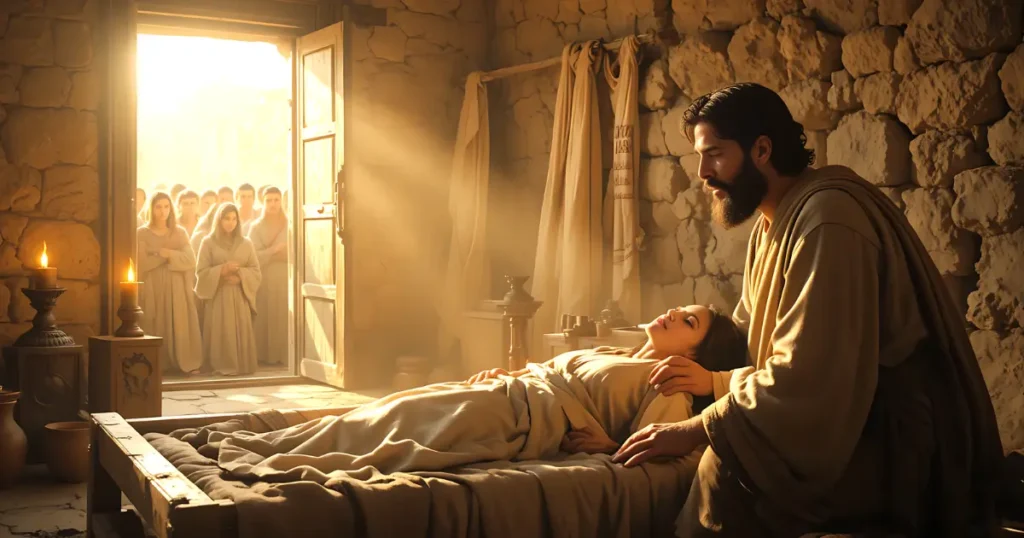
Hearing that the Apostle Peter was nearby, they sent for him right away. When Peter arrived, he saw their grief. But instead of talking first, he did something strong. He prayed.
Then he turned to her body and said, “Tabitha, get up.” And she opened her eyes. She sat up. She was alive again.
This is what happened to Tabitha in the Bible. A woman known for quiet service became part of a public miracle.
And the result was immediate. News spread across Joppa, and many people believed in the Lord.
Among all the stories of Bible women, this one stands out. It shows how a life of simple faith can lead to a moment that changes many lives.
You may want to check out this post: Who Was Martha in the Bible? Her Story and Role
Tabitha in the Bible Verse-by-Verse (Acts 9:36–42)
This explanation of Acts 9:36–42 helps you slow down and see the meaning behind each moment. The Tabitha in the Bible verse carries deep truth about faith, service, and God’s power. Among the women in Scripture, her story stands out for connecting everyday kindness with a powerful miracle.
Acts 9:36
"In Joppa there was a disciple named Tabitha… She was always doing good and helping the poor." (NIV)
This verse introduces Tabitha in a very direct way. She is called a disciple, a rare designation for a woman in the New Testament. That title shows her strong commitment to following Jesus, not just in belief but in daily life.
The phrase “full of good works” is key. It suggests that she was always doing things, not just being kind sometimes. She didn’t serve when it was easy. She made it her way of life. Her identity wasn’t based on status or position but on how she loved and helped others.
You may want to read this post: Who Was Rachel in the Bible? Story, Marriage, and Meaning
Acts 9:37–39
"About that time she became sick and died… All the widows stood around him, crying and showing him the robes and other clothing that Dorcas had made." (NIV)
These verses show a sudden shift. Tabitha dies and is laid in an upper room after being cleaned. This procedure was a normal burial step, but the story pauses here to show the emotional weight of her loss.
The widows’ response says everything. They stand there weeping, holding the garments she made. This is more than just sadness. It shows the impact she had. These clothes were not just items. They were acts of care, time, and love.
You can almost feel the room. Real people, real loss, real memories. Her life affected others that words alone could not.
You may want to check out this post: Who Is Sarah in the Bible? Her Story, Faith, and God’s Promise
Acts 9:40–42
"Peter sent them all out of the room; then he got down on his knees and prayed… He took her by the hand and helped her to her feet." (NIV)
Peter’s first action is prayer. He doesn’t rush. He puts God first. This shows that what happens next is not the result of human effort but God’s power at work.
When he says, “Tabitha, get up,” she opens her eyes and sits up. This moment mirrors the kind of authority seen in Jesus’ miracles. It points back to the power of resurrection.
The result is clear. Many people in Joppa believe in God. Her life already showed faith through service. Now her restoration leads others to faith.
This part of the story reminds us that God can use both our living and our hardest moments to reach others.
You may want to read this post: Who Was Abishag in the Bible? Her Role in King David’s Final Days (1 Kings 1)
How Did Tabitha Die and Come Back to Life?
If you’ve ever wondered how Tabitha died in the Bible, the answer is simple but a bit open-ended. The Bible says she got sick and died, but it doesn’t say what kind of ailment she had. The focus is not on the cause of death, but on what happened next.
Her death is described briefly in Acts 9. The believers washed her body and placed her in an upper room. This indicates they expected a typical funeral. But something different was about to happen.
When Peter arrived, he prayed first. Then he asked Tabitha to stand up. She opened her eyes and sat up right then. This scene is how we see Tabitha in the Bible raised from the dead, not by human power but through God’s authority working through prayer.
Among the Women of the Bible, her story is one of the clearest examples of resurrection outside of Jesus’ own rising. It reminds us that God is stronger than death.
The result was public and powerful. News spread quickly through Joppa, and many people believed in the Lord. Her life had already shown faith through service, but her restoration became a turning point for others’ faith, too.
You may want to check out this post: Who Was Bilhah in the Bible? Her Story, Sons, and Role in Jacob’s Family
Why Did Peter Raise Tabitha From the Dead?
Many people ask, “Why did Peter resurrect Tabitha?” The Bible shows that this miracle was not just about her. It had a bigger purpose tied to God’s plan.
First, it confirmed the truth of the gospel. Miracles helped people in the early church believe that what they heard about Jesus was true. When Tabitha was brought back to life, it pointed to the same power seen in Jesus’ own resurrection.
Second, it strengthened believers. People in Joppa had just lost a dear one. Seeing her alive again reminded them that God was present and active among them. It gave them the strength to keep believing in Him.
Third, it became a public witness. Acts 9:42 says many people believed in the Lord after this event. The miracle was not kept a secret. It spread swiftly and led others to believe.
There is also a clear link to Jesus’ miracles. Peter followed the same pattern as Jesus, even stopping to pray first. This shows that the power came from God, not from Peter himself.
This moment also connects with a deeper truth about faith and action. Tabitha’s life was full of good works, and her story shows how faith and works go together.
Her life and restoration both point to one message. True faith is alive, active, and seen in how we live.
You may want to check out this post: Who Was Sheerah in the Bible? The Woman Who Built Beth-Horon
Historical and Cultural Context of Tabitha’s Life
To really understand Dorcas in the Bible, it helps to look at the world she lived in. Tabitha was in Joppa, a lively port city where people traded, traveled, and shared new ideas. This made it an important place for the spread of the gospel among early church believers.
In that time, widows were among the most vulnerable people in society. Many had no steady income or protection, so they depended on others for their daily needs. This is why the Bible often highlights helping widows. It wasn’t simply being kind. It was serving actual, urgent needs.
Tabitha’s work fits right into this context. She made garments for widows, which may seem simple today, but back then, clothing was essential for survival and dignity. She didn’t just mean well; her actions proved that she cared.
Women also played a key role in the early church, even if their stories are not always told in detail. Tabitha is one of the clearest examples of a woman living out her faith through service and influence in her community.
This background helps us see that Tabitha’s life was not small in any way. It was deeply meaningful in a time and place where her actions truly mattered.
What Is Dorcas Ministry in the Bible?
If you’re asking, “What is Dorcas’ ministry in the Bible?” it simply means a life of serving others in practical, everyday ways. Dorcas in the Bible is known for caring for widows, especially by making garments for those who had little or nothing.
Her ministry was not built on a title or position. It was built on action. She saw a need and responded with what she had. In her case, that was skill, time, and a willing heart. Her experience is what makes her story so relatable.
Dorcas’ work shows what practical faith looks like. She didn’t merely have faith in Jesus. She lived it out through consistent acts of care. People around her really relied on her service.
In many ways, her life became a model for the early church. Believers were told to spread the word about Jesus and show love in concrete ways.
Her story reminds us that ministry is not always public. Sometimes, it looks like quiet service that meets real needs, and that kind of faith has a lasting effect.
What Can We Learn From Tabitha in the Bible?
Tabitha’s life, not just her fate, teaches us what we can learn from her. The story of Tabitha in the Bible shows that real faith is visible in everyday actions.
First, her life teaches faith in action. She didn’t just believe. She worked. Making garments for widows may seem small, but it met real needs. Her faith showed up in what she did daily.
Second, small acts matter. Tabitha was not leading crowds or speaking in public. Yet when she died, the whole community felt the loss. The widows holding the clothes she made showed how deeply her work mattered.
Third, she models quiet leadership. She influenced people without a title or position. Her consistency and care made her someone others trusted and respected.
Fourth, her story shows community impact. Her life strengthened those around her, and her restoration led many to believe in Jesus. One life of faith can have a big impact on many people.
Finally, we see that God values service. He didn’t ignore her work. Her story became part of the Bible instead. That tells us something clear. What we do for others, even in simple ways, matters to God.
Tabitha’s life reminds us that faith is not about being seen. It’s about being faithful.
Key Lessons From Tabitha’s Story
Tabitha’s story is simple, but the lessons are strong and easy to carry into real life.
First, true faith shows in action. She didn’t merely have faith in Jesus. She lived it out by helping people around her. Her daily choices reflected what she believed.
Second, service builds a lasting legacy. When she died, the widows didn’t talk about her words. They showed the garments she made. That was her impact. What she did for other people spoke for her.
Third, God uses ordinary people. Tabitha was not famous or powerful. She was an ordinary woman who chose to help. Yet her story became part of Scripture, and her life helped others come to faith.
Finally, compassion reflects Christ. She cared for widows in the same way that Jesus cared for people in need. Her kindness was not random. It pointed back to Him.
These lessons remind us that a simple, faithful life can carry deep meaning and leave a strong mark on others.
Frequently Asked Questions About Tabitha/Dorcas in the Bible
Q1: What is the story of Tabitha in the Bible?
Tabitha, also called Dorcas, was a disciple in Joppa known for helping widows and the poor. She became sick and died, but God brought her back to life through the Apostle Peter in Acts 9:36–42. Many people in the city believed in Jesus after this miracle.
Q2: Why did Peter bring Tabitha back to life?
Peter didn’t act on his own. He prayed, and God gave her life back. This miracle confirmed the truth of the gospel, strengthened believers, and led many people in Joppa to faith. It indicated that God was working in the early church.
Q3: Was Tabitha the only woman raised from the dead in the Bible?
No, she was not the only one. Jesus also raised Jairus’s daughter. However, Tabitha is unique because she was raised after Jesus’ resurrection by an apostle, showing that God’s power continued in the early church.
Q4: Why were widows central to Tabitha’s story?
Widows were among the most vulnerable in society, often lacking support. Tabitha served them by making garments and meeting real needs. Their presence in the story illustrates how much she cared about others and how much her work changed the town.
Q5: What made Tabitha’s faith different from others?
Her faith was visible through action. She consistently helped others, especially those in need. The community recognized her impact, and even after her death, people continued to show the work of her hands. Her life shows how our service reflects our actual faith.
Final Thoughts on Tabitha in the Bible
Tabitha in the Bible offers a simple yet powerful picture of what real faith looks like. She was not known for power or position but for steady acts of care. Among the women in Scripture, her story stands as a reminder that everyday obedience matters.
Her life points us back to one clear truth: faith is meant to be lived out. The garments she made, the widows she helped, and the lives she touched all show that small acts done with love can carry lasting impact.
It’s worth taking a moment to reflect. What does your faith look like in daily life? Who around you needs simple care or support? Tabitha’s narrative urges us to act rather than just believe.
If you want to keep learning, take time to explore more stories of the Women of the Bible. Each one shows a different side of faith, but they all point back to a life shaped by trust in God and care for others.