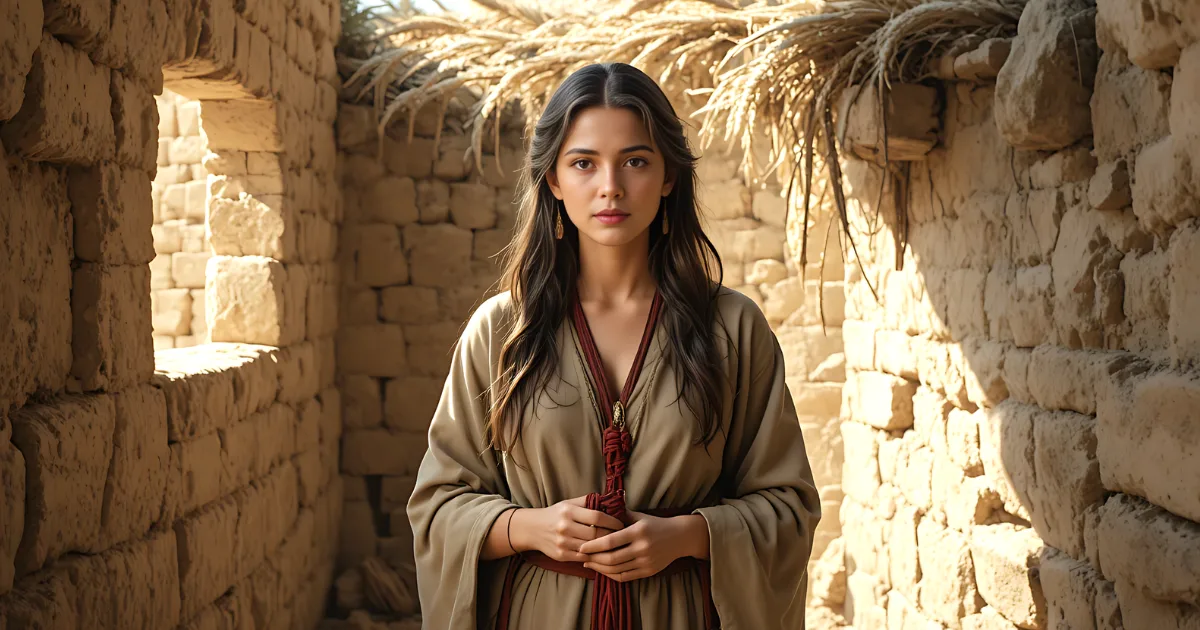
Who Was Rahab in the Bible?
Rahab in the Bible was a Canaanite woman living in Jericho, known for hiding Israelite spies before the city’s fall (Joshua 2). If you’re asking, “Who was Rahab in the Bible?” or “Who is Rahab in the Bible?” she was a woman marked by a difficult past but remembered for bold faith that led to her rescue and place in Jesus’ family line.
Rahab lived in the city of Jericho at a time when Israel was about to enter the Promised Land. Her home was built into the city wall, and she worked as a prostitute, which placed her on the margins of society. Unique among women in Scripture is her story, for she took a risk: she hid the spies Joshua sent and trusted in the God of Israel before she saw His might firsthand.
Her account matters because it shows how God works through unlikely people. Rahab moves from outsider to insider, from fear to faith. In a list of women in the Bible, her name carries weight not because of her past, but because of her response to God. In the sections ahead, we’ll walk through her story, her faith, her place in Jesus’ genealogy, and what her life still teaches today.
Key Facts About Rahab
When people ask who Rahab was in the Bible, these key facts give a clear, simple picture of her life, her choices, and why she still matters today among the women of the Bible.
- Rahab in the Bible was a Canaanite woman living in Jericho during the time of Joshua.
- She is identified as a prostitute, yet becomes known for her faith and courage.
- She helped Israelite spies by hiding them in her home (Joshua 2)
- Rahab lived in a house built into the city wall of Jericho.
- She believed that the God of Israel was the true God before Jericho fell.
- She made a deal with the spies to save her family.
- The scarlet cord in her window marked her home for protection.
- Rahab and her family were rescued when Jericho was destroyed (Joshua 6)
- She later married Salmon and became part of Israel.
- Rahab was the mother of Boaz, who later married Ruth.
- She became an ancestor of King David.
- Rahab is documented in the genealogy of Jesus Christ in the Bible (Matthew 1:5)
- She is honored in Hebrews 11 as a woman of faith.
- She is also mentioned in James 2 as an example of faith shown through action.
These facts show a full picture, not just of her past, but of her faith, her choices, and her lasting place in God’s plan.
Where Is Rahab Found in the Bible?
If you’re wondering where Rahab is found in the Bible, her story appears in both the Old and New Testaments. These references to Rahab in the Bible show her journey from an outsider in Jericho to a lasting example of faith among female Bible characters.
Old Testament Account (Joshua)
Rahab’s story begins in the book of Joshua. In Israel, spies enter Jericho, and Rahab hides them on her roof to protect them from the king’s men. Here we see her courage and her early faith in the God of Israel.
Later, in Joshua 6, Jericho falls after Israel marches around the city. While the walls collapse, Rahab and her family are spared because she trusted God and followed the instructions she received. Her rescue is not fortuitous; it is related directly to her decision to believe and act.
New Testament Mentions
Rahab’s story does not end in Joshua. She is remembered in key New Testament passages.
In the Bible, Rahab is commended for her faith. She is listed among those who trusted God before seeing the outcome.
James 2:25 points to her actions, showing that real faith is demonstrated in what we do, not just in what we say.
Matthew 1:5 includes her in the genealogy of Jesus, placing her directly in God’s plan of redemption.
Her story connects with others like Mary, Mary Magdalene, Salome, and Martha, women whose lives also show how faith works in real, everyday decisions.
The Story of Rahab in Joshua 2–6
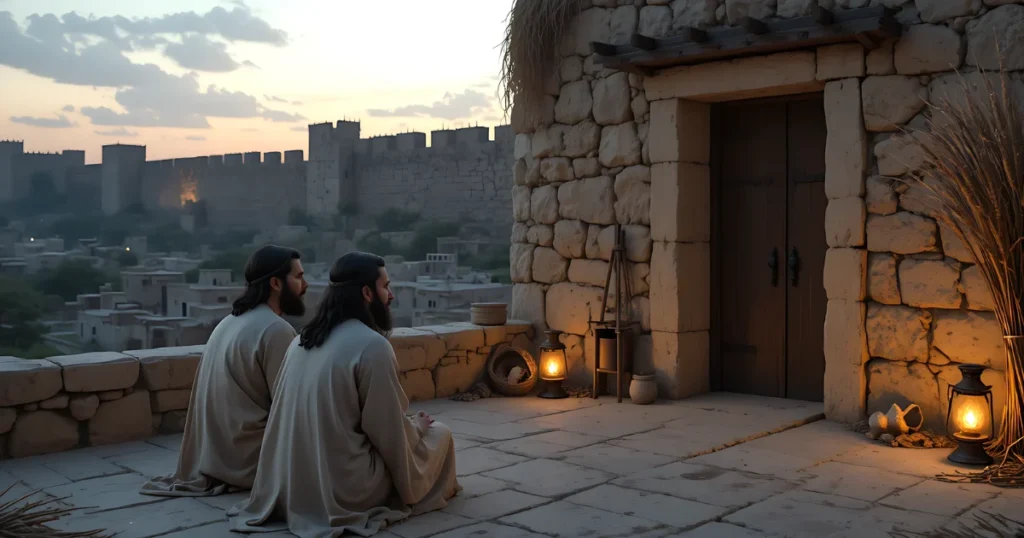
The story of Rahab in the Bible is one of the most powerful stories of women, as it shows how faith can begin amid fear. If you’re asking what the story of Rahab in the Bible is, it unfolds during a tense moment, right before Israel enters the Promised Land. This Rahab Bible story is not just about survival; it is about trusting in God before seeing the outcome.
Rahab Hides the Spies (Joshua 2)
The story of Rahab in the Bible begins when two Israelite spies enter Jericho to scout the land. And they came to Rahab’s home, which was surrounded by the town wall. When the king of Jericho hears about them, he sends men to capture them.
Rahab makes a bold move. She hides the spies on her roof under stalks of flax and tells the king’s men that the spies have already left. She lies to protect them, choosing to stand with Israel instead of her own people. This moment shows her risk. She would lose her life if she were detected.
Rahab’s Faith Statement
After hiding the spies, Rahab explains why she helped them. She says: ‘
"I know that the Lord has given you this land and that a great fear of you has fallen on us… for the Lord your God is God in heaven above and on the earth below" (Joshua 2:9, 11 NIV).
In simple terms, Rahab believed before anything happened. She had only heard what God had done for Israel, yet she was already convinced He was the true God. While the rest of Jericho was afraid, Rahab turned that fear into faith.
The Scarlet Cord and Promise
Rahab asks the spies to rescue her and her family when Jericho is attacked. They agree but give her clear instructions.
She must tie a scarlet cord in her window, and her whole family must stay inside her house. This string would be a sign of her home for protection, a visual gesture of trust.
Rahab accepts the condition without hesitation. She gathers her family and prepares, even though the city still stands. Her faith is not a matter of words but of deeds.
The Fall of Jericho (Joshua 6)
In Israel, they march around Jericho as God commands. On the seventh day, the walls collapse. The city is destroyed just as God foretold.
But Rahab’s house remains standing. She and her family are rescued exactly as promised.
This part of the story makes one thing clear. God had not forgotten her. Her choice to trust Him set her apart from the rest of the city.
Her journey connects with that of other women, such as Miriam, Mary of Bethany, Shiphrah, Aholibamah, Susanna (Daniel 13), and Naomi. Each faced different moments, but all show how faith shapes real decisions. Rahab’s story stands out because it begins in a place of fear and ends with rescue, showing that faith often starts before life makes sense.
Historical and Cultural Context of Rahab’s Life
To really understand the Rahab-Jericho story, it helps to look at the world she lived in. Jericho was not just any city. It was one of the oldest and most fortified cities in the area. This made Rahab’s actions all the more stunning.
Jericho as a Fortified City
Jericho was known for its strong defense system. The ancient city walls of Jericho were thick and layered, designed to keep enemies out. The city sat in a key location near trade routes, making it both wealthy and important.
If you want a deeper look at Jericho’s history, you can read more here:
For Israel, taking Jericho was the first major step into the Promised Land. For those within, it appeared that the end was near.
Rahab’s House in the Wall
Rahab’s home was built directly into the city wall. This was not an accident. Houses like hers were often situated along the outer edges, making them easier to access from both inside and outside the city.
This detail explains how she hid the spies and later helped them escape through a window. Her location made her house the perfect place for a secret meeting and a quiet exit.
Social Status and Reality
Rahab is described as a prostitute in the Bible, but it’s important to understand what that meant in her time. Often, this work was tied to survival, not just personal choice.
Women in her position often lived on the margins of society, with limited protection and few options. But God decided to work through her life, as He did with women like Puah, Priscilla, Rachel, Ruth, Gomer, and Sarah.
Her story reminds us that God does not ignore people because of their past or status. He sees the individual. He sees choices. He sees the faith.
Why Is Rahab Important in the Bible?
If you’re asking why Rahab is important in the Bible, her story stands out because she acted in faith before Israel even entered the land God had promised them. The significance of Rahab in the Bible lies not just in what she did, but in when she did it; she believed even while everything around her still looked uncertain.
First, Rahab acted early. She did not wait to see Jericho fall. She believed God for what she heard and not for what she saw. That kind of faith set her apart.
Second, she was a Gentile, not part of Israel. But God had her in His plan. This shows that His purpose was always greater than that of any one group of people. Rahab’s life is evidence that God welcomes outsiders into His presence.
Third, she risked her life to protect the spies. It wasn’t safe to help them. If discovered, she would have faced death. Her choice is a true display of courage, not just belief in words.
So, how did God use Rahab in the Bible? He used her to protect his people, to prove that faith can begin anywhere, and to draw her into a story so much broader than her background.
Among women in the Bible, Rahab’s story stands alongside those of Zipporah, Tabitha (Dorcas), Jael, and even Jezebel. Some chose faith, others chose control, but each life shows that decisions shape direction. Rahab’s choice changed everything.
Rahab’s Role in Jesus’ Genealogy
When we look at Rahab in the Bible, one of the most meaningful parts of her story is where it leads. The Rahab in the Bible’s genealogy shows that her life did not end with Jericho. It became part of God’s long plan that leads to Jesus. So, if you’re asking whether Rahab is in the genealogy of Jesus, the answer is yes, clearly and directly.
Who Did Rahab Marry?
Rahab married Salmon, not Joshua. This is a common point of confusion, but the Bible is clear. It says:
"Salmon the father of Boaz, whose mother was Rahab…" (Matthew 1:5 NIV)
This places Rahab firmly within the family line of Israel. She was no longer an outsider in Jericho. She joined God’s people via a new beginning and trust.
Rahab → Boaz → David → Jesus
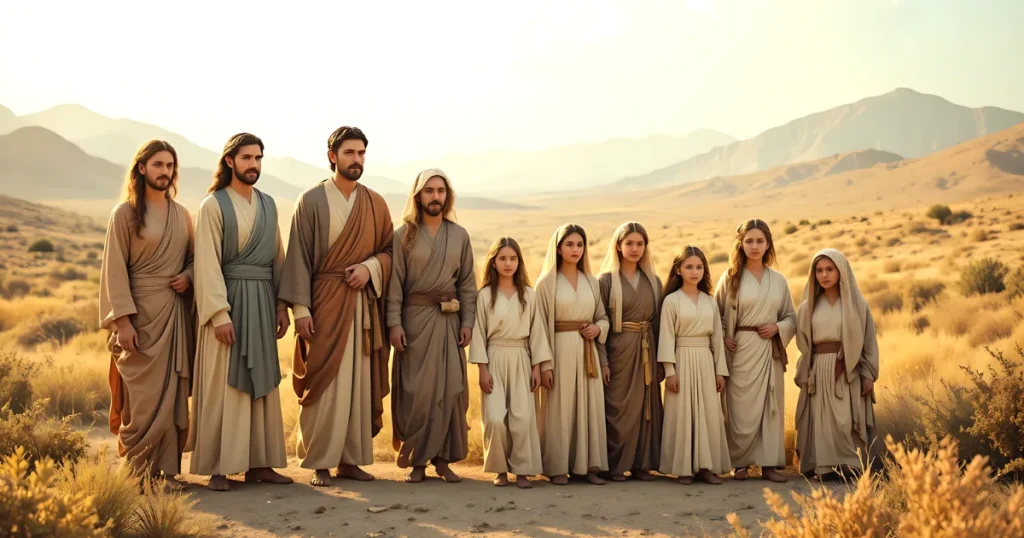
Rahab’s story continues through her son Boaz. Boaz later marries Ruth, another outsider who becomes part of God’s plan. Together, they have a son named Obed, who is the grandfather of King David.
From David’s line, generations later, comes Jesus.
This means the descendants of Rahab in the Bible include key figures in Israel’s history and lead all the way to Christ. Her tale is linked to the stories of others like Hannah, Esther, Elizabeth, and even Eve, all of whom are part of God’s larger plan.
Rahab’s place in this line is important. It shows that God includes people others might overlook. Her past did not block her future. Her faith, instead, put her right in the middle of a story that would change the world.
The Meaning of Rahab’s Faith and the Scarlet Cord
The meaning of Rahab’s scarlet cord is one of the most powerful parts of her story. It was not just a simple sign in a window. It showed trust, obedience, and a clear decision to stand with God. This Bible moment about the scarlet cord symbolism helps us see why Rahab is still remembered as a true example of faith among women in the Bible.
First, the cord symbolized trust and obedience. The spies told Rahab to tie it in her window so her house would be marked for protection. She did what they told her to do. She did not wait; she did not ask. Her safety depended on following that instruction to the letter.
Second, there is a quiet parallel to the Passover story. In Exodus, the Israelites painted their doors with blood to be spared. Similarly, Rahab’s scarlet cord marked her home. It showed that she trusted God’s rescue plan, even before the city fell.
Third, her story shows that faith is tied to action. Rahab didn’t have a mere heartfelt belief. She hid the spies, made the deal, and hung the cord in the window. Her faith moved her to act.
Her life stands alongside women like Delilah, Deborah, and Bathsheba, each with different paths and choices. Rahab’s story makes one thing clear. Real faith is not passive. It shows up in what we do, especially when the outcome is still uncertain.
Rahab as a Model of Faith in Action
Rahab’s life is a clear example of faith in action in the Bible because her belief showed up in what she did, not just what she said. In two ways, the New Testament refers to her tale: one focuses on her faith, the other on her acts.
In Hebrews 11, often called the chapter of faith heroes, Rahab is listed among those who trusted God before seeing results.
Hebrews 11:31 (NIV) says, "By faith the prostitute Rahab, because she welcomed the spies, was not killed with those who were disobedient."
This means her faith set her apart. Others in Jericho refused to trust God, but she did.
Then James points to the other side. In James 2:25, part of the teaching on faith and works, it says,
"Was not even Rahab the prostitute considered righteous for what she did when she gave lodging to the spies and sent them off in a different direction?"
In other words, her acts indicated her faith was genuine.
Rahab risked her life. She stood against her own city and chose God’s side. That kind of faith always costs something.
Her story connects with women like Bilhah, Abigail, and Abishag. Each faced different moments, but Rahab’s life shows that real faith is not safe or passive. It moves, it risks, and it trusts God even when the outcome is unknown.
What Can We Learn from Rahab’s Life
If you’re asking what we can learn from Rahab in the Bible, her life gives clear, real lessons that still apply today. Her story is not just history; it is a picture of high risk, faith, and a strong Rahab redemption story that stands out among female Bible characters.
First, God uses unexpected people. Rahab was not someone others would choose. She was on the edge of civilization. Yet God worked through her in a key moment. This reveals that He looks at the heart and what we choose, not just our past.
Second, your past does not define your future. Rahab’s life could have stayed the same. But one decision changed her path. She trusted God, and that decision brought her into a new identity and a new place in His people.
Third, faith sometimes looks risky. Rahab hid the spies, knowing the danger. She betrayed her hometown. Faith is not always easy or safe. Sometimes it means stepping out before you see the result.
Fourth, obedience brings protection. Rahab followed the instructions she was given, especially placing the scarlet cord in her window. She and her family were spared because she obeyed.
Her story connects with women like Anna (Prophetess), Apphia, and Abital. Each life shows that God works through real people making real choices. Rahab’s story reminds us that one step of faith can change everything.
FAQs About Rahab
Did Rahab lie in the Bible and was it wrong?
Yes, Rahab did lie when she hid the spies (Joshua 2). The Bible reports her action but does not praise the lie itself. Instead, it emphasizes her faith and her decision to protect God’s people. The focus stays on her trust in God, not on making her actions a model for every situation.
Why did Rahab help the spies?
Rahab helped the spies because she believed in God’s power. She had heard what He had done for Israel; she believed that He was the true God. What began as fear of Israel turned into faith, and that faith led her to act.
What happened to Rahab after the fall of Jericho?
Rahab and her family were spared and became part of Israel after the fall of Jericho. She lived among God’s people and joined their community. Her life never went back to what it had been. It advanced into something new.
Why is Rahab included in Hebrews 11?
Rahab is in Hebrews 11 because of her faith. She trusted God before seeing the outcome and acted on that belief. She is named alongside great figures to indicate that true faith means trusting God and responding to him.
How does Rahab’s story connect to Ruth?
Rahab and Ruth share a similar path. Both were foreigners who believed in God. Both became part of Israel, and both are in the lineage leading to Jesus. Their stories show that God’s plan includes people from every background.
What does Rahab’s story teach about second chances?
Rahab’s story shows that God’s grace is stronger than a person’s past. Her identity changed because of her faith and actions. She went from where she was to a new place in God’s plan, illustrating that real change can happen.
Final Thoughts on Rahab’s Story
Rahab in the Bible is a woman from Jericho who chose to trust God and act on that faith, even when it put her life at risk.
Her story is a clear picture of change. She began as an outsider, living on the edge of society, but became part of God’s people through one bold decision. That change didn’t come from her background; it came from her religion. Her life reminds us that God is not focused on where someone starts but on the direction they choose.
When we ask what we can learn from Rahab in the Bible, the answer is simple and real. Faith is more than a conviction. It is something we live out, even when it feels uncertain. Rahab acted before she saw the outcome, and that choice placed her inside God’s bigger plan, even becoming part of the family line that leads to Jesus.
Among women in Scripture, her story stands as a reminder that God sees faith, not just history. One decision can change the course of a life.
A simple takeaway to sit with: where is God asking you to trust Him before you see the result?
If you want to keep growing in these stories, take time to read more posts on Women of the Bible and see how faith shows up in real life.