

Who Was Vashti in the Bible?
In the Bible, Vashti was the queen of Persia and the wife of King Ahasuerus, also known as King Xerxes. In Esther 1, Queen Vashti became known for refusing the king’s command to appear before his guests at a royal banquet. Her decision led to her removal as queen and opened the way for Esther’s rise in Persia.
When people ask, “Who was Vashti in the Bible?” They often focus on one moment: her refusal. But her story carries much deeper meaning. Vashti appears briefly in the Book of Esther, yet her actions determined the course of the rest of the biblical story. Before Esther became queen, Vashti held the position of queen in the Persian Empire.
The story of Vashti in the Bible raises difficult questions about courage, authority, dignity, and consequences. Some readers saw her as heroic and noble. Others debate whether she acted wisely by refusing the king. That tension is one reason her narrative is still relevant today, especially for women studying leadership, conviction, and religion under pressure.
For many readers exploring the list of women in the Bible and other women in Scripture, Vashti stands out because she did not stay silent when faced with a public command that may have humiliated her. Her story also helps readers to better grasp Esther’s later role in God’s providence.
As we move into Esther chapter 1, we’ll look closely at the Persian royal court, the feast of King Xerxes, and why Queen Vashti refused the king’s order in the first place.
Important Facts About Vashti in the Bible
| Fact | Details |
|---|---|
| Name | Vashti |
| Meaning of Name | Possibly “beautiful,” “best,” or “beloved” |
| Bible Location | Esther chapter 1 |
| Role | Queen of Persia |
| Husband | King Ahasuerus, also called Xerxes I |
| Time Period | Persian Empire during the Jewish exile |
| Known For | Refusing the king’s command during a royal banquet |
| Main Scripture | Esther 1:9 to 22 |
| Succeeded By | Esther |
| Major Themes | Courage, dignity, authority, consequences |
| Biblical Importance | Her removal prepared the way for Esther to become queen |
The account of Queen Vashti in the Bible may appear brief, but it plays a major role in the story of Esther. Vashti, queen of Persia, was at the center of a royal crisis that affected the future of the Persian court. Her refusal in Esther chapter 1 became the key moment that eventually brought Esther into the palace.
Many readers studying Vashti in Esther ask, “What happened to Queen Vashti in the Bible after she refused the king’s order?” Scripture says she was removed from her royal position after the king’s advisers feared her actions would influence women throughout the empire.
The story of Queen Vashti remains one of the most discussed accounts among female Bible characters because it touches on power, dignity, wisdom, and public pressure. Like Priscilla, Phoebe, Rachel, and Rahab, Vashti continues to spark meaningful conversations about women’s roles in Scripture.
You may want to read this post: Who Was Zilpah in the Bible? Leah’s Servant and the Mother of Gad and Asher
What Does Vashti Mean in the Bible?
Many readers studying women in the Bible ask what “Vashti” means and whether her name relates to her story in Esther 1. The exact origin of the name is still debated, but many scholars believe it comes from an ancient Persian word meaning “beautiful,” “best,” or “excellent.”
The meaning of the name Vashti in the Bible is not directly explained in Scripture. Unlike some biblical names that clearly describe a person’s role or future, Vashti’s name is somewhat uncertain. Now she lived during the Persian Empire; thus, her name is probably Persian rather than Hebrew.
Even so, many readers notice how the possible queen Vashti’s meaning fits parts of her story. In Esther 1, she is a queen (we know she is beautiful and royal). Yet her story also became connected to deeper themes such as dignity, courage, and queenship. Vashti is not renowned for her beauty but for the difficult decision she took in the royal court.
At the same time, it is important not to overstate symbolic meanings. The Bible never states that her name caused her to act that way or foretold her future. Still, her account has led many Christians to reflect on honor, wisdom, and women’s responses under pressure and in the face of authority.
Like Rebekah, Ruth, Sarah, and Salome, Vashti remains one of the most discussed female figures in Scripture because her story continues to raise meaningful questions about character, influence, and faith.
Vashti in the Bible Verse and Key Passages
You can find Vashti’s main story in the Bible, in the book of Esther, chapters 1 and 2. These verses introduce Queen Vashti in Esther chapter 1, describe her refusal during the king’s banquet, and explain how her removal prepared the way for Esther to become queen. Although Vashti appears only briefly, her story serves as the starting point for the entire Book of Esther.
Where Is Vashti Mentioned in the Bible?
- Esther 1:9 to 12, Vashti refuses King Xerxes’ command during the palace feast.
- Esther 1:19: the king issues a royal decree removing Vashti from the throne.
- Esther 2:1-4: the search for a new queen begins, leading to Esther’s rise.
One important Queen Vashti scripture passage is Esther 1:12 (NIV):
"But when the attendants delivered the king's command, Queen Vashti refused to come. Then the king became furious and burned with anger."
This moment becomes the turning point of the chapter. At a royal supper, replete with drinking and public display, Vashti resisted the king’s command to come before his guests. The Bible does not fully explain her reasons, but her decision shocked the Persian court.
Esther 1:9-22 focuses on the banquet, the refusal, and the king’s reaction. Esther 2 then shifts toward God’s unseen providence as Esther enters the story. In many ways, Vashti’s removal created the opening for Esther’s future role in saving the Jewish people.
Among the many women of the Bible, Vashti’s account stands out because a single decision changed the course of an entire biblical narrative. Like Shiphrah, Susanna, Tabitha, and Zipporah, her story still sparks discussion about courage and conviction.
Historical Background of Queen Vashti and the Persian Empire
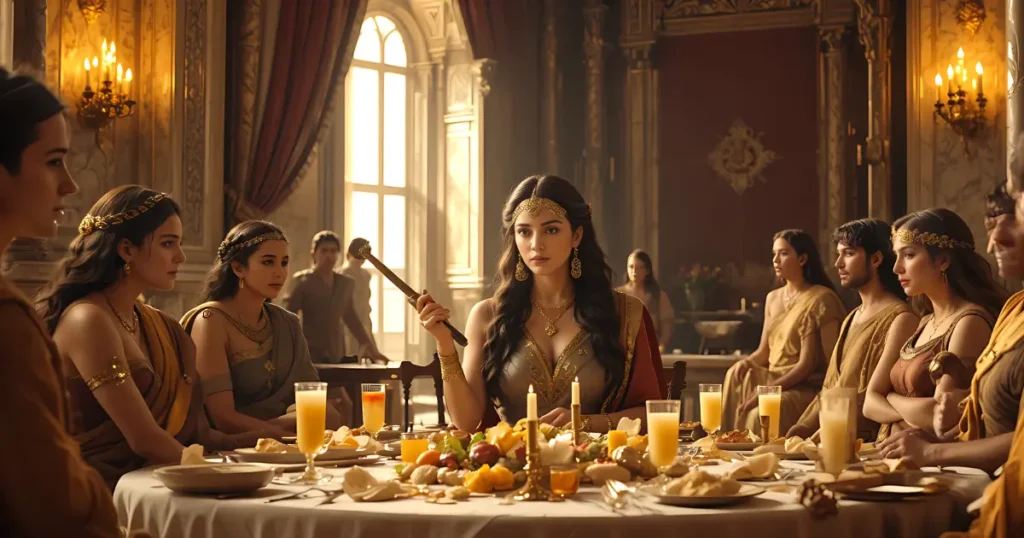
To understand Vashti’s story, we first need to understand the Persian Empire and the world she lived in. The events in Esther took place during the reign of King Xerxes, also known as King Ahasuerus in many Bible translations. Xerxes ruled one of the largest empires of the ancient world, stretching from India to Ethiopia (Esther 1:1).
In ancient Persia, kings displayed power through wealth, military strength, and public ceremonies. Esther 1 opens with a massive royal banquet that lasted for many days. These feasts were not just parties. They were political events designed to show the king’s authority, influence, and riches before nobles and officials from across the empire.
The Bible says Queen Vashti also held a separate banquet for women in the royal palace (Esther 1:9). This detail provides insight into Persian royal customs and the separation of men’s and women’s gatherings in royal settings.
During the final days of the palace feast, the king commanded Vashti to appear before his guests to display her beauty. We are not told everything in the text, but many Bible scholars think there was an element of public humiliation in the request, especially because the king and his guests had been drinking extensively.
In Persian court culture, a queen’s public actions reflected directly on royal authority. Not accepting the king was not seen as a matter of private opinion. It became a political issue tied to honor, reputation, and control. That is why the king’s advisers reacted so strongly in Esther 1:16 to 20. They feared Vashti’s refusal would influence women throughout the empire.
This honor-and-shame culture helps explain why her decision caused such a crisis. It also shows why Vashti remains one of the most discussed women in Scripture and in many Bible women’s stories today.
Like the accounts of Mary, Mary Magdalene, Martha, and Susanna (Daniel 13) and Miriam, Vashti’s account continues to shape conversations about women, leadership, and courage in the Bible.
Why Did Queen Vashti Refuse King Xerxes?
One of the biggest questions readers ask is, “Why did Queen Vashti refuse the king’s command in Esther chapter 1?” The Bible describes the event clearly, but it does not directly explain her motive. That silence has led to many discussions among Bible teachers, historians, and Christians studying Women in Scripture and other female Bible characters.
Esther 1:10 to 12 says that King Xerxes was “in high spirits from wine” during the royal banquet. After days of feasting and drinking, he commanded Queen Vashti to appear before the guests wearing her royal crown.
Esther 1:12 (NIV) says:
"But when the attendants delivered the king's command, Queen Vashti refused to come. Then the king became furious and burned with anger."
This simple verse has sparked centuries of debate.
Many scholars believe Vashti refused because the request may have involved public shame or humiliation. In ancient Persian culture, royal women were frequently kept out of sight. Some historians claim that the monarch wished to flaunt her beauty to drunken nobility during the feast. If true, Vashti’s refusal may have been an act of dignity, wisdom, and personal honor.
Others take a different view. Some argue that Vashti openly rejected royal authority, which created a political crisis in the empire. In Persian culture, the word of a king carried great weight. To reject it in public would be an act of defiance against leadership and social order.
Jewish traditions outside the Bible sometimes add extra details to Vashti’s story, including ideas about pride or punishment. However, it is important to separate later traditions from the actual biblical text. Scripture itself does not fully explain why she refused, and Christians should be careful not to say more than the Bible says.
That balance matters. Vashti may represent courage and conviction, but her story also raises questions about obedience, power, and consequences. The Bible accurately relates the occurrence without making any immediate judgment about her character.
This tension is one reason her story continues to connect with readers today. Most women know the pressure of dealing with authority, respect, public expectations, and personal boundaries.
Like the accounts of Mary of Bethany, Leah, Jael, and Hagar, Vashti’s account reminds readers that some of the most discussed women in Scripture faced difficult choices under pressure.
What Happened to Queen Vashti in the Bible?

Many people ask what happened to Queen Vashti in the Bible after she refused King Xerxes’ command. Esther, chapter 1, explains that her decision quickly became a political issue inside the Persian court.
After Vashti refused to appear at the royal banquet, the king’s advisers became concerned about the wider effect her actions could have across the empire. They feared that women throughout Persia would hear of the queen’s refusal and begin insulting their husbands and leaders.
Esther 1:16-18 describes their reaction. One adviser, Memukan, warned that Vashti’s actions could influence families throughout the kingdom. In retaliation, the advisers proposed a permanent royal edict against her.
Esther 1:19 (NIV) says:
"Therefore, if it pleases the king, let him issue a royal decree and let it be written in the laws of Persia and Media, which cannot be repealed, that Vashti is never again to enter the presence of King Xerxes."
This verse explains why Vashti was removed from the throne. Her refusal was perceived not merely as a personal decision but as a challenge to royal authority and political power.
For readers wondering why Queen Vashti was banished, the Bible presents her removal as the direct consequence of the conflict in Esther chapter 1. Then the king’s attendants went out hunting for a new queen, and that’s how Esther came to the palace and became queen of Persia.
Among the many women in Scripture, Vashti’s story stands out because a single public decision changed the course of biblical history and prepared the way for Esther’s future role.
Did Queen Vashti Die?
Some people ask, “Did Queen Vashti die after being removed as queen?” The Bible never says that Vashti was executed or killed. Scripture only states that she lost her royal position and was no longer allowed to appear before King Xerxes.
Later Jewish traditions and historical theories sometimes add extra details, but the biblical text remains silent about her later life. To be faithful to Scripture, we should say no more than the Bible itself discloses.
Like Hannah, Eve, Elizabeth, Candace, and Esther, Vashti remains an important figure in conversations about faith, leadership, and women in the Bible.
Vashti and Esther in the Bible Compared
The Bible closely connects the stories of Esther and Vashti. Before Esther became queen, Vashti held the title. Both women lived under the rule of King Xerxes, yet they responded to authority in very different ways. That contrast is one reason the discussion of Vashti and Esther in the Bible remains important for Christians studying leadership, wisdom, and courage.
In Esther, chapter 1, Vashti refused the king’s command to appear before his guests during a royal banquet. Her decision was public and instant. But by later in the story, Esther was in a different predicament. In Esther chapters 4 and 5, she risked approaching the king without an invitation to save the Jewish people.
Both women showed courage, but in different forms.
Vashti’s courage appeared in her refusal. Esther’s courage appeared in careful action and timing.
This comparison between Esther and Vashti also shows two different approaches to biblical leadership. Vashti rose to a command she could have considered dishonorable. Esther worked within the royal system to wisely sway the king and defend her people.
Vashti vs Esther
| Vashti | Esther |
|---|---|
| Refused to appear before the king | Approached the king uninvited |
| Lost her position as queen | Became queen of Persia |
| Acted publicly and directly | Acted carefully and strategically |
| Connected with dignity and refusal | Connected with sacrifice and rescue |
| Helped prepare the way for Esther | Helped save the Jewish people |
Even though people often frame the discussion as Vashti vs Esther, the Bible does not present them as enemies. Instead, both ladies had prominent roles among the queens of the Book of Esther.
Without Vashti’s removal, Esther may never have entered the palace. In that sense, both women shaped Jewish history and became memorable female Bible characters among the many women in the Bible.
Like Delilah, Deborah, Bilhah, and Bathsheba, Vashti and Esther continue to spark discussion about influence, wisdom, and the difficult choices women faced in Scripture.
Characteristics of Queen Vashti in the Bible
When people study the characteristics of Queen Vashti in the Bible, they often notice the significant influence she wielded, despite her appearance in only one chapter. Her actions in Esther chapter 1 created a turning point in the biblical story and continue to spark discussion among Christians studying leadership, courage, and wisdom in the stories of biblical women.
The Bible provides few personal details about Vashti, yet her decisions reveal several important traits. In a mighty royal system, she lived, yet she chose to refuse the king’s public demand. That moment required courage because her decision carried serious consequences.
5 Characteristics of Queen Vashti
1. Courage
Vashti stood up to the pressure from the empire’s most powerful ruler.
2. Conviction
She did not change her decision even when confronted with royal authority.
3. Dignity
Many readers believe she refused because she did not want to be publicly displayed during the king’s banquet.
4. Leadership
Her actions influenced discussions throughout the Persian court and affected the entire empire.
5. Wisdom
Although people debate her choices, some view her response as thoughtful rather than reckless.
One reason people continue to discuss Vashti’s leadership qualities is that the Bible does not clearly label her as entirely right or wrong. That tension makes her story seem real. Some Christians stress obedience and authority. Others focus on personal honor and conviction.
Her account also reminds readers that influence is not always measured by the number of chapters someone receives in Scripture. A brief appearance can have a long impact on biblical history.
Like Athaliah, Atarah, Adah, and Ahinoam, Vashti remains one of the most discussed women in the Bible for her association with leadership and authority.
Lessons From Vashti in the Bible
The lessons from Vashti in the Bible continue to resonate with people because her story addresses pressure, authority, courage, and consequences. Esther 1 presents a brief overview of her past, but her choices set the tone for the entire Book of Esther.
One of the big questions people ask is, “What can we learn from Vashti in the Bible today?”
First, Vashti’s story reminds us that courage sometimes comes with a cost. Whether readers agree or disagree with her decision, she understood that refusing the king could have a lasting impact on her future. Her example demonstrates that it is rarely easy to stand by one’s convictions.
Second, leadership affects more than one person. The king’s advisers immediately worried that Vashti’s actions would influence families across the empire. Scripture often opens our eyes to the decisions of leaders that affect whole communities, for good or ill.
Another important spiritual lesson from Queen Vashti is that God can work through difficult events and human failures. In the Book of Esther, God’s name is never mentioned, but we see His providence throughout the plot. Vashti’s removal eventually opened the way for Esther to become queen and later protect the Jewish people from destruction.
This does not mean every painful event is good in itself. Instead, it reminds believers that God can still work through broken situations and imperfect people.
Vashti’s story also teaches the importance of balancing dignity and wisdom. Some readers emphasize her courage. Others focus on the consequences she faced. Both realities count. The Bible often presents people honestly without turning them into perfect heroes or villains.
These biblical lessons about Vashti continue to resonate with modern readers because many people understand what it feels like to face pressure, public expectations, or difficult authority figures.
As a biblical example, Vashti encourages Christians to reflect on courage, humility, leadership, and wise decision-making. Her story remains one of the most studied stories among the Women of the Bible, directing readers beyond human power to God’s greater plan.
Like the accounts of Deborah, Abigail, and Ruth in the Bible, Vashti’s account continues to offer meaningful insight into faith, wisdom, and courage under pressure.
Theological Themes in Vashti’s Story
One of the most important theological themes in Esther 1 is something readers may miss at first glance. The Book of Esther never directly mentions God’s name, yet His presence is evident throughout the story. This is especially true when studying God’s providence in the roles of Esther and Vashti within the larger biblical narrative.
Vashti’s removal may have looked like only a political event inside the Persian court, but it became part of something much bigger. Esther later helped save the Jewish people from destruction, and her departure opened the way for her to become queen. Scripturally, it demonstrates how God can act in human decisions, royal struggles, and even less-than-perfect situations.
The story also raises important questions about Vashti and divine sovereignty. Vashti made a real choice, and King Xerxes made real choices too. Their actions had real effects. But at the same time, God’s broader plan continued behind the scenes.
This balance between human free will and divine sovereignty appears throughout Scripture. People always behave according to their own preferences and decisions, but God can still influence history toward His goals.
Another important theme is providence. In the Bible, providence refers to God quietly working through ordinary events to accomplish His will. Esther’s story does not begin with prophets or miracles. It begins with feasts, political turmoil, royal rage, and a queen’s rejection. But God was still at work.
For readers studying Women in Scripture, Vashti’s account reminds us that even moments of conflict and uncertainty can become part of God’s greater purpose in ways people may not immediately understand.
Like Anna, Abishag, Apphia, and Abital, Vashti plays a meaningful role in the unfolding story of God’s people, even through a brief appearance in Scripture.
FAQs About Vashti in the Bible
Was Queen Vashti right or wrong?
The Bible does not directly say whether Queen Vashti was right or wrong. Esther chapter 1 records her refusal to obey King Xerxes’ command, but Scripture does not clearly praise or condemn her actions. Some readers see her answer as an act of daring and dignity, while others see it as an insult to lawful authority. The story intentionally maintains the tension, which is one reason Christians still discuss her today.
What Kind of Woman Was Vashti in the Bible?
Many readers who ask what kind of woman Vashti was in the Bible describe her as courageous, dignified, and strong-minded. Esther, chapter 1, introduces her as a Persian queen who defied the king’s public demand at a royal dinner. Although the Bible gives only limited details about her personality, her decision had major consequences and shaped the rest of Esther’s story. Her account continues to spark discussion about wisdom, authority, and conviction.
What Does Vashti Symbolize in the Bible?
For many readers, what Vashti symbolizes in the Bible depends on how her actions are interpreted. To some, she’s an icon of personal conviction, courage, and dignity under pressure. Others have themes of authority, obedience, and consequence.” In the larger biblical narrative, Vashti also symbolizes a turning point in God’s providence, as her removal prepared the way for Esther to become queen and to help protect the Jewish people.
Final Thoughts on the Story of Vashti in the Bible
The story of Vashti in the Bible may cover only a brief part of Esther chapter 1, but its impact extends throughout the entire Book of Esther. Queen Vashti marked a major turning point in biblical history when her refusal led to Esther becoming queen of Persia.
For many readers studying Women in Scripture, Vashti remains one of the most debated women in the Old Testament. Some focus on her courage and dignity. Others focus on the consequences of her decision and the questions surrounding authority and obedience. The Bible doesn’t give her story a simple answer, and that honesty is part of what makes it important.
The story of Vashti in the Bible also reminds us that God often works through ordinary human decisions, political events, and difficult moments. God’s name is never specifically spoken in Esther, yet His providence is clear throughout the story. Vashti’s removal prepared the way for Esther’s future role in protecting the Jewish people.
One of the lasting lessons from Vashti is that choices matter. Courage can make history. Leadership influences others. Wisdom and conviction must often be carefully matched.
As a biblical woman, Vashti continues to challenge readers to think deeply about honor, influence, public pressure, and faithfulness in difficult situations.
If you enjoyed this study, take time to read more about other remarkable Women in Scripture and how their stories reveal God’s work through imperfect but important people throughout the Bible.