Introduction of Sarah in the Bible
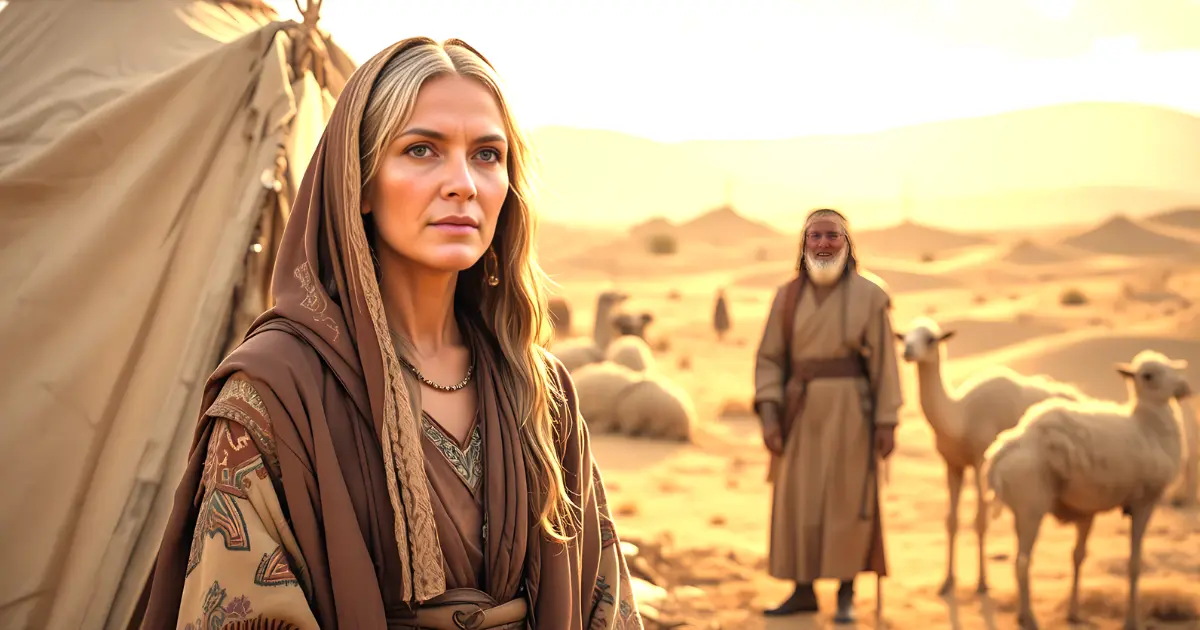
Sarah in the Bible was Abraham’s wife and Isaac’s mother. If you’ve ever wondered, “Who was Sarah in the Bible?, Scripture identifies her as a woman chosen by God to become the mother of the nation through which His covenant promises would continue. Originally called Sarai, she remained childless for many years before giving birth to Isaac at the age of ninety (Genesis 17:15-16, 21:1-3, NIV).
Known as “Sarah wife of Abraham,” and “Sarah, mother of Isaac,” she appears throughout Genesis as one of the most important women of Scripture. Her story includes waiting, doubt, travel, family conflict, and the fulfillment of God’s promises.
Her account also includes difficult moments, especially her relationship with Hagar and the painful consequences that followed. Yet the Bible does not hide her weaknesses. Instead, it shows how God continued to work through an imperfect person.
Later, the New Testament points to Sarah’s faith as an example for believers (Hebrews 11:11; 1 Peter 3:6). Her life remains one of the most studied stories in the list of women in the Bible because it reveals an important truth: God’s promises often unfold according to His timing, not ours.
Quick Facts About Sarah and Her Biblical Story
Before exploring her journey in detail, this table summarizes the most important facts about Sarah in Genesis. The Bible presents Sarah as Abraham’s wife, Isaac’s mother, and a central figure in God’s covenant story. These details provide a simple reference point for the events discussed throughout this article.
| Fact | Answer |
|---|---|
| Original name | Sarai |
| New name | Sarah |
| Husband | Abraham |
| Son | Isaac |
| Handmaid | Hagar |
| Main book | Genesis |
| Isaac’s birth | Sarah at 90 |
| Age at death | Sarah at 127 |
| Burial place | Cave of Machpelah |
| Major themes | Faith, promise, motherhood, waiting |
What Does Sarah Mean in the Bible?
Many readers ask, “What does Sarah mean in the Bible?” The most common meaning of Sarah is “princess.” But in Scripture, her name has a meaning beyond just a definition. The Bible connects her new name with God’s promise that she would become the mother of many nations.
From Sarai to Sarah
The change from Sarai to Sarah appears in Genesis 17:15 (NIV):
“God also said to Abraham, ‘As for Sarai your wife, you are no longer to call her Sarai; her name will be Sarah.'”
This moment marks a turning point in her story. Readers often ask, Why did God change Sarai’s name to Sarah? The immediate biblical answer appears in God’s promise in Genesis 17. Her new name mirrored the destiny God had already intended for her, even if she had not yet seen that promise fulfilled.
A Name Connected With God’s Promise
In Genesis 17:16, God declared that Sarah would become the mother of nations and that kings would come from her descendants. Her identity was no longer defined by years of waiting or childlessness.
Some later Jewish traditions offer additional explanations of the Hebrew meaning behind her name. But Scripture itself highlights her role in God’s covenant, not linguistic minutiae.
Sarah’s story also connects naturally with other biblical women who experienced seasons of waiting. Like Hannah, who prayed for a child, and Rachel, who also struggled with infertility, Sarah reminds readers that God’s plans often unfold over time. Their stories show different paths, yet each woman became part of God’s larger purpose.
Her Journey With Abraham Through Genesis

Some of the most important chapters in Genesis weave together the lives of Sarah and Abraham. Sarah’s story in the Bible is not simply the account of a wife who followed her husband across unfamiliar lands. It is the story of a woman who lived through uncertainty, family troubles, deferred promises, and dramatic moments that shaped Israel’s future.
When readers summarize Sarah’s story in the Bible, they often focus on Isaac’s birth. Yet her journey began many years earlier and included events that tested both her patience and her trust in God.
Leaving Home and Entering an Uncertain Future
Sarah first appears as Sarai in Genesis 11:29-31. She married Abram before God called the family to leave their homeland and travel to Canaan.
Genesis also introduces an important detail that would shape the rest of her life: she could not have children. This brief statement was significant in the ancient world, where family lines and inheritance depended on descendants.
When Abram obeyed God’s call in Genesis 12:1-5, Sarai joined him on the journey. She left familiar surroundings as she journeyed with her husband into an unknown future.
Sarah in Egypt and the Question of Her Sisterhood
A famine forced Abram and Sarai to travel to Egypt (Genesis 12). Fearing for his safety, Abram asked Sarai to say that she was his sister.
Many readers ask, “Was Sarah Abraham’s sister?” According to Genesis 20:12, Abraham later explained that Sarah was his half sister because they shared the same father but had different mothers.
Even so, Abraham’s fear left Sarah vulnerable. God intervened and protected her by bringing judgment on Pharaoh’s household. This event showed that despite human failing, God’s plans for Sarah would still be fulfilled.
A Second Encounter in Gerar
Years later, a similar situation occurred in Gerar during Abraham’s interaction with Abimelech in Genesis 20. Although the circumstances resembled the earlier event in Egypt, the two accounts are separate and should not be treated as the same story.
God stepped in again to save Sarah. He warned Abimelech in a dream and prevented any harm from coming to her. The pattern repeats, showing God’s faithfulness to keep the family through which His covenant promises would continue.
The Long Wait for a Child
One of the most painful parts of Sarah’s journey was her barrenness. In a culture where children represented both inheritance and security, years of infertility brought deep emotional and social challenges.
Yet God’s promise to Abraham included descendants as numerous as the stars. Sarah’s inability to conceive made that promise seem impossible from a human perspective, which is precisely why this part of her story matters so much.
Her childlessness was no side detail. It stood at the center of the covenant story and set the stage for God’s future work through Isaac.
Like Sarah, other women in Genesis also faced complex family relationships and questions about inheritance. Leah and Rebekah each played a significant role in the generations that followed, making their stories valuable additions to any personal Bible study or character study of the women in Scripture.
Sarah, Hagar, and the Birth of Isaac
This part of Sarah’s journey contains some of the most difficult and important events in Genesis. It includes family conflict, delayed expectations, and God’s repeated promise to fulfill His plan.
The relationship between Sarah and Hagar shows what can happen when people try to solve a problem on their own timeline. At the same time, these chapters also show God’s faithfulness. Even when people made painful choices, His promises kept moving forward.
Why Sarah Gave Hagar to Abraham
Genesis 16 records one of the most debated moments in Sarah’s life. After years of infertility, she gave her servant Hagar to Abraham so that he might have a child through her.
Many readers ask, Why did Sarah give Hagar to Abraham? In the ancient Near East, some families used servant women as surrogates when a wife could not have children. However, historical customs should provide only background information because Scripture focuses on the choices made within this specific family.
Instead of bringing peace, the arrangement created conflict. Hagar became pregnant, tension developed between the two women, and Sarah treated Hagar harshly.
The Bible presents these events honestly. It does not hide Sarah’s pain, excuse her actions, or ignore Hagar’s suffering.
For additional historical context, see Hagar and Ishmael at My Jewish Learning.
God’s Covenant and the Promise of Isaac
In Genesis 17, God made it clear that the promised son would come through Sarah. This chapter strengthened the Abraham and Sarah covenant by confirming that she would give birth despite her age.
This moment also reveals Sarah’s role in God’s covenant. She was not only a peripheral character in Abraham’s narrative. God specifically included her in His promise and declared that nations and kings would come through her descendants.
Although Ishmael was Abraham’s son, God stated that Isaac would carry the covenant line. That promise shaped Israel’s future and eventually pointed to God’s larger purpose of restoration.
When Sarah Laughed at the Impossible
Genesis 18 records Sarah’s laughter after she overheard God’s promise that she would have a son. The idea seemed impossible at almost ninety years old.
Many people ask, Why did Sarah laugh at God’s promise? Her reaction reflected the tension between human limitations and divine power. At first, her laughter expressed disbelief. Later, it would take on an entirely different meaning.
Isaac’s Birth and the Laughter of Joy
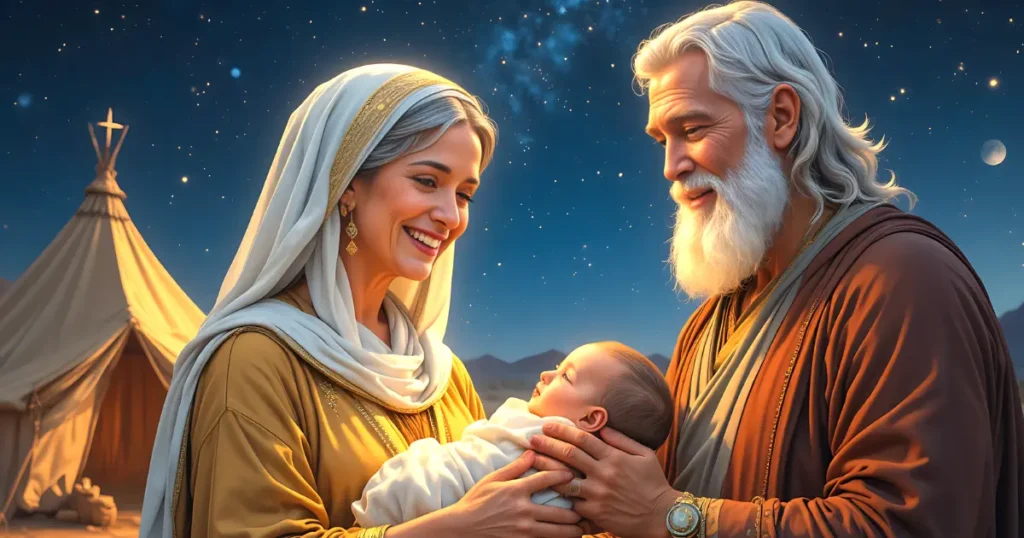
Genesis 21 describes the long awaited birth of Isaac. God kept his word, just as he said he would.
If you’ve wondered how old Sarah was when Isaac was born, the answer is in Genesis 17:17 and 21:5. Abraham was 100 years old, Sarah was 90, and at last she received the son she had waited decades for.
Isaac’s name is connected with laughter, creating a beautiful contrast with Sarah’s earlier response. Her laughter changed from doubt to joy as she witnessed God’s faithfulness firsthand.
Many stories of women in the Bible begin with hardship and end with God’s provision. Sarah’s experience echoes themes found in the accounts of Eve and Tamar, two women whose lives also shaped the family line that runs through Scripture.
Sarah’s Faith, Struggles, and Character
A careful reading of Genesis shows a woman who experienced both remarkable faith and very human weakness. To understand Sarah’s character in the Bible, look at her entire journey rather than one event. Scripture paints a balanced picture that includes trust, impatience, influence, fear, hope, and endurance.
A Woman Who Trusted God Through Waiting
Few people in Scripture waited as long for a promise to be fulfilled as Sarah. Decades passed between God’s promise and Isaac’s birth, yet God remained faithful.
Hebrews 11:11 (NIV) says:
“And by faith even Sarah, who was past childbearing age, was enabled to bear children because she considered him faithful who had made the promise.”
This verse highlights Sarah’s faith as confidence in God’s character rather than confidence in her circumstances. Her story reminds believers that God’s timetable often looks very different from their own.
For additional insight into Hebrews 11, see The Faith of Noah, Abraham, and Sarah at Desiring God.
A Woman With Real Human Struggles
The Bible does not cover up Sarah’s failures. Her decisions reflected the same fears and uncertainties that many people experience today.
Her attempt to solve infertility through Hagar, her laughter when she heard God’s promise, and her moments of doubt reveal an honest picture of her humanity.
When readers ask, What does the Bible say about Sarah’s faith? The answer includes both trust and struggle. A realistic character analysis should recognize both. Ignoring her weaknesses would remove an important lesson from her story.
Strength, Influence, and Responsibility
Examining Sarah’s strengths and weaknesses shows why she remains such an important biblical figure. She exercised significant influence within Abraham’s household and played an active role in protecting Isaac’s place within the covenant family.
At the same time, Scripture does not present her as a flawless heroine or a passive observer. Instead, it portrays a woman whose choices carried real consequences.
As one of Israel’s great matriarchs, Sarah left a legacy that reached far beyond her lifetime. Her story also connects naturally with the accounts of Rahab and Ruth, two women whose faith shaped future generations in very different ways.
Her Legacy in the New Testament
Sarah’s story does not end in Genesis. Later biblical writers returned to her life to explain faith, spiritual inheritance, and godly living. Sarah in Hebrews 11, Sarah in 1 Peter 3, and Sarah in Galatians 4 each highlight a different aspect of her legacy.
These passages do more than retell familiar events. They show how the New Testament interprets Sarah’s place in God’s larger plan and why her life still matters for Christians today.
Sarah, an Example of Faith
Hebrews 11:11 places Sarah among Scripture’s great examples of faith.
“And by faith even Sarah, who was past childbearing age, was enabled to bear children because she considered him faithful who had made the promise.”
This passage does not focus on her mistakes. Instead, it emphasizes her trust in God’s promise. The writer of Hebrews includes her because her life demonstrated that faith depends on God’s faithfulness rather than human ability.
Sarah as an Example for Christian Women
In 1 Peter 3:5-6, Peter points to Sarah as an example of a godly woman.
The passage encourages Christian women to cultivate inner character and trust in God. Rather than making broad cultural claims, Peter uses Sarah’s relationship with Abraham to illustrate a life shaped by faith and respect.
Sarah and Hagar in Paul’s Argument
In Galatians 4:21-31, Paul uses Sarah and Hagar to explain a theological argument about freedom, slavery, and God’s promise.
This passage should not be read as a simple retelling of Genesis. Instead, Paul uses the two women symbolically to contrast life under the law with life under the promise. His focus is theological, while the original Genesis account remains a historical narrative.
Readers interested in the continuing influence of biblical mothers may also enjoy related studies of Mary, the Mother of Jesus, and Elizabeth, two women whose stories reveal God’s work across generations.
Her Final Years, Death, and Burial
The final chapter of Sarah’s life brings her story to a quiet and meaningful close. Genesis records both Sarah’s death and the first permanent piece of land Abraham owned in Canaan. These events may seem simple at first, yet they held profound significance in God’s covenant plan.
Sarah’s Death at 127
Genesis 23:1-2 tells us that Sarah died at 127 in Kiriath Arba, later called Hebron, in the land of Canaan.
Many readers ask, How old was Sarah when she died? The answer is in the Scripture. She lived for 127 years, making her the only woman in Genesis whose age at death is specifically recorded.
The passage also describes Abraham’s grief. He mourned and wept for his wife, reminding us that biblical figures experienced the same pain and loss that people still face today. Even after decades of travel, waiting, and fulfilled promises, their relationship remained deeply personal and human.
The Burial at Machpelah
Genesis 23 also records Sarah’s burial in the cave of Machpelah after Abraham purchased the surrounding field from Ephron the Hittite.
If you’ve ever wondered where Sarah was buried, the answer is the Cave of Machpelah near Hebron.
This burial site became important because Abraham’s family later buried other members there. In Genesis, it was more than a burial ground. It became a lasting connection between God’s promises and the land He had pledged to Abraham’s descendants.
Like many women in the Old Testament, Sarah left behind a legacy that extended far beyond her lifetime. Her story also connects naturally with the stories of Mary Magdalene and Naomi, two women whose experiences reveal different expressions of faith, loss, and hope across Scripture.
What Can We Learn From Sarah’s Life?
When we ask what we can learn from Sarah’s life, the answer goes far beyond her role as Abraham’s wife or Isaac’s mother. Her journey offers practical wisdom for Christians who are walking through uncertainty, delayed answers, or difficult seasons.
The most important lessons from the life of Sarah in the Bible include these truths:
- Faith and doubt can live in the same person. Sarah believed God’s promises, yet she also struggled to understand how they could become reality.
- Waiting does not mean that God has forgotten. Sarah waited many years before God fulfilled His promise.
- Trying to force God’s timing can lead to painful consequences. Her decisions involving Hagar affected several lives and created lasting conflict.
- God remains faithful even when people make mistakes. His promises remained despite human failure.
- Impossible situations do not limit God’s power. Sarah’s story reminds believers that God often works in ways that people do not expect.
- A person’s legacy can include both weakness and faithfulness. Sarah’s faith became part of her lasting testimony, even though Scripture honestly records her failures.
Other women in Scripture teach similar lessons. Keziah demonstrates how hope can emerge after suffering, while Jochebed shows what courageous trust can look like during uncertain times.
Frequently Asked Questions About Sarah
Was Sarah Abraham’s first wife?
Yes. Genesis identifies Sarah, originally called Sarai, as Abraham’s wife early in his story (Genesis 11:29). Scripture presents her as his primary wife long before Hagar enters the biblical narrative.
How old was Sarah when she married Abraham?
The Bible does not give Sarah’s exact age when she married Abraham. Scripture says Abraham was ten years older than Sarah (Genesis 17:17), but it does not record when they married. Any specific age comes from later tradition, not the biblical text.
Why is Sarah important to the biblical story?
Sarah matters because God chose her to be the mother of Isaac, the son through whom the covenant line continued. The New Testament also recognizes her as an example of faith, making her one of Scripture’s most influential women.
Final Thought on Sarah’s Legacy
Sarah’s story in the Bible reminds us that God often works through ordinary people in extraordinary circumstances. Her journey included years of waiting, moments of doubt, painful mistakes, and the joy of seeing God’s promises fulfilled.
Sarah’s legacy does not rest on perfection. Scripture remembers her because God remained faithful throughout every stage of her life. Her account continues to encourage believers because she became a woman of faith while still facing the same struggles that many people experience today.
When God’s promises seem impossible, Sarah’s story reminds us to keep trusting Him. Sarah’s journey is one of many powerful stories found in Scripture. To continue your study, check out our other Women of the Bible topics.