

Who Was Naomi in the Bible?
Naomi in the Bible was a key figure in the Book of Ruth, an Old Testament account set during the time of the judges. If you’re wondering, “Who was Naomi in the Bible?” she was the wife of Elimelech, the mother of two sons, and the mother-in-law of Ruth. After a famine forced her family to leave Bethlehem and move to Moab, Naomi experienced deep loss when her husband and sons died.
She later returned to Bethlehem with Ruth, where God slowly turned her grief into restoration. Naomi, in the Book of Ruth, highlights faith, hardship, and God’s quiet provision.
Among many women in Scripture, Naomi stands out because her story feels deeply human. She wasn’t a queen, prophetess, or warrior. She was a widow carrying heartbreak, uncertainty, and difficult questions about God’s plan. Yet her story became part of something much bigger.
Her relationship with Ruth shaped one of the most powerful stories of redemption in the Bible. That’s why Naomi remains one of the most talked-about names on any list of women in the Bible. Her life reminds us that God can still be working, even when life feels painfully empty.
Fun Facts About Naomi in the Bible
If you’re still asking who Naomi was in the Bible, these quick facts give you a clear picture of her life and why her story matters. Among the many well-known women of the Bible, Naomi’s story stands out because it moves from grief to restoration and connects directly to God’s broader redemptive plan.
- Name: Naomi, which means “pleasant” or “delightful” in Hebrew
- Also Called: Mara, which means “bitter” (Ruth 1:20)
- Time Period: During the time of the Judges
- Husband: Elimelech
- Sons: Mahlon and Kilion
- Daughters-in-law: Ruth and Orpah
- Main Locations: Bethlehem and Moab
- Biblical Book: Book of Ruth
- Key Life Event: Lost her husband and both sons before returning home as a widow
- Famous Relationship: Naomi and Ruth
- Grandson: Obed, grandfather of King David
- Role in Scripture: Central figure in a powerful story of redemption, faith, and God’s hidden provision
Unlike Sarah’s, Rebekah’s, Rachel’s, or Tabitha’s, Naomi’s story shows how God can work through ordinary suffering and unexpected family bonds.
What Does Naomi Mean in the Bible?
What does Naomi mean in the Bible? The name Naomi comes from a Hebrew word that means “pleasant,” “delightful,” or “lovely.” At the beginning of her story, that name likely reflected the joy and stability she once had as a wife and mother. But after losing her husband and both sons in Moab, Naomi felt her life no longer matched her name.
When she returned to Bethlehem, she told the women of the town:
"Don't call me Naomi," she told them. "Call me Mara, because the Almighty has made my life very bitter." (Ruth 1:20, NIV)
Naomi believed her suffering had changed her identity. This answers an important question many readers ask: why Naomi called herself Mara. The name Mara means “bitter,” and it reflects her grief, disappointment, and pain.
Yet her story doesn’t end in bitterness. God was quietly writing restoration into her life through Ruth. That’s why what Naomi means in the Bible carries a deeper meaning: God can restore what grief tries to rename.
Like Phoebe, Priscilla,Mary of Bethany, Athaliah, and Miriam, Naomi remains one of the most relatable women in the Bible because her faith story feels deeply personal.
Key Bible Passages About Naomi
If you’re wondering, “Where is Naomi in the Bible?” Her story is found entirely in the Book of Ruth, specifically in chapters 1-4. Even though the book is named after Ruth, Naomi plays a major role in this powerful Naomi Bible story.
Ruth 1:1 to 22, Loss and Return
This chapter introduces Naomi’s family during a famine in Bethlehem. She, her husband, Elimelech, and their sons move to Moab. Naomi is sad after her husband and sons die. She decides to go back home, and Ruth decides to go with her.
"Where you go I will go, and where you stay I will stay." (Ruth 1:16, NIV)
This verse marks a turning point in one of the most beloved Bible stories about a woman.
Ruth 2, God’s Provision
Ruth meets Boaz while gathering grain. Naomi begins to see God’s provision unfold.
Ruth 3, Naomi’s Wise Plan
Naomi guides Ruth toward Boaz, helping set up their future redemption.
Ruth 4:13 to 17, Restoration
Boaz married Ruth, and they had a son named Obed.
"Naomi has a son!" (Ruth 4:17, NIV)
Her tale goes from sad to joyful, making her one of the most remarkable women in the Bible.
Check out Martha, Mary Magdalene, Mary, and Lydia for more stories that will make you believe.
Naomi in the Bible Story (A Step-by-Step Guide)
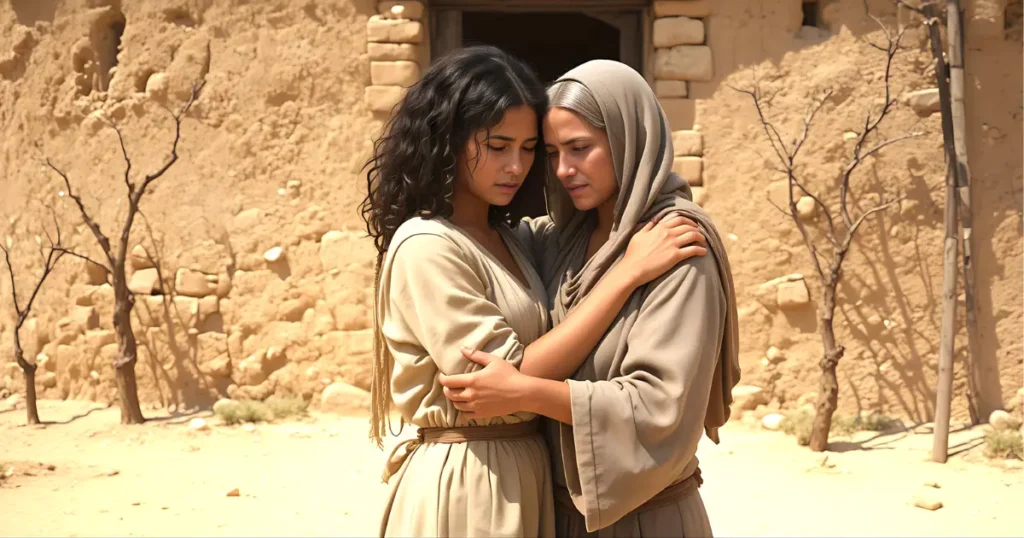
Life in Bethlehem and the Famine
Naomi in the Bible story begins in Bethlehem during the time of the judges, a period marked by spiritual instability in Israel. Ruth 1:1 says:
"In the days when the judges ruled, there was a famine in the land..." (Ruth 1:1, NIV)
This famine in the biblical moment of Bethlehem changed everything for Naomi’s family. She lived with her husband, Elimelech, and their two sons, Mahlon and Kilion. Because food was scarce, the family left their homeland and moved to Moab.
For many women in scripture, major life changes often began with circumstances they couldn’t control. Naomi’s tale is one example of this.
Move to Moab and Family Loss
Many people ask, “What happened to Naomi in the Bible?” Soon after arriving in Moab, Naomi’s husband died. She had to raise her sons by herself in a faraway country.
Her sons later married Moabite women, Ruth and Orpah. But tragedy struck again.
"After they had lived there about ten years, both Mahlon and Kilion also died." (Ruth 1:4 to 5, NIV)
Naomi lost both of her sons in the Bible, leaving her without a husband or children. In ancient Israel, widowhood often meant financial insecurity, social vulnerability, and deep grief.
Return to Bethlehem with Ruth
Naomi chose to go home after hearing that God had provided food for the people in Bethlehem. This answers the question: why did Naomi return to Bethlehem? She came back because she had nothing left in Moab.
At first, both daughters-in-law set out with her. Naomi told them to stay and rebuild their lives. Orpah went home, but Ruth stayed.
This is one of the most famous moments in Naomi and Ruth in the Bible:
"Where you go I will go, and where you stay I will stay." (Ruth 1:16, NIV)
The loyalty between Naomi and Ruth in the Bible continues to inspire readers today.
Naomi’s Role in Ruth and Boaz’s Marriage
Once back in Bethlehem, Ruth gathered leftover grain in the fields of Boaz, a relative of Elimelech.
Many ask, “How is Boaz related to Naomi in the Bible?” Boaz was a family redeemer, also known as a kinsman redeemer. He had the legal right to help preserve the family line.
So why did Boaz marry Ruth rather than Naomi? Naomi was likely past childbearing age, and Ruth was the widow directly connected to preserving Mahlon’s family line. Naomi gave Ruth excellent advice during this time.
Restoration and Joy at the End
The Naomi Bible story summary ends on a hopeful note. Boaz and Ruth got married and had a son named Obed.
"Praise be to the Lord, who this day has not left you without a guardian redeemer." (Ruth 4:14, NIV)
The women of Bethlehem celebrated Naomi’s restoration. Obed later became the father of King David’s son.
Her story began with famine and funerals but ended with renewed purpose. The lives of Leah, Jezebel, Jael, and Hagar also showcase similar powerful stories.
Historical and Cultural Context of Naomi’s Story
To fully understand Naomi’s story, you need to understand the world she lived in. Many modern readers miss these details, but they add real depth to the story of one of the most memorable Women of the Bible.
Why Moab mattered
Many readers search for the meaning of Moab in the Bible because it played a major role in Naomi’s story. Moab was located east of the Dead Sea and had a complicated history with Israel. According to Deuteronomy 23:3, Moabites were often viewed with suspicion because of past conflicts with Israel.
That makes Ruth’s loyalty even more powerful because she was a Moabite woman who became part of God’s redemption story.
The harsh reality for widows
The story also highlights the struggles of widows in ancient Israel. Women often depended on husbands or sons for financial security. Naomi lost them both. That meant she returned to Bethlehem with very little protection or income.
Among many female Bible characters, Naomi’s vulnerability feels very real because she faced both emotional pain and practical hardship.
Barley harvest and God’s provision
When Ruth got there, it was important. Ruth 1:22 says they returned during the barley harvest, the Ruth season. Under Old Testament law, landowners were told to leave leftover crops for the poor to gather (Leviticus 19:9-10).
This allowed Ruth to work in Boaz’s fields. Boaz also acted as a kinsman redeemer, a relative who could help restore a family’s future.
Like Eve, Elizabeth, Esther, and Delilah, Naomi shows how God works through ordinary women living in difficult times.
Naomi’s Character and Emotional Journey
One reason Naomi feels so relatable is that her story doesn’t hide pain. When people ask about Naomi’s character in the Bible, they often note her honesty, resilience, wisdom, and deep emotional struggle. She wasn’t presented as a perfect woman who always said the right thing. She reacted as many actual people do after losing someone close to them.
After returning to Bethlehem, Naomi told the women:
"Don't call me Naomi," she told them. "Call me Mara, because the Almighty has made my life very bitter." (Ruth 1:20, NIV)
This is why many readers ask, “Was Naomi bitter in the Bible?” Yes, she was angry at that moment. She thought God had been really hard on her. But her bitterness was not rebellion. It was grief spoken honestly before God and her community.
That’s what makes the Naomi grief and faith Bible story so powerful. Naomi didn’t act like everything was well. She put her husband in the ground. She buried both sons. She returned home empty.
Yet her story slowly changed. She began guiding Ruth again. Through Boaz, she saw that God had provided. By the end of Ruth 4, the same woman who said she was empty was holding her grandson Obed.
Many women in the Bible experienced hardship, but Naomi’s emotional honesty makes her stand out among their stories.
Her journey echoes those of Deborah, Bilhah, Bathsheba, and Adah, women whose stories also carried pain, complexity, and purpose.
Theological Meaning of Naomi’s Story
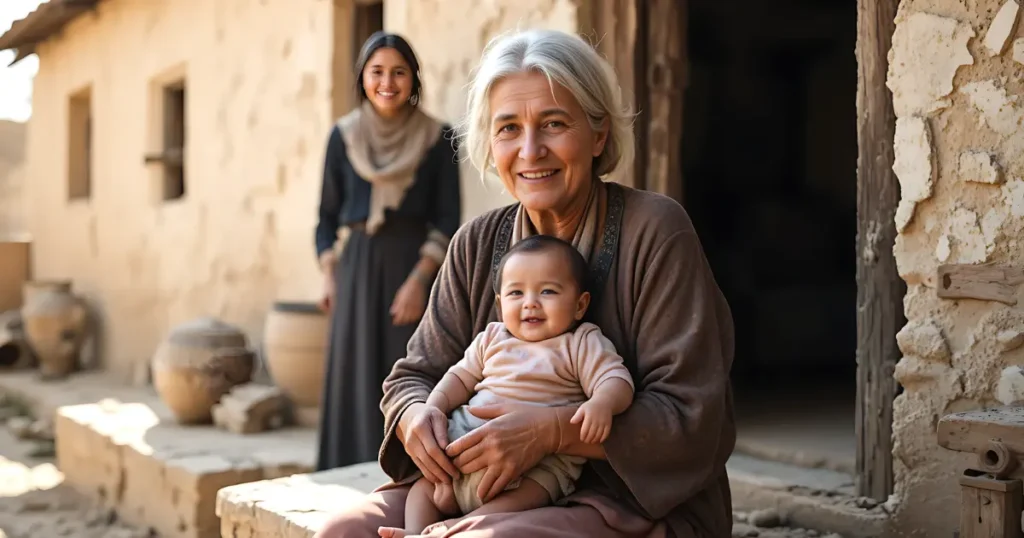
Many readers ask, “What does Naomi represent in the Bible?” Her story points to something bigger than personal survival. It reveals how God can be working behind the scenes even when people cannot see it.
For much of the book, Naomi feels abandoned. She loses her husband, her sons, and her sense of safety. Nothing about her situation looks hopeful. Yet God’s providence in Naomi’s story becomes clear through small moments that seem ordinary at first.
Ruth “happens” to work in Boaz’s field. Boaz “happens” to be a family redeemer. Naomi “happens” to return during harvest season. These times weren’t random. God was quietly arranging restoration.
In the Book of Ruth, redemption is a major theme. Boaz redeemed Ruth and protected Naomi’s family line, but this story also points forward to a greater Redeemer.
Ruth 4:17 says:
"They named him Obed. He was the father of Jesse, the father of David." (NIV)
Obed became the grandfather of King David. Later, the family line led to Jesus Christ (Matthew 1:5-6).
That makes Naomi’s story far bigger than personal healing. It became an element of God’s story of salvation.
Among many female Bible characters, Naomi shows that God often works quietly. Her life remains one of the most meaningful stories of Bible women because hidden seasons can still carry an eternal purpose.
You may also enjoy learning about Ahinoam, Abital, Apphia, and Anna.
Naomi’s Role in God’s Bigger Plan
At first, Naomi’s story looks small and deeply personal. It seems centered on grief, family loss, and survival. But by the end of the Book of Ruth, we see that her life had a much bigger purpose in God’s plan.
Ruth 4:17 says:
"They named him Obed. He was the father of Jesse, the father of David." (NIV)
This verse explains Naomi’s place in biblical history. Through Obed came Jesse, and through Jesse came King David. That makes Naomi in David’s lineage an important part of the Old Testament story.
Her influence did not stop there.
Matthew 1 traces the genealogy of Jesus from Ruth and Naomi through the family line of Ruth and Boaz, culminating in Jesus Christ.
Naomi never led armies. She never ruled a nation. She never had a public job. Yet among many women of the Bible, her quiet faithfulness shaped generations.
That’s one of the most beautiful lessons from her story: your life may feel ordinary right now, but God can use unseen seasons to build something far bigger than you realize.
Naomi’s role may have seemed small in the moment, but it helped shape the future of Israel and the Messiah’s arrival.
For related stories, explore Abishag and Abigail.
Lessons from Naomi in the Bible
There are powerful lessons from Naomi in the Bible because her life reflects what many people quietly face today: grief, uncertainty, financial stress, and waiting for God to move. Her narrative feels very authentic because she didn’t have a flawless existence. She went through, endured loss, and still found optimism.
1. Faith during loss is still faith
Naomi’s husband, Elimelech, and both of her boys died. She had every reason to give up. But she still went back to Bethlehem and kept going. Sometimes faith looks less like confidence and more like taking the next step.
2. Be honest with God about your pain
Many people ask, “What can we learn from Naomi in the Bible when life feels unfair?” Naomi shows us that being honest is important. She openly said:
"I went away full, but the Lord has brought me back empty." (Ruth 1:21, NIV)
She did not hide her pain behind fake positivity. Many women in the Bible cried out to God honestly, and Naomi was one of them.
3. God restores in His timing
One of the most important lessons from Naomi in the Bible is that restoration often unfolds slowly. Naomi could not see the full picture while she was grieving. But God was using Ruth, Boaz, and eventually Obed to do his work.
4. Mentorship leaves a lasting legacy
Naomi guided Ruth with wisdom and care. Her mentorship helped shape Ruth’s future and impacted generations.
Your painful season may not be your final chapter. Naomi’s life proves that God can still write beautiful endings after painful beginnings.
Naomi and Ruth’s Relationship in the Bible
The relationship between Naomi and Ruth in the Bible is one of the most beautiful examples of loyalty, love, and commitment in Scripture. Their bond began through marriage; Ruth was Naomi’s daughter-in-law, but it grew into something much deeper after tragedy struck their family.
After the deaths of Elimelech, Mahlon, and Kilion, Naomi urged both of her daughters-in-law to stay in Moab and rebuild their lives. Orpah went home in the end, but Ruth made a choice that changed her life.
This famous verse about Ruth’s loyalty to Naomi still moves readers today:
"Where you go I will go, and where you stay I will stay. Your people will be my people and your God my God." (Ruth 1:16, NIV)
This moment shows covenant love. Ruth didn’t help Naomi because she felt bad. She willingly left her homeland, her culture, and her future plans to stand beside her.
The relationship between Naomi and Ruth in the Bible also reveals a strong emotional and spiritual bond. Later, Naomi gave Ruth wise advice, and Ruth took care of Naomi by doing things for her.
Among the many women in the Bible, their relationship stands out for its sacrificial love, loyalty in hardship, and a faith that remained strong in uncertain seasons.
FAQs About Naomi in the Bible
Q: How far did Naomi and Ruth travel to Bethlehem?
A: Naomi and Ruth likely traveled around 30 to 50 miles from Moab to Bethlehem, depending on their exact route. It was hard to walk, especially for two widows. Their vacation was a sign of moving on from sadness and toward God’s help and hope.
Q: What happened to Naomi after Ruth married Boaz?
A: After Boaz married Ruth, Naomi’s life changed dramatically. Ruth 4:16 says Naomi held and cared for her grandson Obed. The woman who previously felt empty became part of a revived family legacy, and her community hailed her return.
Q: Why didn’t Boaz marry Naomi instead of Ruth?
A: Many readers ask this question. The answer comes down to legal and cultural customs. Ruth was the widow directly connected to Naomi’s deceased son’s family line. Boaz was a kinsman-redeemer who protected the family’s fortune. Naomi was likely older and not the person tied to continuing that lineage.
Final Thoughts on Naomi in the Bible
The story of Naomi in the Bible may seem quiet compared to some dramatic biblical accounts, but its impact is powerful. Her life moved from famine to provision, from heartbreak to healing, and from emptiness to renewed purpose.
Naomi teaches us that faith does not always look loud or confident. Sometimes it seems like going home after a loss. Sometimes it looks like helping someone else rebuild while you are still healing yourself. Sometimes it looks like trusting God when you cannot see what He is doing.
Her story reminds us that God’s plan often unfolds slowly. Naomi could not see how her painful season would connect to King David and, ultimately, to Jesus Christ, but God was working throughout.
Among many unforgettable women in Scripture, Naomi stands out because her story feels so real. She grieved deeply, spoke honestly, loved faithfully, and experienced God’s restoration.
If Naomi’s story encouraged you, explore more stories of faithful women throughout Scripture and keep learning from the many powerful examples found in the lives of biblical women.