
Introduction: Who was Hagar in the Bible
Who was Hagar in the Bible? In the Bible, Hagar was an Egyptian servant of Sarah and part of Abraham’s household in the Book of Genesis. Known as Hagar, the mother of Ishmael, she bore Abraham’s first son. The story of Hagar in the Bible also tells how God met her in the wilderness and promised to care for her and her child.
Have you ever felt unseen, pushed aside, or stuck in someone else’s story? That question makes the story of Hagar in the Bible hit a little closer to home. When people ask who Hagar was in the Bible, they often hear only a short answer. She was Sarah’s servant. She became Hagar, the mother of Ishmael, after Abraham fathered a child with her. But that summary doesn’t even begin to cover it.
The real story is raw, messy, and deeply human. In the Bible, Hagar is a woman caught between power, pain, and God’s unexpected mercy. She faced jealousy, exile, and life in the wilderness. But God came to her in person when she was at her lowest point. Her encounter gave us one of the most powerful names for God in Scripture.
And that moment reveals something many people miss. Even when the world overlooks you, God does not.
Quick Facts About Hagar in the Bible
Before diving deeper into her story, here are a few key details that help explain Hagar in the Bible and why her life still matters today. The Hagar in the Genesis narrative may be short, but it carries powerful meaning.
- Identity: Hagar was an Egyptian servant of Sarah, Abraham’s wife. During the early patriarchal period, she resided with Abraham.
- Partner: Abraham fathered a child through Hagar after Sarah gave her to him because she could not conceive at the time.
- Son: Hagar became the mother of Ishmael, Abraham’s first son.
- Main Passages: Her story is primarily found in Genesis 16 and 21, the key Bible passages describing Hagar’s journey.
- Known For: Hagar encountered the angel of the Lord in the wilderness and experienced God’s personal care.
- Unique Title: Many readers remember her as the servant woman God saw, because she called Him El Roi, meaning “the God who sees me.”
Even in hardship, Hagar’s story shows that God notices the overlooked.
You may want to read this post: Who Is Sarah in the Bible? Her Story, Faith, and God’s Promise
Where Is Hagar Mentioned in the Bible?
If you are wondering where Hagar is in the Bible, her story appears in a few key passages that reveal both her struggles and God’s care for her. The book of Genesis contains the majority of Hagar’s references in the Bible, with one significant mention in the New Testament.
Genesis 16
This chapter introduces Hagar in Genesis as Sarah’s Egyptian servant. Sarah gives Hagar to Abraham so she can bear a child for the family. Hagar and Sarah’s relationship worsens once Hagar becomes pregnant with Ishmael. Hagar eventually flees into the wilderness, where the angel of the Lord meets her and promises that her son will become a great nation.
Genesis 21
Years later, after Isaac is born, conflict arises again. Sarah asks Abraham to send Hagar and Ishmael away. God hears Ishmael sobbing in the desert and provides him with water, which saves his life.
Galatians 4:21–31
The apostle Paul later uses Hagar’s story as an illustration of law and promise.
You may want to check out this post: Who Is Eve in the Bible? Creation, Fall, and Key Verses
Hagar as the Servant of Sarah in Abraham’s Household
To understand Hagar in the Bible, we first need to examine her place within Abraham’s household. Scripture introduces Hagar, an Egyptian servant in Sarah’s household. As Hagar, the servant in the Bible, she likely came to live with Abraham and Sarah during their time in Egypt (Genesis 12:10–20). In the past, rich families generally had servants who worked in the house and helped with everyday tasks.
In Genesis 16, we see how cultural customs shaped the difficult situation Hagar faced. In the ancient Near East, if a wife could not have children, it was sometimes acceptable for her to give her husband a servant as a surrogate. The wife would legally own the child born of that marriage. This custom helps us understand the choice that Abraham and Hagar made, even though it later caused a lot of trouble.
You may want to read this post: Who Was Rebekah in the Bible? Her Story in Genesis and Life of Faith
Because Sarah had not yet given birth to the promised child, she offered Hagar to Abraham. According to the Bible, Sarah gave Hagar to her husband so that Hagar could have a son for the family. Soon after, Hagar became pregnant. What sounded like a good idea turned into stress very fast.
The relationship between Sarah and Hagar in the Bible became strained. Hagar began to look at Sarah differently, and Sarah felt disrespected and hurt. Their home, once stable, was now full of jealousy and pain. Hagar suddenly found herself caught in a power struggle she did not create.
This moment reveals the fragile dynamics inside Abraham’s family and sets the stage for the powerful events that follow in Hagar’s story.
You may want to read this post: Who Was Hannah in the Bible? Her Story, Prayer, and Faith
The Story of Hagar in the Bible (Genesis Narrative)
The story of Hagar in the Bible unfolds in the early chapters of Genesis and gives readers a raw look at family tension, human decisions, and God’s compassion. Hagar’s life becomes closely intertwined with Abraham’s household, and what happens to her is a major part of the patriarchal saga.
Hagar Becomes the Mother of Ishmael
The journey begins in Genesis 16. At this point in the story, God had already promised Abraham that he would become the father of many nations. Years went by, but Sarah still didn’t have a kid. Sarah took matters into her hands because she was frustrated and unsure.
She gave her servant, Hagar, to Abraham so that she could bear a child for the family. This choice was based on outdated cultural norms, but it quickly had negative consequences. Through this arrangement, Hagar became pregnant and gave birth to the son of Abraham and Hagar.
You may want to read this post: Who Was Rachel in the Bible? Story, Marriage, and Meaning
The pregnancy shifted the mood in the house. Scripture says that once Hagar realized she was pregnant, her attitude toward Sarah shifted. She started to look down on Sarah. What began as a plan to solve a problem quickly created emotional tension and rivalry.
In the end, Hagar had a son named Ishmael. Ishmael’s birth was a big deal for Abraham’s family. Ishmael became Abraham’s first son, and God would later promise that he, too, would become the father of a great nation.
However, the joy of a child did not erase the strain within the household. The disagreement, on the other hand, kept getting worse.
You may want to check out this post: The Story of Ruth in the Bible Explained: Summary, Key Verses, and Meaning
Conflict Between Sarah and Hagar
The tension between the two women soon became impossible to ignore. The conflict between Hagar and Sarah reached a breaking point as emotions ran high.
Sarah felt deeply disrespected by Hagar’s change in attitude. In response, she began to treat Hagar harshly. As the mistress of the household, Sarah held power over her servant, and that imbalance shaped the situation. Hagar couldn’t remain anymore since the treatment was too harsh.
This incident explains why Hagar ran away.
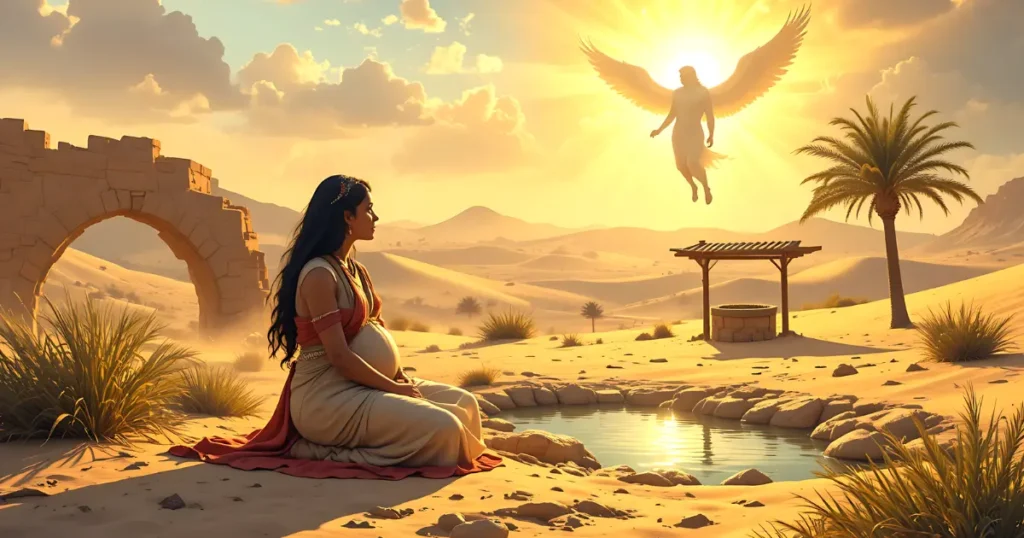
Feeling mistreated and overwhelmed, Hagar fled into the wilderness. Alone, pregnant, and far from home, she traveled into the desert. The forest was scary, especially for a lady who worked as a servant and had no protection.
Yet this desperate escape became one of the most powerful moments in her story. God met her personally in the middle of the desert when she had nowhere else to go. The encounter would change Hagar’s life and reveal something remarkable about God’s character.
You may want to read this post: Who Is Esther in the Bible? Story, Key Verses, and Meaning
God Meets Hagar in the Wild
When Hagar ran away, she entered one of the most difficult moments of her life. Alone and pregnant, Hagar in the wilderness had no protection, no clear destination, and no support from Abraham’s household. The desert was scary, especially for a woman who worked as a servant and was traveling alone. But something amazing happened there, in that lonely place.
Scripture tells us that the angel of the Lord appears to Hagar beside a spring of water in the desert (Genesis 16). The angel speaks directly to her, asking where she has come from and where she is going. Hagar says that she is running away from Sarah, her mistress. God doesn’t ignore her pain; instead, he shows compassion and gives her guidance.
You may want to check out this post: Who Was Leah in the Bible? Story, Sons, and Her Role in God’s Plan
The angel tells Hagar to return to Sarah, but also gives her a powerful promise. Her son would be named Ishmael, which means “God hears,” because the Lord had heard her distress. The angel also says that Ishmael will have many children and will be the father of a large nation.
In that moment, Hagar experiences something no other woman in Scripture had yet expressed so clearly. She realizes that God sees Hagar, even in her suffering. She gives God a special name since she is so moved by the meeting. She calls Him El Roi, which means “the God who sees me.”
This moment carries deep theological meaning. Hagar was a servant, an outsider, and a woman with little power in society. Yet God met her personally in the desert and acknowledged her pain. Her tale teaches us that God does not forget or ignore those who are hurting. Even in isolation, God sees the oppressed and responds with care.
You may want to check out this post: Who Was Mary Magdalene in the Bible? First Witness of the Resurrection
The Birth of Ishmael and God’s Promise
After her encounter with God in the wilderness, Hagar did something remarkable. She trusted the message she had received and returned to Abraham’s household. Her coming back showed bravery and trust. Hagar thought that God had heard her and would uphold His word, even though things were still hard with Sarah.
Not long after, Ishmael was born. Genesis tells us that Abraham was eighty six years old when Hagar gave birth to his first son. This child became an important figure in the larger biblical story. Through this event, the narrative of Hagar and Ishmael in the Bible continued to unfold within Abraham’s family.
You may want to check out this post: Who Was Miriam in the Bible? Her Story and Role
Abraham named the child Ishmael, just as the angel of the Lord had instructed. The name Ishmael means “God hears,” which is a reminder that God heard Hagar’s cries for help in the desert.
God also made a promise about what would happen to Ishmael in the future. Although Isaac would later become the son of the covenant, the Lord declared that Ishmael would not be forgotten. Scripture reveals the promise to Ishmael that he would become the father of a powerful nation and have many descendants.
History records that Ishmael became the ancestor of several tribes in the ancient Near East, fulfilling the promise spoken to Hagar in the desert.
You may want to read this post: Who Was Deborah in the Bible? Judge and Prophetess of Israel
Why Sarah Sent Hagar and Ishmael Away
Years later, the situation in Abraham’s household changed dramatically. God fulfilled His promise to Sarah, and she finally gave birth to Isaac. The arrival of this long-awaited child changed the family’s dynamic and added to the family’s stress. The celebration of Isaac’s birth soon exposed deeper problems within the household.
Genesis 21 describes the growing conflict between Isaac and Ishmael. During a feast held when Isaac was weaned, Sarah noticed Ishmael, the older son of Abraham and Hagar, mocking or laughing at Isaac. Sarah was scared at that moment. She was afraid that Ishmael would try to take Isaac’s place as the promised heir.
This concern led to a painful decision. Sarah told Abraham that Hagar and her son must leave the household. Many readers ask why Sarah sent Hagar away, and the answer lies in the issue of inheritance. Sarah wanted to protect Isaac’s position as the son through whom God’s covenant would continue.
The request deeply troubled Abraham. Ishmael was still his son, and the idea of sending him away caused great sorrow. Yet God reassured Abraham that he should listen to Sarah. The Lord reminded him that the covenant promise would continue through Isaac.
At the same time, God did not abandon Ishmael. He told Abraham that Ishmael would likewise become a great country because he was Abraham’s son.
So what happened to Hagar and Ishmael next becomes another powerful part of their story. Forced to leave Abraham’s home, they began a difficult journey into the wilderness, where God would once again show His care for them.
What Happened to Hagar and Ishmael in the Wild
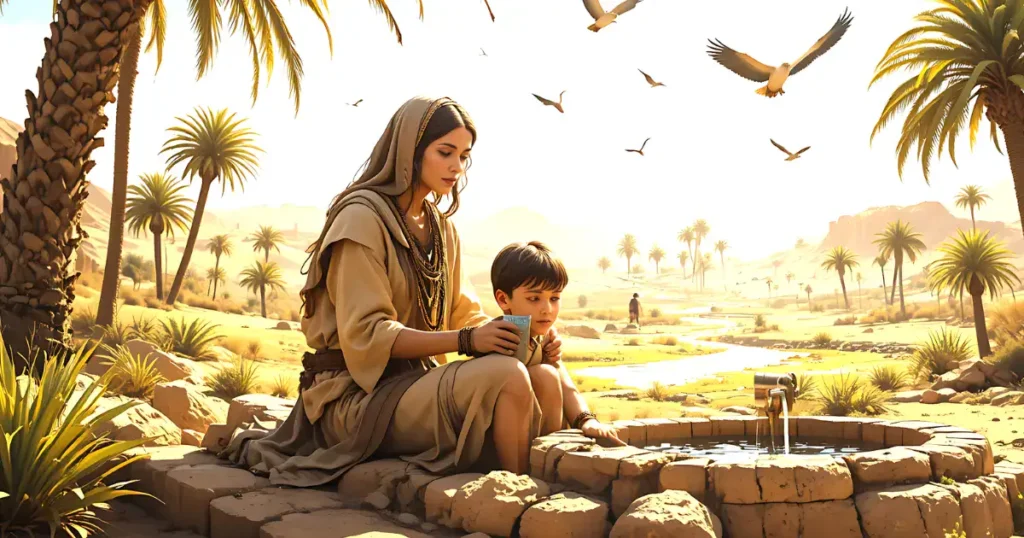
After leaving Abraham’s household, Hagar and her son entered a harsh and uncertain journey. Many readers inquire about Hagar’s fate in the Bible after her departure. Genesis 21 tells us that Abraham gave Hagar some bread and a skin of water before she departed with Ishmael into the wilderness of Beersheba.
At first, the supplies sustained them. But the desert was unforgiving. Eventually, the water ran out. It was almost impossible to stay alive in the woods without water. Hagar put Ishmael under a bush and stood back a little as things got worse. She could not bear to watch her son suffer.
In that heartbreaking moment, God responded.
Scripture says that God heard the boy crying. The Lord was kind to Hagar and her kid once more. An angel of God called to Hagar from heaven, reassuring her that Ishmael would live and that his descendants would become a great nation.
Then something miraculous happened. God provides water in the desert. The Bible says that God had Hagar see a nearby well of water. She quickly filled the skin with water and gave her son something to drink.
This moment reveals a powerful truth about God’s character. When Hagar felt abandoned and hopeless, God was still present. He saw their need, heard their cries, and provided exactly what they needed to survive.
The wilderness did not become their end. Instead, it became another place where God’s faithfulness was clearly revealed.
Why Hagar Is Important in the Bible
Many readers ask why Hagar was important in the Bible, especially since she was not part of the covenant line through Isaac. Yet the story of this biblical character, Hagar, reveals powerful truths about God and His heart for people who feel forgotten.
First, Hagar is the only person in Scripture recorded as giving God a personal name. After her encounter with the angel of the Lord in the wilderness, she called Him El Roi, meaning “the God who sees me” (Genesis 16:13). At that time, Hagar realized that God sensed her pain and helped her. Her story highlights a theme repeated throughout Scripture: God sees the oppressed and does not ignore those in distress.
Second, Hagar became the mother of Ishmael, who would grow into a great nation, as God had promised. Even though Isaac promised the covenant, God nonetheless rewarded Ishmael and kept the promise made to Hagar.
Finally, Hagar’s story shapes the larger narrative of Abraham’s family. Her experiences reveal the consequences of human decisions, the tension within Abraham’s household, and God’s mercy even in complicated situations.
Hagar’s life reminds readers that God’s care extends beyond status, nationality, or social position.
Character Traits of Hagar in the Bible
The characteristics of Hagar in the Bible reveal a woman who faced hardship yet persevered. Her tale is short in Genesis, but it demonstrates great bravery and faith in the face of hardship.
Resilience
Hagar endured rejection, conflict, and life in the wilderness. Only a few people in Scripture experience such a sudden loss of security. She did endure banishment, though, and she reared her son in a tough place. Her strength reminds readers that God can help people even when things are hard.
Courage in hardship
Running into the desert while pregnant took courage. Later, it took strength to leave Abraham’s house again with only a few items. Hagar kept going even though she was scared and didn’t know what would happen next.
Honesty before God
When the angel of the Lord spoke to her, Hagar answered honestly about her situation. She didn’t try to hide her sadness or pretend that everything was alright. Instead, she said out loud that she was running away from Sarah. This honest response became part of her encounter with God.
Faith in difficult circumstances
Hagar’s faith becomes clear when she obeys God’s instruction to return to Sarah after meeting the angel in the wilderness. She trusts God anew as He offers Ishmael a future.
These moments reveal powerful lessons from Hagar’s faith. Even when life feels unfair or overwhelming, trusting God can lead to unexpected hope and provision.
Lessons We Can Learn From Hagar in the Bible
Many readers ask what we can learn from Hagar in the Bible, especially when her story includes pain, rejection, and life in the wilderness. But her path teaches us much about who God is and how He helps individuals when things get tough.
God sees those who feel forgotten.
One of the most powerful moments in Hagar’s story is when she realizes that God sees her. She calls Him El Roi, which means “the God who sees me.” This reminds us that God sees our hardships and knows our pain, even when others don’t.
God hears cries for help.
When Hagar and Ishmael were desperate in the wilderness, God heard their cries. The name Ishmael means “God hears.” This moment indicates that God hears people when they call out to Him, even when things are bad.
God provides even in exile.
Hagar’s story also shows that God provides in unexpected ways. When she thought her son would die of thirst, God revealed a well of water nearby. This strong moment shows that God can help even when things appear bleak.
These lessons from Hagar in the Bible remind believers that God’s care extends to anyone who trusts Him, even in seasons of hardship and uncertainty.
Hagar in the New Testament

The story of Hagar does not end in Genesis. The New Testament reference to Hagar appears in the apostle Paul’s letter to the Galatians, where he uses her story to explain an important spiritual truth.
In Hagar in Galatians 4, Paul compares two women from Abraham’s family. Hagar represents slavery, while Sarah represents freedom. Paul says that Hagar’s son, Ishmael, was born of human effort, whereas Isaac, Sarah’s son, was born of God’s promise. This difference makes a strong point.
Paul uses Hagar to symbolize life under the law, where people try to earn righteousness through their works. Sarah, on the other hand, stands for the freedom that comes from God’s promise and love. For Christians, this passage teaches that salvation comes not by human effort but by faith in Christ.
Even though Paul uses Hagar symbolically, her story still reminds readers of God’s compassion and justice. The same God who met Hagar in the desert is the God who gives everyone who believes in Him freedom and grace.
Timeline of Hagar’s Life in the Bible
The timeline of Hagar in the Bible helps readers see how her story unfolds across several key moments in Genesis. Though Hagar’s life in Genesis spans only a few chapters, each event reveals important turning points in Abraham’s family.
- Hagar becomes a servant in Abraham’s household, likely after Abraham and Sarah spent time in Egypt.
- Sarah gives Hagar to Abraham so she can bear a child for the family (Genesis 16).
- Hagar flees into the wilderness after conflict grows between her and Sarah. The angel of the Lord visits her there and tells her that her son will have a future.
- The birth of Ishmael follows when Hagar returns to Abraham’s household.
- Hagar and Ishmael are later sent away after Isaac is born (Genesis 21).
- God rescues them in the desert, providing water and promising that Ishmael will become a great nation.
This timeline shows how God remained present throughout Hagar’s difficult journey.
Key Bible Verses About Hagar
Several important Bible verses about Hagar reveal the heart of her story and show how God responded to her suffering. These chapters help us understand what the Bible says about Hagar and why her story is still important today.
Genesis 16:7
"The angel of the Lord found Hagar near a spring in the desert."
This moment marks the first time God personally meets Hagar as she flees into the wilderness. Even when she’s alone, God looks for her and talks to her directly.
Genesis 16:13
"So she gave this name to the Lord who spoke to her: 'You are the God who sees me.'"
After the encounter, Hagar calls God El Roi, meaning “the God who sees me.” This strong moment reveals that God cares about people who feel alone.
Genesis 21:17
"God heard the boy crying, and the angel of God called to Hagar from heaven."
When Ishmael is in danger in the desert, God hears their cries and provides help.
Cultural Context of Hagar’s Story
To fully understand Hagar’s story, it helps to look at the cultural world of Genesis. The events surrounding Hagar reflect common practices in the ancient Near East. During that time, it was vital for families to survive and pass on their wealth.
Some societies allowed a servant to serve as a wife to someone who couldn’t have children. These old surrogacy practices in Genesis help us understand why Sarah gave Hagar to Abraham.
Hagar was likely an Egyptian servant in Abraham’s household, possibly acquired during Abraham and Sarah’s time in Egypt (Genesis 12). Servants generally resided in the same house as their masters and were expected to do what their lords said. As a servant woman in Genesis, Hagar had little control over the decisions made about her life.
When Sarah remained childless for many years, she followed this cultural custom and offered Hagar to Abraham so the family could have an heir. Sarah would be the child’s legal parent under this arrangement. While this solution made sense in that cultural setting, it eventually created tension, jealousy, and hardship within the family.
Understanding this background helps readers see why these events unfolded the way they did.
Hagar and the Other Women in Abraham’s Story
Hagar’s story closely intertwines with those of the other women in Abraham’s family, especially Sarah and, later, Rebekah. Together, these women in Genesis help shape the early history of God’s covenant people.
Sarah, Abraham’s wife, plays a central role in the promise of Isaac. But her choice to give Hagar to Abraham caused problems for the whole family. Hagar, the servant, became the mother of Ishmael and experienced both conflict and God’s personal care. Their relationship reveals how complicated things are in Abraham’s family.
Later in Genesis, Rebekah enters the story as Isaac’s wife. She continues the covenant line through her sons, Jacob and Esau. While Hagar’s son Ishmael forms a separate nation, Sarah and Rebekah represent the line through which God’s covenant promise continues.
Conclusion: What Hagar’s Story Teaches Us Today
The journey of Hagar in the Bible is short in Scripture, but its message is powerful. Hagar began as a servant in Abraham’s household, caught in circumstances she did not choose. Hagar faced numerous challenges, including fighting, rejection, and ultimately exile. Yet her story also reveals something remarkable about God’s character.
When Hagar felt alone in the wilderness, God met her there. When she and Ishmael were desperate for water, God heard their cries and provided what they needed. Her story is a reminder that God sees people that most people don’t.
One of the greatest lessons from Hagar’s story is that God sees and hears our struggles. He is still there and faithful, even when things are hard, scary, or unclear.
For readers today, Hagar’s experience offers hope. God’s care extends to every person who calls on Him.
If you enjoyed this study, explore more inspiring stories on our Women of the Bible platform and discover other powerful examples of faith in Scripture.
Frequently Asked Questions About Hagar in the Bible
Was Hagar Abraham’s wife or concubine?
In Genesis 16, Sarah entrusted Hagar to Abraham so that she might have a child for the household. In that culture, Hagar was a secondary wife or concubine. However, she remained Sarah’s servant in the household, creating tension between the two women.
What does the name Hagar mean in the Bible?
The meaning of Hagar in Hebrew is often understood as “flight” or “fleeing.” This interpretation suits her story nicely because Hagar ran away from Sarah and into the wilderness. Her life reflects movement, hardship, and ultimately God’s care for her during difficult moments.
Why is Hagar important in biblical history?
Many people ask why Hagar matters in the Bible. Hagar is notable for giving birth to Ishmael, Abraham’s first son. Her tale also shows how much God cares about people who feel like they don’t matter. Through Hagar’s encounter with God in the wilderness, Scripture shows that God hears the cries of the suffering and provides for them.