
Leah in the Bible: Who She Was and Why She Matters
Have you ever felt overlooked, like you were chosen second… or not at all? That’s precisely where Leah in the Bible steps in and flips the script. If you’ve ever wondered who was Leah in the Bible, her story might hit closer to home than you expect.
In the Bible story, Leah is the daughter of Laban, the sister of Rachel, and the first wife of Jacob, though not the one he loved. Ouch, right? Yet this “unloved” woman became the mother of six tribes of Israel, shaping the very foundation of God’s people.
Here’s the twist. Culture liked love and beauty, but God picked Leah for something bigger. Through her came Judah, and through Judah came Jesus Christ.
A modern example? Think of someone passed over for promotion who later builds something greater on their own. That’s Leah’s life.
So yes, Leah in the Bible isn’t just a side character. She’s central to God’s plan.
Where Is Leah Found in Scripture? Important Bible Verses
To understand the story of Leah in the Bible, you need to follow her journey through several key chapters in Genesis. Her story begins in Genesis 29–30, where we see Jacob’s marriage to Leah, the tension with Rachel, and the birth of her children. This is where the emotional and spiritual richness of her life comes to the fore.
Next, Genesis 35 places Leah within the broader family structure of Jacob’s household, showing her role among the mothers of the tribes of Israel. Then, in Genesis 49, Jacob blesses his sons, linking Leah’s children to the nation’s future and to God’s covenant plan.
Together, these passages reveal a powerful narrative flow, from rejection to legacy, showing how God works through real family struggles to fulfil His promises.
You may want to read this post: Who Was Rebekah in the Bible? Her Story in Genesis and Life of Faith
Facts About Leah in the Bible
Looking for quick, clear facts about Leah in the Bible? Here’s a simple breakdown to help you understand her identity, role, and impact at a glance. These key details also highlight why Leah in the Bible matters far more than many realize.
- Daughter of Laban and sister of Rachel
Leah grew up in Haran as part of a family that would play a major role in Israel’s history. - First wife of Jacob, married through Laban’s deception
Jacob intended to marry Rachel, but Laban tricked him, leading to a complicated marriage dynamic. - Mother of six sons and one daughter
Leah gave birth to Reuben, Simeon, Levi, Judah, Issachar, Zebulun, and Dinah, forming a large part of the tribes of Israel. - Matriarch of Israel and ancestor of Jesus Christ
Through her son Judah, Leah became part of the covenant lineage leading to Jesus. - Known for her “soft eyes”
This detail has sparked discussion, often pointing to her gentle or less striking appearance compared to Rachel. - Experienced rejection but remained faithful and fruitful
Despite being unloved, Leah continued to trust God and was greatly blessed. - Key moments recorded in Genesis
Her story unfolds in Genesis 29–30, with continued significance in Genesis 35 and 49.
You may want to check out this post: Who Was Hagar in the Bible? Her Story, Faith, and the Birth of Ishmael
Leah in the Bible Story: Marriage to Jacob and Family Conflict
The Leah in the Bible story begins with love, but not for her. Jacob arrived in Haran and fell deeply in love with Rachel, agreeing to work for her hand in marriage for seven years. But on the wedding night, Laban deceived him and gave Leah instead. That moment changed everything.
This is where Jacob and Leah in the Bible become a story filled with tension. Jacob stayed married to Leah, but his heart belonged to Rachel. Imagine building a life with someone who never chose you. That was Leah’s daily reality.
You may want to check out this post: Who Was Miriam in the Bible? Her Story and Role
The story of Rachel and Leah in the Bible unfolds as a painful rivalry. Rachel was loved but unable to have children at first, while Leah, though unloved, began to bear sons. Their rivalry caused a major emotional rift in the family.
In the Bible, Rachel and Leah are two sisters competing for affection, identity, and worth. Meanwhile, Jacob and Leah in the Bible show Leah’s quiet strength. Even when her marriage felt hollow, she kept going, hoping, and turning to God.
This wasn’t just family drama. It was the setting where God’s bigger plan quietly unfolded.
You may want to read this post: Who Is Sarah in the Bible? Her Story, Faith, and God’s Promise
Why Did Jacob Not Love Leah? Cultural and Biblical Context
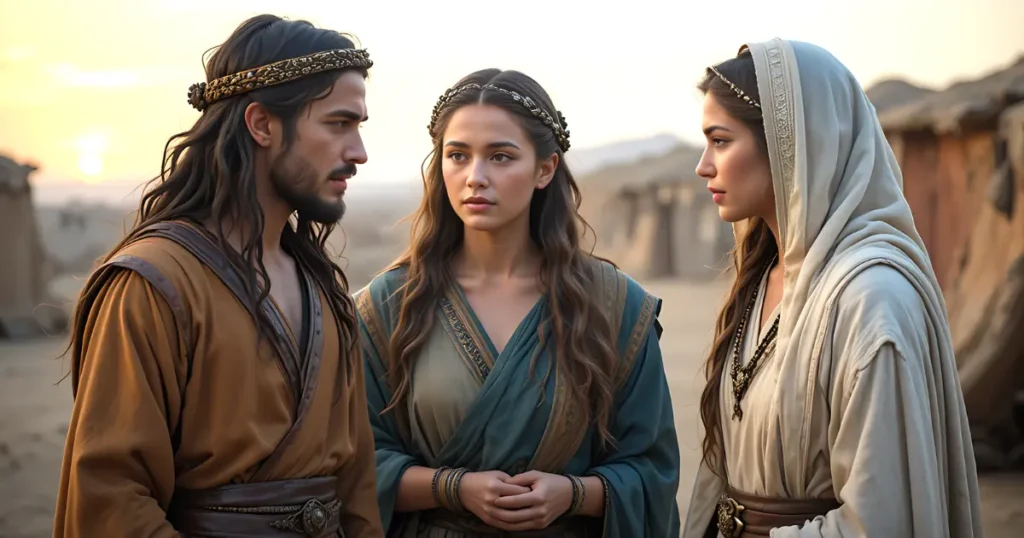
So, why did Jacob not love Leah? The answer isn’t as simple as appearance or personality. It’s deeply tied to culture, expectations, and one painful moment of deception.
First, let’s address a common question: What was wrong with Leah in the Bible? The truth is, nothing was “wrong” with her. Genesis describes Leah as “weak” or “soft” (Genesis 29:17). In the original context, the term likely means gentle, delicate, or less striking than Rachel, who was described as beautiful in form and appearance. It reflects cultural beauty standards, not a flaw in Leah herself.
Second, cultural customs mattered. As the older daughter, Leah was expected to marry first. Laban’s decision to give Leah to Jacob before Rachel, even though it was done through deception, followed this tradition.
Jacob’s lack of love wasn’t rooted in Leah’s worth. It came from unmet expectations and a broken agreement.
Here’s the deeper truth. While Jacob overlooked Leah, God did not. In fact, Scripture says God saw that she was unloved and responded with compassion.
You may want to check out this post: Who Is Eve in the Bible? Creation, Fall, and Key Verses
Why Did God Enable Leah to Conceive?
So, why did God enable Leah to conceive while Rachel remained unable to have children at first? Scripture gives a direct and powerful answer: “God saw that Leah was unloved.” That one truth changes everything.
In Genesis, we read that the Lord opened her womb, not by accident, but as an act of compassion. God stepped into Leah’s pain and responded to her rejection with blessing. While Jacob overlooked her, God saw her fully.
This behavior follows a pattern throughout Scripture. God often lifts the overlooked, the rejected, and the forgotten. Think of Hannah, David, or even Mary. Leah’s story fits this same thread of divine reversal.
At the same time, Rachel’s temporary barrenness creates a sharp contrast. The loved wife struggled to conceive, while the unloved wife became fruitful. This wasn’t punishment, but purpose. God was shaping a story bigger than human preference.
Leah’s children would become foundational to the tribes of Israel, and through Judah, part of the covenant lineage leading to Jesus Christ.
You may want to read this post: Who Was Hannah in the Bible? Her Story, Prayer, and Faith
Leah’s Sons in the Bible: Names, Meanings, and Spiritual Significance
To truly understand Leah’s sons in the Bible, we need to look beyond their names to her heart, her journey, and her growing faith. If you’ve ever wondered what the names of Leah’s sons are, each one tells a story, not just about Leah, but about God’s work in her life.
Reuben, Simeon, Levi, and Judah
Leah’s first four sons reflect her emotional pain and spiritual growth.
- Reuben means “See, a son.” Leah said this name because she believed, “Now my husband will love me.” Her longing for Jacob’s affection is clear.
- Simeon means “He has heard.” Leah recognized that God heard her pain of being unloved.
- Levi means “Attached.” She hoped this child would finally bond Jacob’s heart to hers.
But then something shifts.
- Judah means “Praise.” Instead of seeking Jacob’s love, Leah turns fully to God and says, “This time I will praise the Lord” (Genesis 29:35, NIV).
This moment is powerful. It marks a spiritual transformation. Leah moves from seeking human approval to resting in God’s presence. And through Judah, the lineage of Jesus Christ begins.
You may want to check out this post: The Story of Ruth in the Bible Explained: Summary, Key Verses, and Meaning
Issachar and Zebulun (and Dinah)
Later, Leah bears more children, completing her role among Leah’s sons in the Bible and the house of Israel.
- Issachar means “Reward,” reflecting Leah’s sense that God had honored her faithfulness.
- Zebulun means “Honor” or “Dwelling,” as she hoped her husband would finally honor her.
She also had a daughter, Dinah, who is briefly mentioned but is part of the family narrative.
Together, these children formed six tribes of Israel, shaping the covenant people. Leah’s story tells a deep reality. God can take a life marked by rejection and turn it into one filled with purpose, legacy, and lasting spiritual impact.
You may want to read this post: Who Is Esther in the Bible? Story, Key Verses, and Meaning
Leah’s Role in the Lineage of Israel and Jesus Christ
Leah’s story doesn’t just stay in Genesis. It echoes through the entire Bible. From her came six of the tribes of Israel, making her one of the most influential matriarchs in Scripture. Her sons, including Levi (of the priestly line) and Judah (of the royal line), laid the spiritual and leadership foundation of God’s people.
So, who was Leah to Jesus? She was part of His direct family line. King David was the son of Judah, and Jesus Christ, the Savior of the world, was the son of David. This places Leah right at the center of God’s covenant plan, even though she was once overlooked and unloved.
What’s striking is Leah’s significance. God didn’t choose Rachel, the loved one, to carry the Messianic line. He picked Leah. This reminds us that God’s plans don’t always match what people want.
Leah’s legacy is not defined by rejection, but by redemption. Her life became a foundation for both a nation and the promise of salvation.
You may want to check out this post: Who Was Mary Magdalene in the Bible? First Witness of the Resurrection
What Does Leah Symbolize in the Bible?

So, what does Leah symbolize in the Bible? Her life tells a deeply human story, one that moves from rejection to acceptance and from longing to lasting faith.
At the beginning, Leah represents the pain of being overlooked. She was the unloved wife, constantly hoping for Jacob’s approval. But her story doesn’t stay there. Over time, we see powerful qualities of Leah in the Bible emerge, especially her endurance, faith, and spiritual growth.
Leah’s journey shows what it means to be truly seen by God. While people valued outward beauty and preference, God responded to her inner pain and gave her purpose. Scripture makes it clear that God noticed her suffering and acted on her behalf.
The biggest shift in Leah’s life comes when she stops chasing human approval and starts praising God. Her emphasis changes when Judah is born. She moves from “Will my husband love me?” to “I will praise the Lord.”
Leah symbolizes a quiet but powerful truth. Even when people overlook you, God sees you, grows you, and uses your life for something greater.
You may want to read this post: Who Was Deborah in the Bible? Judge and Prophetess of Israel
Lessons from Leah in the Bible for Faith Today
There are powerful lessons from Leah in the Bible that still speak into our everyday lives, especially if you’ve ever felt unseen or unchosen. Her story is not just history; it’s a mirror for real faith today.
First, Leah reminds us that God sees hidden pain. While others overlooked her, God stepped in. He noticed her hurt and responded with compassion. That means your quiet struggles are never invisible to Him.
Second, Leah teaches that identity should not be built on human approval. For much of her life, she longed for Jacob’s love. But as time went on, she changed her mind. Instead of chasing validation, she found her worth in God. That’s when real freedom starts.
Another key takeaway is growth through hardship. Leah’s life was not easy, but it shaped her faith. Her story shows that difficult seasons can produce deeper trust in God.
Finally, we see a faith that matures over time. Early on, Leah sought love from people. Later, she praised God with a full heart. That transformation is one of the most important lessons from Leah in the Bible.
Her life proves this simple truth. God can use pain to grow a stronger, more genuine faith.
How Did Leah Die and Where Was She Buried?
You might wonder, how did Leah die in the Bible? Interestingly, Scripture does not record the details of her death. Like many women in the Bible, her passing is not described, but her legacy speaks far louder than the moment she died.
However, we know from the Bible where Leah was buried. She was laid to rest in the cave of Machpelah in Hebron. This site was a significant burial place where Abraham, Sarah, Isaac, Rebekah, and later Jacob were also buried (Genesis 49:31).
This detail matters. Being buried alongside the patriarchs and matriarchs shows Leah’s honored place in God’s covenant family. Despite being overlooked in life, she was remembered as one of the foundational figures of Israel.
Leah’s ending reminds us of something powerful. God not only saw her in her pain, but He also secured her place in a lasting legacy.
Frequently Asked Questions About Leah in the Bible
Did Leah ever feel loved by Jacob?
The Bible shows that Jacob loved Rachel more than Leah (Genesis 29:30), and there’s no clear moment where his love for Leah fully changes. However, Leah experienced something deeper. God noticed her, blessed her, and gave her a reason to live, even though no one loved her. In many ways, she found a greater love through God’s presence.
Why is Leah often compared to Rachel?
Leah and Rachel are contrasted to highlight deeper spiritual truths. Rachel was loved and outwardly beautiful, while Leah was overlooked. Yet God worked powerfully through Leah. This comparison shows that God’s choices are not based on human standards but on His divine purpose.
Why is Leah’s story still relevant today?
Leah’s story connects with anyone who has felt unseen, rejected, or second-best. Her life reminds us that God sees hidden pain and can turn it into purpose. In a world that values appearance and approval, Leah’s journey points us back to identity, faith, and lasting worth in God.
Final Thoughts on Leah in the Bible: Seen by God, Chosen for His Plan
When you step back and look at Leah in the Bible, her life tells a quiet but powerful story. She began as the unloved wife, overlooked in her own home, yet she became central to God’s covenant plan. There is more to Leah in the Bible than just labels. She was a woman God saw, shaped, and used for something lasting.
Her journey moves from seeking love from people to trusting God fully. That shift changes everything. Through her son Judah, her story connects directly to the lineage of Jesus Christ, placing her among the most significant women in Scripture and any list of women in the Bible.
Leah’s life reminds us that God does not overlook the overlooked. He works through ordinary people, even in painful situations, to accomplish His purposes.
If you want to keep exploring stories like Leah’s, take time to read more about other Women of the Bible and see how God’s plan unfolds through each life.