

Introduction to Dinah in the Bible
In the Bible, Dinah was the daughter of Jacob and Leah and the only named daughter among Jacob’s children. She is introduced in Genesis 30:21 and becomes the central figure in Genesis 34, one of the most difficult and discussed chapters in the Old Testament. The account recounts how Dinah was violated by Shechem, the son of Hamor the Hivite, and how her brothers, Simeon and Levi, responded. Although Dinah speaks no recorded words in the biblical text, her story raises important questions about justice, family responsibility, sin, and the consequences of human choices.
Among the many women of Scripture, Dinah often receives less attention than Sarah, Rebekah, Ruth, Esther, or Mary. But her story is an important part of Jacob’s family history and the future of the nation of Israel. As Jacob’s daughter Dinah in the Bible, she lived during a key period when God’s covenant promises were being passed through the patriarchs and their descendants.
Her story is not included simply as a historical record. Genesis 34 shows the painful results of sin, the dangers of unchecked anger, and the challenges faced by God’s covenant family as they live among surrounding nations. It also reminds readers that Scripture does not ignore difficult events but records them honestly.
In this study, we will explore the identity of this Dinah, the meaning of her name, her family background, the events of Genesis 34, what happened afterward, and the lasting lessons Christians can learn today. As we examine this often overlooked woman from the list of women in the Bible, we learn more about God’s faithfulness even in times of human failure.
Meaning of the Name Dinah in the Bible
The meaning of the name Dinah in the Bible derives from the Hebrew word din, which refers to judgment, justice, or vindication. Many Bible scholars understand Dinah’s name to mean “judged,” “justice,” or “vindicated.” In ancient Hebrew culture, names often carried deep spiritual and personal significance. They could reflect a family’s circumstances, a parent’s hope, or an important truth about God.
Throughout the Old Testament, names frequently point to larger biblical themes. In Dinah’s case, the idea of justice is especially meaningful because her story in Genesis 34 centers on wrongdoing, family conflict, and the search for a proper response to injustice. While the chapter records painful events, it also highlights the consequences of human sin and the need for true righteousness.
Among the many women of the Bible, Dinah’s name stands out because her account closely aligns with the themes of her story. Her narrative reminds readers that God sees every injustice, even when human responses to it fall short of His flawless standard.
Like other biblical women, such as Abigail, who showed wisdom during a family crisis, and Abishag, whose brief appearance reveals God’s work during a critical period in Israel’s history, Dinah’s account contributes to the larger story of God’s people and His concern for justice.
Quick Facts About Dinah in the Bible
If you are looking for facts about Dinah in the Bible, it helps to separate what Scripture clearly states from later traditions and assumptions. Although Dinah appears in only a few passages, her account plays an important role in the book of Genesis.
Here are some key facts about Dinah in the Bible:
- Dinah was the daughter of Jacob and Leah (Genesis 30:21).
- She is first mentioned by name when her birth is recorded.
- Her story is mainly found in Genesis 34.
- She lived when Jacob’s family was settling in the land of Canaan.
- Shechem, the son of Hamor the Hivite, violated her and later sought to marry her (Genesis 34:2, 8).
- Her brothers reacted strongly to what happened, leading to a violent conflict with the men of Shechem.
- Dinah is mentioned again in genealogical lists in Genesis 46:15.
- She is one of the few daughters named among the patriarchal families in Genesis.
The Bible gives readers important details about the events surrounding Dinah, but it also leaves many questions unanswered. Scripture does not tell us her exact age. It does not record any words she spoke. The biblical narrative does not tell us whether she married, had children, or how she died.
Because of these gaps, later Jewish traditions attempted to fill in some of the missing details. While those traditions may be historically interesting, they should not be treated as equal to the biblical record.
As several lesser known women discussed on a Women of the Bible site, including Apphia and Abital, Dinah receives limited space in Scripture. Yet the events connected to her life reveal important lessons about justice, family responsibility, and the consequences of human sin within God’s covenant people.
Dinah’s Family and Genealogy in the Bible

Understanding Dinah’s family in the Bible helps situate her within one of the most important families in Scripture. Dinah was part of the household through which God was working out His covenant promises. Her family line may be traced directly back to the patriarchs of Israel and the future tribes that will carve out the nation’s history. Among the many women of the Old Testament, Dinah’s place in this family lends her story significance far beyond Genesis 34.
Jacob and Leah as Dinah’s Parents
Dinah was born to Jacob and Leah, making her part of the covenant family descended from Abraham and Isaac. Genesis 30:21 briefly records her birth after the births of several of Leah’s sons.
Jacob, grandson of Abraham, was the father of the twelve sons who became the ancestors of the tribes of Israel. Leah, Dinah’s mother, was Jacob’s first wife and played an important role in the history of the family of Israel. Through Leah, significant tribal lines came, including Judah, from whom the Messiah would ultimately come.
Dinah’s heritage placed her within God’s unfolding plan for His people, even though her personal story occupies only a small portion of the biblical narrative.
Dinah’s Brothers in the House of Jacob
The Dinah’s brothers in the Bible included Reuben, Simeon, Levi, Judah, Issachar, and Zebulun, all of whom were born to Leah. She also lived alongside her half-brothers born to Rachel, Bilhah, and Zilpah.
These sons together formed the basis of the twelve tribes of Israel. The household was large, complex, and often marked by rivalry, favoritism, and family tension. These relationships provide important context for understanding later events in Genesis.
Like family studies involving women such as Ahinoam and Adah, we cannot fully understand Dinah’s story apart from the family structure surrounding her.
Dinah’s Place in the Covenant Family
Dinah was more than just Jacob’s daughter. She was a member of the covenant family through whom God promised blessings to future generations. Her father and brothers would be the ancestors of the country of Israel.
Although Scripture focuses primarily on the male tribal lines, Dinah’s inclusion by name in Genesis and later genealogical records shows that she held a recognized place within God’s people. Her account reminds readers engaged in Christian Living that every member of God’s covenant community matters, even when their role receives limited attention in the biblical text.
Through her connection to this family, Dinah remains an important figure in the larger story of redemption that unfolds throughout Scripture.
Dinah in the Bible Story (Genesis 34 Narrative)
The story of Dinah in the Bible is found in Genesis 34. It is one of the most difficult chapters in Genesis because it contains violence, deception, family conflict, and painful consequences. At the same time, it presents a true picture of human sin and reminds readers that God’s covenant family was not without severe faults.
Dinah Visits the Women of Shechem
Genesis 34 begins by saying:
“Now Dinah, the daughter Leah had borne to Jacob, went out to visit the women of the land.” (Genesis 34:1, NIV)
Dinah left her family’s camp and visited the local women living in the region of Shechem. This verse does not imply any wrongdoing on her part. It just says she wants to interact with the women around her.
As one of the important figures in the story of women in the Bible, Dinah appears to have been interested in learning about the local culture and people. This brief introduction provides the background for the sad events to follow.
Shechem’s Sin and Immediate Aftermath
Many readers asking what happened to Dinah in the Bible are referring to the events recorded in Genesis 34:2.
“When Shechem son of Hamor the Hivite, the ruler of that area, saw her, he took her and raped her.” (Genesis 34:2, NIV)
This verse clearly answers the question of who defiled Dinah in the Bible. It was Shechem, son of Hamor, a Hivite leader in the land.
The account does not soften the seriousness of what happened. As told in Scripture, Dinah suffered brutality and cruelty. Yet the chapter also notes that afterward, Shechem became emotionally attached to her and wanted to marry her.
“His heart was drawn to Dinah, daughter of Jacob; he loved the young woman and spoke tenderly to her.” (Genesis 34:3, NIV)
His feelings did not erase the wrong he had committed. The damage had been done.
For Christians today, this passage reminds us that sin always carries consequences. Genuine feelings afterward cannot undo sinful actions. This remains a vital concept for Christian faith and biblical ethics.
Marriage Proposal and Negotiation
After the incident, Shechem asked his father, Hamor, to arrange a marriage to Dinah.
Hamor approached Jacob’s family with a proposal. He suggested that the two groups intermarry, trade together, and live peacefully in the land.
From a political and economic perspective, the proposal seemed attractive. It promised more prosperity and cooperation between the families.
However, Dinah’s brothers viewed the situation very differently. They viewed Shechem’s conduct as dishonoring their sister and their family.
Genesis 34:7 says they were shocked and furious because such a thing should never have happened in Israel.
The negotiations that followed were not real negotiations. While Hamor and Shechem discussed marriage arrangements, Dinah’s brothers were already planning another response.
Simeon and Levi’s Plan
The focus of Genesis 34 soon shifts from Dinah and Shechem to Dinah’s brothers, particularly Simeon and Levi.
They told Hamor and Shechem that marriage was possible only if all the men of the city agreed to be circumcised.
Circumcision was the symbol of God’s covenant with Abraham. Simeon and Levi were not asking for this procedure because of any spiritual conviction. They were utilizing it as a part of a plot to deceive.
The men of Shechem accepted the proposal because they believed it would strengthen relationships between the two groups. Shechem himself was eager to agree because he wanted Dinah as his wife.
This moment shows how rage and hurt pride may lead people to destructive decisions. Simeon and Levi chose not wisdom but revenge.
Revenge on Shechem’s People
Three days after the circumcisions, Simeon and Levi carried out their plan while the men of the city were still in pain.
They entered the city, killed Shechem, Hamor, and the other men, and rescued Dinah from Shechem’s household.
The rest of Jacob’s sons then joined in taking livestock, possessions, and goods from the city.
The event is often called the retribution of Simeon and Levi. While their anger over Dinah’s mistreatment was understandable, their response went far beyond punishing the guilty individuals.
Genesis presents the event without approving it. The chapter records the events but does not glorify the brutality.
This distinction is important during Bible study. Not everything recorded in Scripture is presented as an example to follow. Sometimes the Bible simply shows the tragic results of human choices.
Jacob’s Reaction and Family Conflict
The chapter concludes with a tense confrontation within Jacob’s family.
Jacob felt deep grief over what his sons had done. He feared that neighboring groups would unite against them and threaten the entire household.
“You have brought trouble on me by making me obnoxious to the Canaanites and Perizzites.” (Genesis 34:30, NIV)
Jacob focused on the danger their actions created for the family.
Simeon and Levi answered with a question of their own:
“Should he have treated our sister like a prostitute?” (Genesis 34:31, NIV)
Their response highlights the central tension of Genesis 34. A terrible wrong had been committed against Dinah, but their revenge only compounded the wrongdoing and suffering.
The chapter ends without a simple resolution. Readers are left to wrestle with difficult questions about justice, anger, family loyalty, and human responsibility.
Like the accounts of Aholibamah, Atarah, Athaliah, and Bathsheba, Dinah’s story reminds us that the Bible presents real people living through complex situations. Ultimately, Genesis 34 is a pointer to humanity’s need for God’s wisdom and righteousness.
Human attempts at justice often become distorted by sin, but God’s standards remain perfect. That truth continues to speak powerfully to believers who seek to live out their Christian faith today.
What Happened to Dinah After Genesis 34?
One of the most common questions readers ask is, “What happened to Dinah after Genesis 34?” The honest answer is that the Bible does not provide many details about the rest of her life.
After the events in Shechem, Dinah disappears from the biblical narrative. Later, she is mentioned in genealogical records such as Genesis 46:15 and Numbers 26:46, but Scripture does not continue her personal biography. We are not told where she lived, how long she lived, or what role she may have played within Jacob’s growing family.
Another frequently asked question is, did Dinah have children? The Bible does not record a husband, marriage, or descendants for Dinah. Because Scripture remains silent, Christians should avoid presenting speculation as fact.
Some later Jewish traditions attempted to explain Dinah’s later life and even suggested possible marriages or descendants. These traditions may be historically significant, but they are not part of the biblical text and lie outside Scripture.
For a careful character study, it is important to distinguish between what the Bible says and what later writers assumed. For example, the story of some lesser-known women in the Bible, including Bilhah and Bernice, is brief. Dinah’s recorded story is brief. Yet her account continues to teach important lessons about justice, family relationships, and God’s faithfulness even when human lives are marked by pain and unanswered questions.
Historical and Cultural Context of Dinah’s Story
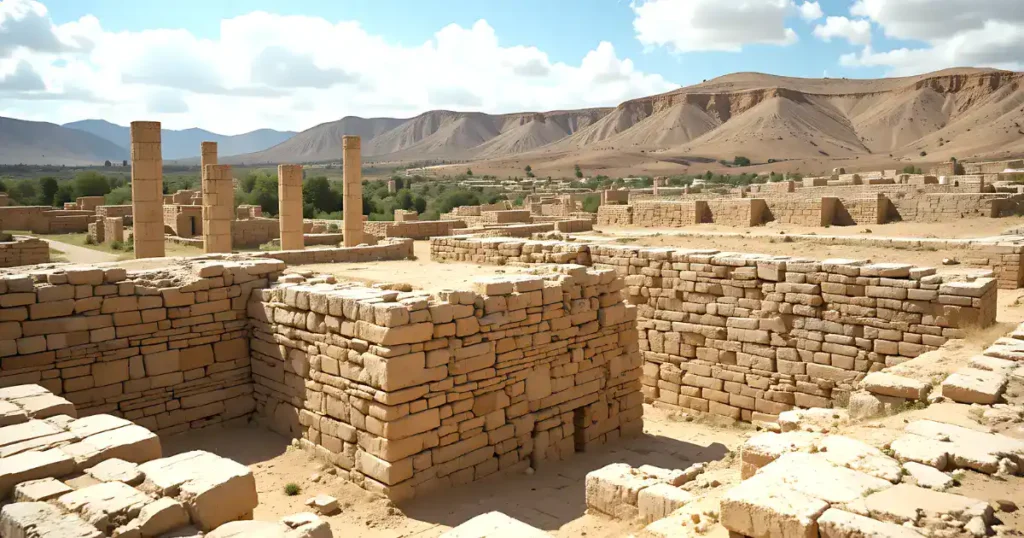
To understand Dinah’s account accurately, readers must view Genesis 34 through the lens of its original setting. The chapter took place within the ancient Near Eastern culture, a world very different from modern society. Understanding that background helps explain the actions, concerns, and conflicts recorded in the text without excusing sinful behavior.
Life in Canaan During the Patriarchs
Dinah lived during the time of the patriarchs, when Jacob and his family traveled throughout Canaan as shepherds and landowners. The region had many population groupings, including the Hivites, Canaanites, and other tribes.
Families often lived as large clans rather than independent households. A person’s identity, security, and future were closely tied to family relationships. This setting forms the backdrop for many stories involving the women of Scripture.
Marriage and Family Customs
The marriage customs in biblical times were very different from modern practices. Marriages were commonly arranged through family negotiations, agreements, and gifts exchanged between households.
Family approval carried great importance. Marriage was viewed not only as a relationship between two individuals but also as an alliance between families. These customs help explain why Hamor approached Jacob’s family to discuss a marriage arrangement after the events involving Dinah and Shechem.
Honor, Shame, and Tribal Society
Ancient societies placed a strong emphasis on honor and family reputation. Actions affecting one family member often impacted the entire household.
This honor-and-shame culture influenced how people responded to conflict, wrongdoing, and public disgrace. Understanding this background helps readers see why Dinah’s brothers reacted so strongly, even though their response was sinful and excessive.
Understanding Genesis 34 in Context
Historical context helps explain Genesis 34, but it does not justify the actions recorded there. The chapter examines a series of bad choices made by a group of people. For those interested in Christian living, the passage reminds us that cultural customs should never replace God’s standards of righteousness.
Like the stories of Delilah and Esther, Dinah’s account must be understood within its historical setting while allowing Scripture itself to guide our interpretation and application.
Characteristics of Dinah in the Bible
When examining Dinah’s character in the Bible, readers quickly discover that Scripture offers only a limited personal description of her. Unlike some biblical figures whose words and actions are recorded in detail, Dinah remains largely silent yet plays an important role.
First, Dinah is presented as a daughter within God’s covenant family. She was of the household of Jacob and Leah, a family selected by God to bear His promises to Abraham. Her place in that family gives importance to her account within the larger biblical story.
Second, Dinah serves as a central figure in one of Genesis’s most challenging family conflict narratives. Although the chapter focuses heavily on the actions of Shechem, Simeon, Levi, and Jacob, the events unfold because of what happened to her. In this way, she remains a central figure in the plot even when she is not speaking.
Another notable characteristic is her silence in the text. The Bible does not record any direct speech by Dinah. Rather than diminishing her importance, this silence draws attention to the suffering, tensions, and decisions surrounding her life.
Among the many women in Scripture, Dinah stands as a reminder that some individuals influence the biblical narrative through their experiences rather than through recorded speeches or leadership roles. Like the accounts of Eve, Tamar, and Elizabeth, her account contributes to God’s larger story of redemption, family relationships, and human responsibility.
Lessons from Dinah in the Bible
The lessons from Dinah in the Bible remain relevant for Christians today because Genesis 34 honestly portrays a broken world where sin affects individuals, families, and entire communities. During personal Bible Study, this chapter encourages readers to seek God’s wisdom rather than depending on human reactions.
First, Dinah’s account reminds us that God sees people in difficult situations, even when the biblical narrative records few details about their personal thoughts or feelings. Scripture does not record God’s direct involvement in Genesis 34, but God’s concern for justice and righteousness is obvious throughout the Bible. No act of evil escapes His notice.
Second, the story shows that family decisions carry lasting consequences. Shechem’s sinful actions harmed many lives, and Simeon and Levi’s revenge caused even greater suffering. Their decision was not only for themselves but also for everyone in Jacob’s household.
Another crucial lesson is that justice without wisdom can do more harm than good. The desire to address wrongdoing is right, but revenge that ignores God’s standards only increases pain. Believers are called to pursue justice in ways that honor the Lord.
Finally, Dinah’s story teaches us to trust God when life raises difficult questions without easy answers. Like Hagar, who experienced God’s care during a painful season, Hannah, who trusted Him through deep personal sorrow, and Huldah, who faithfully spoke God’s truth, Dinah reminds readers that every person matters to God. Among the many women in the Bible, her account shows us God’s perfect justice, even when human justice fails.
FAQs About Dinah in the Bible
Q1: Who did Dinah marry in the Bible?
The Bible does not record that Dinah married anyone. Although Shechem asked to marry her after violating her, the marriage never took place. There is no mention of another husband or a subsequent marriage in Scripture.
Q2: How did Dinah die in the Bible?
The Bible does not tell us how Dinah died. After the events of Genesis 34, she is mentioned only briefly in later genealogical records. No details are given about the end of her life.
Q3: Why is Dinah important in the Bible?
Dinah is important because her story reveals the serious effects of sin, the challenges of family conflict, and the need for true justice. Genesis 34 also gives valuable insight into the cultural setting of the patriarchs while reminding readers that God’s covenant people were still capable of making sinful choices. Her account encourages believers to seek God’s wisdom and righteousness when facing difficult situations.
Conclusion
Dinah in the Bible may appear in only a few chapters of Scripture, but her account leaves a lasting impression. As Jacob and Leah’s daughter, she stood at the center of the events in Genesis 34, a chapter that reveals the painful effects of sin, broken relationships, and misguided human responses to injustice. At the same time, her story reminds us that God remains faithful to His covenant people even when they fail.
Among the many women of Scripture, Dinah’s life encourages us to read the Bible carefully, allowing God’s Word to shape our understanding of justice, mercy, and wisdom. Rather than looking for easy answers, we can trust God’s perfect character when facing life’s difficult questions.
If you found this character study helpful, continue exploring the lives of other faithful and fascinating women throughout the Bible. Read more posts in our Women of the Bible series to discover how God worked through ordinary people to accomplish His extraordinary purposes across Scripture.