

Introduction to Basemath in the Bible
Basemath in the Bible refers to more than one woman mentioned in the Old Testament. Most commonly, the name is linked to one of Esau’s wives in Genesis, though another Basemath was the daughter of Solomon (1 Kings 4:15). This article focuses on Basemath, wife of Esau, her place in Genesis, her family connections, and what her account teaches us within God’s unfolding plan.
Many Women of Scripture receive only a few verses, yet their lives help shape the larger story of women in the Bible. Basemath is one of them. Her marriage to Esau, her connection to the families of Isaac, Rebekah, Ishmael, and Abraham, and her place in the genealogy of Edom all fit into the wider Genesis narrative.
We’ll also explain why the Bible appears to identify more than one Basemath, why some passages use different names, and what those details reveal about biblical genealogy. Most importantly, we’ll stay close to Scripture and see how even a brief account can strengthen our Christian faith by reminding us that every person recorded in God’s Word has a purpose within His redemptive plan.
Quick Facts About Basemath
Although Basemath in the Bible is mentioned only briefly, the details Scripture provides help place her within Esau’s family, the genealogy of Edom, and the broader Genesis account. Below the table are some of the main facts about her.
| Fact | Details |
|---|---|
| Meaning of her name | Basemath meaning in Hebrew is generally understood as “fragrance,” “perfume,” or “pleasant scent.” |
| Husband | Esau, the son of Isaac and Rebekah (Genesis 26:34; Genesis 36:3). |
| Father | Genesis 26:34 identifies her as the daughter of Elon the Hittite, while Genesis 36:3 identifies a Basemath as the daughter of Ishmael and sister of Nebaioth. This naming difference is explained later in the article. |
| Son | Reuel, one of Esau’s sons and an ancestor of the Edomites (Genesis 36:4, 13). |
| Key Bible passages | Genesis 26:34 to 35, Genesis 28:8 to 9, Genesis 36:2 to 5, Genesis 36:10 to 17. |
| Time period | During the era of the biblical patriarchs, after Abraham and before the nation of Israel was established. |
| Biblical significance | A Basemath, wife of Esau, appears in the genealogy of Edom and illustrates how Esau’s marriages fit into the larger covenant account in Genesis. |
| Other women named Basemath | The Bible also mentions Basemath, the daughter of Solomon and wife of Ahimaaz (1 Kings 4:15). |
Basemath’s account becomes even clearer when viewed alongside Eve, whose story begins God’s plan for humanity, and Sarah, whose life highlights the covenant promises passed through Isaac. Reading these women together helps us see how each played a unique role in the Genesis narrative, even when Scripture records only a few details about them.
Who Was Basemath in the Bible?
Basemath, Wife of Esau and Daughter of Elon the Hittite
Who was Basemath in the Bible? She is first introduced in Genesis 26:34 as the daughter of Elon the Hittite and one of Esau’s wives. At the age of forty, Esau married both Judith and Basemath, two Hittite women.
These marriages brought “grief of mind” to his parents, Isaac and Rebekah (Genesis 26:34-35, NIV), because they were outside the covenant family and reflected choices that differed from the values God had established for Abraham’s descendants.
Later in Genesis, Basemath is connected with Reuel, one of Esau’s sons (Genesis 36:4). Through Reuel, she became part of the genealogy of Edom, giving her a lasting place in biblical history even though Scripture records only a few details about her life.
As one of the Women in the Old Testament, Basemath reminds us that people mentioned briefly in Scripture can still have an important role in God’s unfolding plan. Careful Bible study also shows that to understand her story, we need to study multiple chapters together, rather than trying to understand it by reading one passage.
Basemath’s story also becomes clearer when read alongside Rebekah, whose deep concern for the covenant family helps explain why Esau’s marriages caused such sorrow. Likewise, Hagar’s account reminds us how Ishmael’s descendants became connected to Abraham’s larger family, providing helpful background for later events in Genesis.
Other Women Named Basemath in the Bible
One reason readers ask, “Who is Basemath in the Bible?” is because the name belongs to more than one woman. Genesis 36:3 identifies a Basemath as the daughter of Ishmael, the sister of Nebaioth, and the mother of Reuel.
In Genesis 28:9, however, Esau’s Ishmaelite wife is called Mahalath, leading many Bible scholars to understand Basemath and Mahalath as two names for the same woman. Since Scripture does not directly explain the difference, it is best to present the scenario as an interpretation rather than a certainty.
A third woman named Basemath appears in 1 Kings 4:15 as a daughter of Solomon and the wife of Ahimaaz. The Bible does not provide any other facts about her life other than this short mention.
For the rest of this article, our focus will remain on Basemath, wife of Esau, while carefully explaining the related passages so we stay faithful to what Scripture says without adding details it does not provide.
Key Bible Passages About Basemath Explained
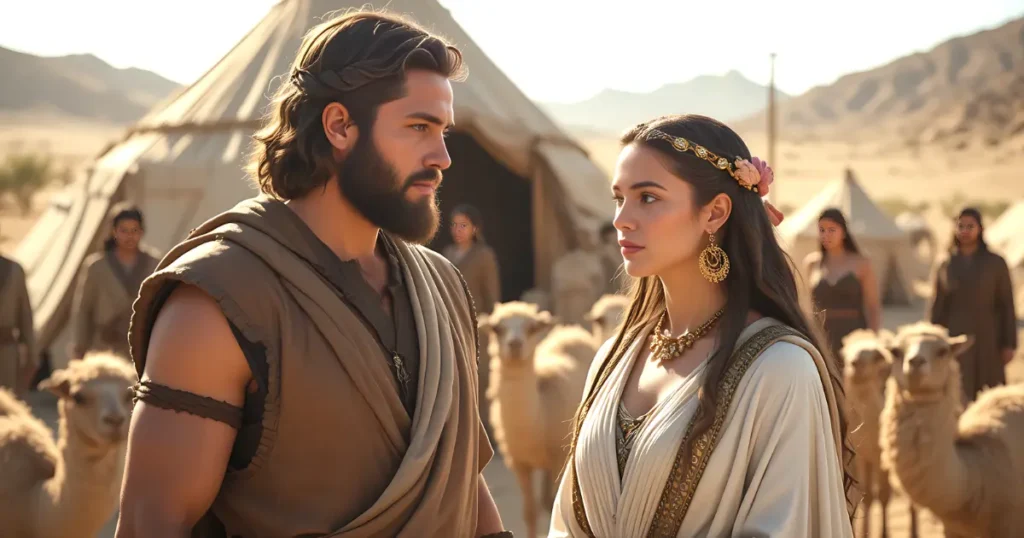
To understand Basemath in Genesis, we need to read three key chapters together. Genesis 26, Genesis 28, and Genesis 36 each add an important piece to her account. Reading them as a whole helps us see why Basemath’s identity has prompted discussion for centuries and why her place in Scripture is tied to Esau’s family rather than to a detailed personal biography.
Genesis 26:34, Esau Marries Basemath the Hittite
The first mention of Basemath appears in Genesis 26:34 to 35. The passage says that when Esau was forty years old, he married Judith and Basemath, the daughter of Elon the Hittite. The Bible also says that these marriages “were a source of grief to Isaac and Rebekah” (NIV).
Their sorrow was not based on ethnicity alone. The greater concern was that Esau chose wives from outside the covenant family, showing little regard for the spiritual heritage that God had established through Abraham and Isaac. This decision was representative of the increasing divergence between Esau and Jacob as the Genesis story developed.
For anyone doing a Scripture study or character study, this passage reminds us that even brief details can reveal important themes about faith, family, and obedience.
Genesis 28:9, Esau Marries Ishmael’s Daughter
After seeing that his parents were displeased with his earlier marriages, Esau took another wife, Mahalath, the daughter of Ishmael and the sister of Nebaioth (Genesis 28:9). Many readers notice that Genesis 36 later refers to Basemath, the daughter of Ishmael, instead of Mahalath.
This difference has led to an important question: are Basemath and Mahalath the same woman, or were they different wives? Scripture does not directly answer the question. Many Bible scholars believe the two names refer to the same person, while others suggest a different explanation. Because the text does not settle the issue, it is wise to acknowledge the possibilities without presenting any one view as certain.
Genesis 36:2 to 4, Basemath in Esau’s Genealogy and the Birth of Reuel
Genesis 36 shifts its focus to Esau’s genealogy, explaining how his descendants became the nation of Edom. Here, Basemath is named as Esau’s wife and the mother of Reuel, son of Esau, whose descendants became part of the Edomite family line.
This genealogy may seem like a simple list of names, but it serves an important purpose. It records the growth of Esau’s family and shows how his descendants developed into a distinct people living around Mount Seir. In this way, Genesis continues to follow the covenant line through Jacob and helps the reader comprehend the contrasting routes followed by the two brothers.
Basemath’s account also fits naturally within the wider story of the women in Scripture. As many women receive only brief mention, her life contributes to the larger picture of God’s work through families and generations.
Reading her account alongside the broader study of Women in Genesis also shows how each woman, whether she receives many chapters or only a few verses, has a meaningful place in the biblical record. In the same way, the account of Huldah reminds us that God used women in different seasons and for different purposes, each contributing to His unfolding plan in unique ways.
Why Do Esau’s Wives Have Different Names?
One of the most common questions readers ask is, “Why does Basemath have different names?” The answer begins by comparing Genesis 26, Genesis 28, and Genesis 36. In Genesis 26, Basemath is introduced as the daughter of Elon the Hittite. In Genesis 28, Esau marries Mahalath, the daughter of Ishmael and sister of Nebaioth. Then, in Genesis 36, Esau’s wife is called Basemath, the daughter of Ishmael and the mother of Reuel.
This has led many readers to ask, “Is Basemath the same as Mahalath?” Since Scripture does not directly explain the difference, Bible scholars have suggested several views. The most common explanation is that Basemath and Mahalath are two names for the same woman, much like other people in the Bible who are known by more than one name. Others believe the differences reflect ancient family records or naming traditions preserved in Genesis.
The biblical facts are clear. Genesis records these names exactly as they appear in the text. The explanation for the disparities, nevertheless, is not an official instruction but an interpretation. For that reason, it is best to present the evidence honestly and avoid making claims that Scripture itself does not make.
This careful approach is helpful whenever we study the Women of the Bible. Whether reading about Jochebed, whose faith protected the infant Moses, or Keziah, whose brief appearance reflects God’s restoration in Job’s family, we honor Scripture by distinguishing between what it clearly says and what thoughtful interpretation suggests. That same principle helps us understand Basemath’s account with both confidence and humility.
The Meaning of Basemath’s Name in Hebrew
The meaning of Basemath is generally understood to be “fragrance,” “perfume,” or “pleasant scent.” Like many Hebrew names found in Genesis, her name carries a meaningful idea that would have been familiar in the ancient world. Throughout the Bible, many biblical names reflect a person’s circumstances, family hopes, or an important event. At times, God even changed a person’s name to mark a new purpose or calling.
However, when it comes to Basemath, Scripture never explains whether the Basemath meaning in Hebrew has any direct connection to her life or character. Her name may be interesting, but the Bible is far more interested in her family ties and her place in Esau’s lineage than in what her name means. For that reason, we should avoid building spiritual lessons on ideas that Scripture does not clearly support.
This careful approach also helps when studying other biblical women. For example, Keturah and Leah both have names with recognized meanings, yet their lasting significance comes from what God accomplished through their lives, not from the meanings of their names alone. The same principle applies as we study women of the Bible, like Basemath.
Historical and Cultural Background
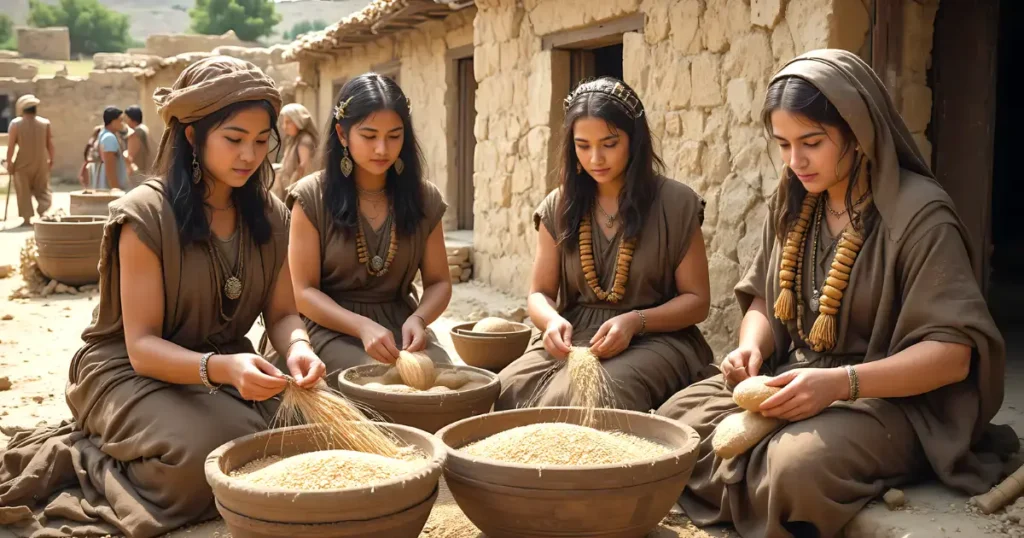
The Hittites and Their Relationship with Abraham’s Family
Understanding the world of the Hittites helps explain why Esau’s marriage concerned Isaac and Rebekah. The Hittites were one of the peoples existing in Canaan at the time of the patriarchs. Although Abraham dealt peacefully with Hittite communities, God’s covenant family remained distinct because the promised line was to continue through those who shared the covenant faith.
When Esau married Hittite women, his parents were deeply troubled, not because of cultural differences alone, but because his choices reflected a disregard for the spiritual direction of the covenant family. This background is an important part of any careful Bible study of Basemath’s account.
Why Esau Married into Ishmael’s Family
After realizing that his earlier marriages had displeased Isaac, Esau married Mahalath, the daughter of Ishmael (Genesis 28:9). Since Ishmael was Abraham’s son, this marriage connected Esau with another branch of Abraham’s descendants. Even so, Scripture does not say that this decision restored Esau’s standing within the covenant line. Instead, Genesis continues to trace God’s covenant promises through Jacob.
This historical setting helps us read the account without adding motives the Bible does not mention. In the ancient Near East, biblical marriage often strengthened family relationships, but Genesis keeps the focus on God’s unfolding plan rather than political or social alliances.
Like many women in Scripture, Basemath appears within that larger story. Reading her account alongside Naomi, whose family also faced difficult choices, and Naamah, whose brief mention contributes to the early Genesis genealogy, reminds us that even short biblical accounts help complete the larger picture of God’s work through generations.
What Can We Learn From Basemath’s Story?
When we ask, “What can we learn from Basemath?” the answer is found not in the number of verses about her, but in the role she plays within God’s larger plan. What is Basemath’s significance in the Bible? She reminds us that even those just mentioned in passing are there for a reason in the biblical narrative. Her place in Esau’s family and the genealogy of Edom shows that every generation recorded in Scripture contributes to the unfolding story of God’s purposes.
Basemath’s account also reminds us that family choices have lasting consequences. Esau’s marriages shaped his relationship with his parents and were part of the larger narrative of Genesis. At the same time, the genealogies show that God continues to work through history, faithfully accomplishing His purposes despite human failures and imperfect decisions.
Another valuable lesson is to trust Scripture more than tradition. When the Bible is clear, we can stand with confidence. Where it leaves questions unanswered, such as the relationship between Basemath and Mahalath, we should avoid speculation and remain humble before God’s Word.
This perspective encourages modern Christians to value every part of the Bible, even passages that seem brief or difficult. As we see in the lives of Martha, whose faithful service was shaped by her relationship with Jesus, and Candace, the Queen of Ethiopia, whose account highlights the spread of the gospel, God often uses ordinary people to accomplish extraordinary purposes.
Whether studying Women in the New Testament, the women who encountered Jesus, or the women of Genesis, every account points us back to God’s faithful plan of redemption.
Frequently Asked Questions About Basemath
Q: Was Basemath the first wife of Esau?
The Bible does not explicitly identify Basemath as Esau’s first wife. Genesis 26:34 states that when Esau was forty years old, he married Judith and Basemath, but it does not indicate which marriage took place first. Scripture simply records that both marriages occurred during the same period and that they brought grief to Isaac and Rebekah.
Q: Why is Basemath important in the genealogy of Edom?
Basemath is important because she became the mother of Reuel, one of Esau’s sons (Genesis 36:4). Through Reuel, she became part of the recorded genealogy of Edom, the nation descended from Esau. Her inclusion shows that the Bible carefully traces family lines to document the development of nations and to distinguish Esau’s descendants from the covenant line that continued through Jacob.
Q: Why does the Bible include women like Basemath in genealogies?
The Bible includes women like Basemath because genealogies are about more than lists of names. They record families, preserve historical accuracy, and show how God’s plan unfolded through real people across generations. Even when Scripture says little about an individual’s life, including women in these family records demonstrates that they had an important place in God’s redemptive account and helps readers understand the relationships that shape the broader biblical narrative.
Final Thoughts on Basemath
Basemath in the Bible may appear only briefly, but her account has an important place in the Genesis narrative. As one of Esau’s wives, she is connected to the family of Isaac, the genealogy of Edom, and the generations that followed Abraham’s descendants. Her story also reminds us to approach Scripture carefully, recognizing what the Bible clearly teaches while remaining humble about details it does not explain.
Studying Basemath alongside the surrounding passages in Genesis helps us better understand family, covenant history, and God’s work through generations. Like many women in Scripture, Basemath’s life is recorded in a few verses, yet her place in God’s Word still matters. Every person named in the Bible contributes to the larger story of God’s faithfulness and purpose.
Continue exploring more stories and lessons from the Women of the Bible to discover how God worked through women across Scripture.










1 thought on “Who Was Basemath in the Bible? One of Esau’s Wives in Genesis”