

Who Was Gomer in the Bible? An Introduction to Her Remarkable Story
Gomer in the Bible was the wife of the prophet Hosea and the daughter of Diblaim, introduced in Hosea 1. If you’ve ever wondered, “Who was Gomer in the Bible?” or “Who is Gomer in the Bible?” Scripture presents her as a woman whose troubled marriage became a living picture of Israel’s unfaithfulness to God and God’s faithful, covenant love toward His people. Although only a few chapters tell her story, Gomer’s story has become one of the best-known stories among the women of Scripture.
Her story reaches far beyond one marriage. God conveyed his sadness over Israel’s spiritual adultery, his readiness to forgive, and his desire to restore those who return to him via Hosea and Gomer. As one of the best known names on the list of women in the Bible, Gomer reminds us that God’s grace is greater than human failure. In this guide, you’ll discover what the Bible says about Gomer, the historical setting of her life, the meaning of her name, her family, the symbolism of her marriage, and the lasting lessons her story offers believers today.
Gomer in the Bible at a Glance With Key Facts and Bible References
Before exploring her story in depth, here’s a quick overview of Gomer in the Bible. These facts provide helpful context for your Bible study and make it easier to understand her role in God’s message through the prophet Hosea. Her story is brief, but it contains one of the most potent images of God’s covenant love in the whole of Scripture, and it has continued to influence how Christians conceive of redemption and restoration among the women of the Bible.
Quick Facts About Gomer
- Main Bible references: Hosea 1 to 3, especially the key Gomer in the Bible verse passages: Hosea 1:2, Hosea 1:3, Hosea 1:6, Hosea 1:8, Hosea 3:1, Hosea 3:2, and Hosea 3:3 (NIV)
- Time period: Eighth century BC, during the reign of Jeroboam II in the Northern Kingdom of Israel
- Husband: The prophet Hosea
- Father: Diblaim
- Children: Jezreel, Lo Ruhamah, and Lo Ammi
- Place: Northern Kingdom of Israel
- Role in Scripture: Hosea’s wife, whose marriage became a prophetic picture of Israel’s unfaithfulness and God’s faithful love
- Meaning of her name: The exact Hebrew meaning is uncertain. Common suggestions include “completion” or “to come to an end,” though scholars do not agree on a single meaning.
Gomer’s story is remembered because it points beyond one family’s struggles to God’s relationship with His covenant people. Her life reminds readers that even when people turn away, God continues to call them back with mercy and grace.
As you continue this study, you’ll see why Gomer’s story stands alongside the accounts of women like Rahab and Ruth, each showing God’s power to redeem lives in very different circumstances. These connections are also great opportunities to pursue your related character studies on those women.
What Does Gomer Mean in the Bible and Why Does Her Name Matter?
The Bible does not state Gomer’s meaning, so we should not claim more than the text says. The Hebrew meaning of Gomer is not known. Some scholars suggest it means “completion,” while others associate it with “bringing to an end” or “consummation.” The Bible doesn’t name her, so those are informed guesses, not facts. The meaning of Gomer in the Bible is accurate in its vagueness.
Throughout the Bible, names often carry significance. They might reflect a person’s character, God’s purpose, or an important event. However, not all biblical names are explained. Gomer is unnamed but identified by God’s message through her marriage to Hosea. The account teaches readers about God’s covenant love, mercy, and desire to restore His people.
For Christians today, the story is a helpful reminder to let Scripture lead our conclusions. When the Bible speaks clearly, we can be confident. And if it’s silent, then the best thing is to be humble. Gomer’s importance among the women of the Bible comes from her role in God’s unfolding plan of redemption, not from the meaning of her name alone.
As you continue studying women such as Esther and Hannah, you’ll notice that some names receive detailed explanations while others point us instead to the larger story of God’s work through ordinary people. That perspective continues to strengthen Christian faith by keeping our attention on God’s character rather than speculation.
Who Was Gomer in the Bible? Her Identity, Marriage, and Historical Background
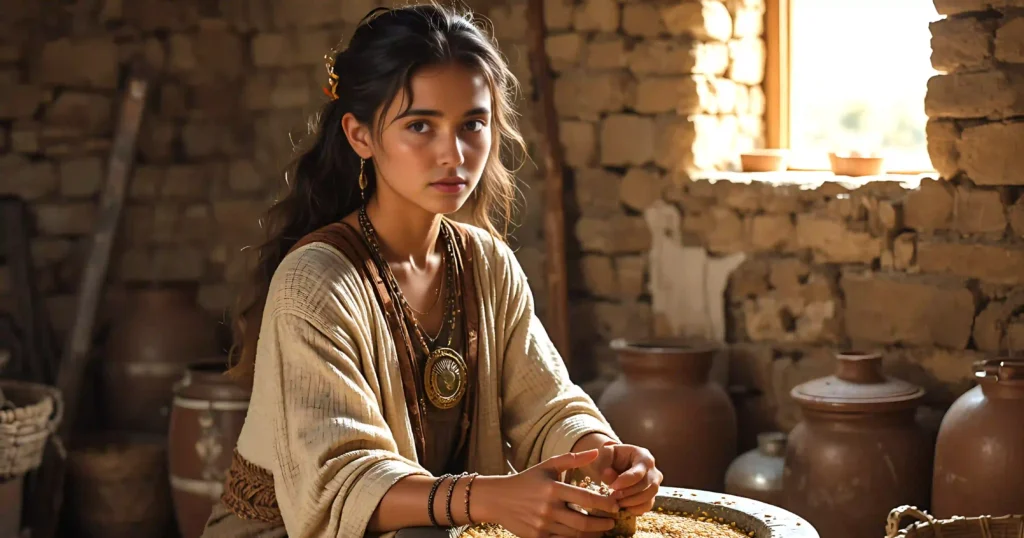
Understanding Gomer’s identity helps us see why her story carries such a powerful message. Although Scripture gives only a few personal details, those details are enough to place her in one of the darkest spiritual periods in Israel’s history. For anyone asking who married Gomer in the Bible, the answer is Hosea’s wife, whom God called to be part of a living prophetic message.
Gomer, Daughter of Diblaim
The Bible introduces Gomer as the daughter of Diblaim (Hosea 1:3). Beyond naming her father, Scripture provides no information about her family, upbringing, occupation, or early life. We don’t know where she was raised, how she met Hosea, or what happened to Diblaim. Rather than filling these gaps with tradition or speculation, a careful study of Scripture accepts that God revealed only what was necessary for His purpose.
This reminds us that the Bible often focuses more on God’s message than on complete biographies. Many biblical women are introduced briefly, yet their lives carry lasting spiritual significance.
Marriage to the Prophet Hosea
God commanded the prophet Hosea to marry Gomer as a prophetic sign to the nation (Hosea 1:2-3). Hosea obeyed God’s difficult instruction, demonstrating remarkable faith despite knowing that the marriage would illustrate Israel’s unfaithfulness. It was never meant to be a love story for the two of them, just that. Instead, it became a visible picture of God’s faithful love for a people who repeatedly turned away from Him.
Life During a Spiritually Declining Israel
Gomer lived in the Northern Kingdom of Israel during the reign of Jeroboam II, a time of economic success but deep spiritual decline. The nation looked good on the outside, but many had turned to worshipping Baal and other idols and had broken the covenant God had made with Israel.
This historical setting shows why Hosea’s marriage was so significant. Israel was unfaithful to the Lord via idol worship and covenant disobedience, just as Gomer would be unfaithful to her husband. The timing of Hosea’s ministry made his family’s story impossible to ignore, calling the nation to repentance before coming judgment.
As you compare Gomer’s account with those of other women in the Old Testament, such as Delilah and Dinah, you’ll notice that each story has distinct consequences for human choices while pointing readers back to God’s justice, mercy, and faithfulness.
The Story of Gomer in the Bible and What It Reveals About God’s Covenant Love
The story of Gomer in the Bible is much more than the account of one troubled marriage. Through Hosea and Gomer in the Bible, God gave Israel a living illustration of His relationship with His covenant people.
The story of Hosea and Gomer in the Bible reveals both the seriousness of sin and the depth of God’s faithful love. It remains one of the clearest pictures of redemption in the Old Testament and is a valuable character study for anyone seeking to understand God’s heart.
Hosea Chapter 1, Marriage, Children, and God’s Message
God began this remarkable account with a difficult command.
“When the Lord began to speak through Hosea, the Lord said to him, ‘Go, marry a promiscuous woman and have children with her, for like an adulterous wife this land is guilty of unfaithfulness to the Lord.'” (Hosea 1:2, NIV)
God’s command was not given to approve sin. Instead, it provided a strong object lesson of Israel’s recurrent spiritual unfaithfulness as demonstrated in idol worship.
Hosea obeyed.
“So he married Gomer daughter of Diblaim, and she conceived and bore him a son.” (Hosea 1:3, NIV)
Their first son was named Jezreel, reminding Israel that God would soon judge the house of Jehu and bring an end to the kingdom’s violence (Hosea 1:4-5).
Their daughter was named Lo Ruhamah, meaning “not loved” or “not shown mercy.” This moniker signified that God was bringing judgment on the Northern Kingdom for their continued rejection of Him (Hosea 1:6).
Their next son was named Lo Ammi, meaning “not my people” (Hosea 1:8-9). His name reflected the broken covenant relationship caused by Israel’s persistent rebellion. Even so, the following verses promise future restoration, showing that God’s judgment would not be His final word.
In the Bible, the names of the children in the story of Hosea were living sermons. Every time their names were spoken, they reminded Israel both of the consequences of sin and of God’s continuing plan to restore His people.
Hosea Chapter 3, Gomer’s Redemption and Restoration
At some point after the events of chapter 1, Gomer left Hosea. Although the Bible does not describe every detail, Hosea chapter 3 shows that she had fallen into circumstances from which she needed to be redeemed.
God again spoke to Hosea.
“The Lord said to me, ‘Go, show your love to your wife again, though she is loved by another man and is an adulteress. Love her as the Lord loves the Israelites, though they turn to other gods.'” (Hosea 3:1, NIV)
Instead of abandoning Gomer, Hosea obeyed once more.
“So I bought her for fifteen shekels of silver and about a homer and a lethek of barley.” (Hosea 3:2, NIV)
The purchase price shows that redemption came at a cost. Hosea did not merely take back Gomer. He paid to get the romance back. Then he said to her,
“You are to live with me many days; you must not be a prostitute or be intimate with any man, and I will behave the same way toward you.” (Hosea 3:3, NIV)
These passages are the core of the book. Hosea’s faithful love reflected God’s firm dedication to His covenant people. Israel had pursued false gods, yet the Lord continued calling them to repentance and restoration.
While Gomer’s account is unique among the women in Scripture, it points forward to the greater redemption accomplished through Christ. Like Hosea paid a price to buy back his bride, Jesus gave His life to buy back sinners and restore them to communion with God.
Although this story belongs to the Old Testament, its message echoes throughout the New Testament and helps us better appreciate God’s saving grace revealed through women such as Elizabeth and Joanna, who witnessed His faithfulness in different ways.
Why did God tell Hosea to marry Gomer?
God told Hosea to marry Gomer so their marriage would become a living picture of Israel’s unfaithfulness and God’s enduring covenant love. Through Hosea’s faithful commitment to his wife despite her unfaithfulness, God showed His willingness to forgive, redeem, and restore His people when they returned to Him.
What Can Christians Learn From Gomer in the Bible Today?
Many readers ask, What does Gomer represent in the Bible? At its heart, her story points to God’s relationship with His people. Gomer represents humanity’s tendency to wander, while Hosea reflects God’s persistent love that seeks to restore those who have turned away. It is not merely a matter of people marrying. It is about redemption, about the mercy of God, and about the pardon of God extended to those who repent and return to Him.
For believers today, Gomer’s account reminds us that no failure is beyond God’s grace. Sin has significant repercussions, yet when there is true repentance, wrongdoing does not have the final say. Throughout Scripture, God continually calls His people back into a restored covenant relationship with Him. That same invitation is extended via Jesus Christ, who completed God’s plan of salvation by offering His life for sinners.
At the same time, we should avoid misapplying Hosea’s marriage to every Christian relationship. As part of his prophetic career, Hosea received a unique order from God. His experience was not presented as a universal rule requiring every husband or wife to remain in every difficult or harmful situation. Other portions of Scripture provide larger lessons on marriage, wisdom, justice, and compassion for individuals who experience abuse or abandonment. Good Bible study always considers the whole counsel of God’s Word rather than building doctrine from a single account.
The enduring lesson is God’s covenant faithfulness. Even when people fail, God’s character remains unchanged. His love is holy, patient, and committed to rehabilitating those who really seek him. That truth strengthens Christian faith and gives hope to anyone who has made past mistakes.
Like Miriam, who learned the importance of humility after God’s discipline, and Susanna in Daniel 13, who remained faithful under false accusation, Gomer’s story shows that God works through very different circumstances to reveal His justice, mercy, and saving purpose. Together, these women encourage us to trust the Lord, repent when we fall short, and rest in His unfailing love.

What Happened to Gomer in the Bible and Afterward?
Many readers wonder what happened to Gomer in the Bible after Hosea redeemed her. The short answer is, Scripture doesn’t tell us. The biblical text says nothing about Gomer’s later life after the events reported in Hosea 3. We are not given details about her remaining years, her relationship with Hosea, or what became of her children beyond the prophetic purpose they served.
This also answers the common question, How did Gomer die in the Bible? The Bible does not tell us how she died, where she was buried, or how long she lived. Any claims about these details come from later traditions or personal speculation rather than the biblical text.
For a careful biblical study of women characters, it is important to distinguish between what Scripture says and what it does not. The inspired narrative is not intended to be a comprehensive biography but a message from God regarding Gomer’s life. When the Bible is silent, faithful readers should avoid making unsupported assumptions about the story.
Gomer is one of the most unforgettable characters in the story of women in the Bible, even though we do not know how her life ended. Her account continues to point readers to God’s covenant love, His willingness to redeem those who have wandered, and His desire to restore broken relationships with Himself.
As you continue exploring women in Scripture, you’ll find that characters such as Susanna (Luke 8:3) and Sheerah also demonstrate that God works through people whose lives are recorded with varying levels of detail, yet each contributes to His greater redemptive story.
Common Misconceptions About Gomer in the Bible Explained
Gomer’s story has prompted many questions over the centuries. Some are answered plainly in Scripture, and some are open to interpretation. A careful reading helps us distinguish biblical facts from assumptions and strengthens both our understanding of women in Scripture and our Christian faith.
Was Gomer Really a Prostitute?
This is one of the most debated questions in the book of Hosea. In Hosea 1:2, some Bible translations describe Gomer as a “promiscuous woman,” while others use terms such as “wife of whoredom” or “prostitute.” Because the original Hebrew expression can be understood in different ways, faithful Christian scholars do not all reach the same conclusion.
Some believe Gomer was already sexually immoral before marrying Hosea. Others say she was unfaithful just after the marriage. Since Scripture does not explain every detail, Christians should hold their views with humility while agreeing on the main message: God’s faithful love for an unfaithful people.
Did Gomer’s Children All Belong to Hosea?
The Bible states that Gomer bore Jezreel to Hosea (Hosea 1:3). However, when describing the births of Lo Ruhamah and Lo Ammi, the wording differs slightly, leading some scholars to ask whether all three children were Hosea’s biological children.
The text never gives a direct answer. Therefore, no interpretation should be assumed to be certain. What is clear is that each child’s name served God’s prophetic purpose by communicating His message to Israel.
Is Gomer Mentioned Anywhere Else in the Bible?
Gomer, the woman, only occurs in the book of Hosea. She should not be confused with Gomer in Genesis 10, who was a grandson of Noah and the ancestor of several nations. Although they share the same name, they are entirely different biblical figures.
As you compare Gomer’s account with those of the Shunammite woman and Tamar in Genesis 38, you’ll see that each narrative presents distinctive obstacles while revealing God’s justice, mercy, and sovereign work through imperfect people.
Why Gomer’s Story Still Speaks to Christians Seeking God’s Grace Today
The story of Gomer in the Bible reminds us that no one is beyond the reach of God’s redeeming love. Her life shows both the seriousness of sin and the greatness of God’s mercy. Through Hosea’s faithful love for Gomer, we see a powerful picture of God’s commitment to His people, even when they wander. The lasting lessons are clear: God calls us to repentance, offers forgiveness, and remains faithful to His covenant promises.
Take time to read the book of Hosea for yourself. As you study its chapters, you’ll discover that the message is not ultimately about Gomer or Hosea but about a God who never stops pursuing those He loves. That truth still brings hope to believers today through Jesus Christ, our Redeemer.
If you enjoyed this study, continue exploring the lives of other remarkable women in Scripture by reading more posts in our Women of the Bible series. Each account reveals another beautiful part of God’s unfolding plan of redemption and His faithfulness across every generation.
Frequently Asked Questions About Gomer
Q1: Did Hosea continue living with Gomer after redeeming her?
Yes, the Bible indicates that Hosea brought Gomer back into his household after redeeming her. In Hosea 3:3, he instructed her to remain faithful to him, symbolizing God’s desire to restore His covenant relationship with Israel. Scripture does not provide further details about their later married life.
Q2: Why are Gomer’s children’s names so important in Hosea?
God chose the names of Gomer’s children to deliver prophetic messages to Israel. Jezreel pointed to coming judgment; Lo Ruhamah (“not loved” or “not shown mercy”) announced the withdrawal of God’s mercy, and Lo Ammi (“not my people”) reflected Israel’s broken covenant relationship. Their names joined together pointed to God’s justice and His promise of future restoration.
Q3: How is Gomer different from other women in the Bible?
Gomer’s role is unique because God designed her marriage to Hosea as a living prophecy rather than simply a family story. While many biblical women demonstrate faith, courage, or leadership, Gomer’s account primarily illustrates God’s covenant love, mercy, and willingness to redeem an unfaithful people. Her story fits but differs from the stories of women like the Shunammite woman and Tamar in Genesis 38, each of whom displays a different aspect of God’s work throughout Scripture.