

Introduction: Who Was Keziah in the Bible?
Keziah in the Bible was one of Job’s three daughters born after God restored his family and blessed him following his season of suffering. She is mentioned by name in Job 42:14 (NIV), alongside her sisters Jemimah and Keren Happuch. Although Scripture gives only a few details, Keziah’s place in Job’s restored household points to God’s mercy, renewal, and abundant blessing. If you’re wondering, “Who was Keziah in the Bible?” the Bible presents her as part of the joyful conclusion to Job’s story and as one of the memorable women of Scripture.
Keziah’s account may be brief, but it carries lasting meaning. Her name, her family, and the unusual honor she received help us better understand God’s restoration after suffering. As one of the lesser known women on the list of women in the Bible, she reminds us that even people mentioned only a few times can teach important spiritual truths. In this study, we’ll explore Keziah’s story, the meaning of her name, her place in Job’s family, and why her life continues to encourage Christians to trust God’s faithfulness today.
What Does the Name Keziah Mean in the Bible?
The meaning of Keziah in the Bible comes from the Hebrew word associated with “cassia,” a fragrant spice valued in the ancient world. Understanding the meaning of Keziah in the Bible adds another layer to her brief appearance in Scripture. While the Bible does not explain why Job chose this name, it reminds us that names often carried significance in biblical history. Like many women in Scripture, Keziah invites readers to reflect on identity, blessing, and God’s work in a person’s life.
The Hebrew Meaning Behind Keziah
The name Keziah is linked to cassia, an aromatic bark from the cinnamon family that was prized for its pleasant fragrance. Cassia is one of the precious spices referenced in the Old Testament. For example, Exodus 30:24 lists cassia among the ingredients of the sacred anointing oil, while Psalm 45:8 mentions garments scented with myrrh, aloes, and cassia.
In biblical culture, names often reflected a person’s identity, family hopes, important events, or circumstances surrounding their birth. Scripture does not provide us a rationale for Job naming his daughter Keziah; thus, we should not suggest a cause that the text does not offer. Even so, the name would have been familiar to readers because it was associated with something precious and pleasing.
Biblical Symbolism of Fragrance
Throughout the Bible, fragrance often represents beauty, honor, worship, or something that pleases God. Fragrant spices, for example, were used in church and at important occasions as symbols of reverence and devotion.
It is reasonable to observe that Keziah’s name carries these positive associations. But we must separate what the Bible says from what the readers might conclude. Scripture does not state that Keziah herself symbolizes fragrance, beauty, or blessing because of her name. Those ideas are thoughtful interpretations rather than direct biblical teaching.
For Christians, Keziah’s name serves as a reminder to read the Bible carefully, appreciating both its clear truths and its rich imagery. As you continue studying the lives of Miriam, Ruth, and other faithful women, you’ll see that names often enrich the biblical account, but God’s message always rests on what Scripture clearly reveals.
Keziah in the Bible at a Glance
Before exploring her story in more detail, here’s a quick overview of Keziah in the Bible. Although only a few verses mention her, those verses provide important details about her family, her place in God’s restored blessings, and her unique role among the Women in the Old Testament. If you ever wondered, “Where is Keziah in the Bible?” you will find her in Job 42:14-15, towards the close of the Book of Job, where God restores Job after his lengthy period of suffering and testing.
Quick Facts About Keziah
| Category | Details |
|---|---|
| Name | Keziah |
| Meaning | Cassia, a fragrant spice |
| Father | Job |
| Sisters | Jemimah and Keren Happuch |
| Bible Reference | Job 42:14 to 15 |
| Time Period | Patriarchal era, Old Testament |
| Location | Land of Uz |
| Known For | Being Job’s second daughter after God’s restoration of Job |
| Husband | Not mentioned in Scripture |
| Children | Not mentioned in Scripture |
Keziah’s brief appearance reminds us that God often includes meaningful details about people whose lives point to His greater plan. Because she is one of the lesser-known women of the Bible, her story beckons the reader to look beyond the length of a person’s story to the spiritual message it carries. You may also enjoy reading about Eve, the first woman in Scripture, and Sarah, whose life also reflects God’s faithfulness through His promises.
Historical Background: Job’s Life Before and After Restoration
Understanding the Book of Job helps us appreciate why Keziah’s story matters. Her appearance comes at the end of one of the Bible’s most powerful accounts of suffering and restoration. This character study is not only about Keziah herself but also about the God who remained faithful to Job through every trial. The narrative shows that God is present even in the darkest times of life.
Job’s Trials and Faithfulness
Job is introduced in the Old Testament as a righteous man who honored God and turned away from evil (Job 1:1). He lived in the land of Uz and was known for his great wealth, large family, and respected position in his community. Yet everything changed when Satan challenged Job’s faithfulness, claiming he served God only because of his blessings.
Within a short time, Job lost his livestock, servants, and all ten of his children. He also endured excruciating bodily ailments. Despite his grief and honest questions, Job refused to abandon his faith in God. His tale is proof that sincere faith doesn’t mean pretending sorrow isn’t real. Instead, it means continuing to trust God even when His purposes are hard to understand.
God Restores Job’s Family
After Job prayed for his friends, Job 42:10 (NIV) says that the Lord restored his fortunes and gave him twice as much as he had before. This marked the beginning of Job’s restoration, revealing both God’s compassion and His perfect justice. God did not wipe away Job’s bitter memories, but He gave him new hope and new benefits in his life.
It was during this restored season that Keziah, along with her sisters Jemimah and Keren Happuch, was born. Their births became visible signs of God’s blessing after years of sorrow. For readers studying the women in the Bible, Keziah reminds us that God can write a new chapter after hardship without asking us to forget the past.
As you continue this Bible study, you’ll also notice similar themes of God’s guidance and faithfulness in the lives of Rebekah and Leah, two women whose stories reveal how God works through both joyful and difficult seasons.
Who Was Keziah in the Bible? Her Story in Job 42
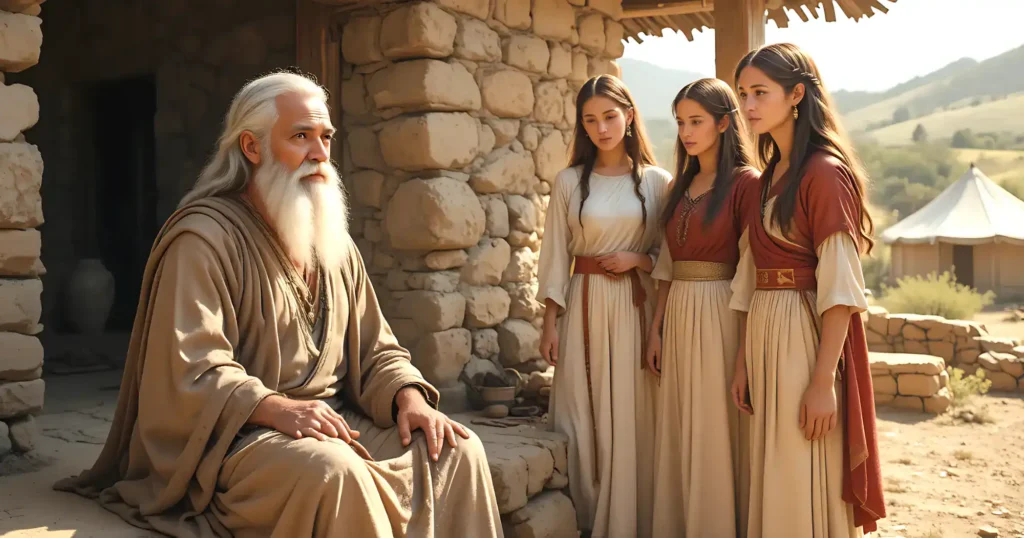
If you’ve been asking who Keziah was in the Bible or who Keziah is in the Bible, the answer is found in the closing chapter of the Book of Job. The story of Keziah in the Bible is short, yet it carries a powerful message about God’s grace in the midst of suffering. Keziah was Job’s daughter. She was part of the new family God granted Job following his time of testing.
Though Scripture records only a few verses about her, those verses reveal important truths about God’s restoration, honor, and generous care. Her account stands as a meaningful example among the stories of biblical women, encouraging believers to trust God’s faithfulness even when life takes unexpected turns.
Keziah Was Job’s Second Daughter
After Job remained faithful through deep loss and hardship, God blessed him with a new season of life. Job 42:13 to 14 (NIV) says:
“And he also had seven sons and three daughters. The first daughter he named Jemimah, the second Keziah, and the third Keren Happuch.”
These verses introduce Keziah as Job’s second daughter, born after God’s restoration. Also identified are her sisters Jemimah and Keren Happuch, one of the few sibling pairs listed together in Scripture.
Before this point, Job had already lost his first ten children during the tragedy recorded in Job 1. The birth of three children does not erase that profound loss. Instead, it shows that God continued to bless Job’s life with a new generation and renewed hope. Nowhere does the Bible say that one family superseded another. Rather, it presents God’s restoration as an expression of His compassion after a season of grief.
Although Keziah appears only once by name, her place in Job’s restored family gives her lasting significance. Her account reminds us that some of the most meaningful people in Scripture are remembered not for many recorded actions but for where they fit within God’s larger story.
Why Were Job’s Daughters Named in Scripture?
One of the most interesting details in Job’s closing chapter is that the daughters’ names are recorded, while the names of Job’s sons are not. Why this choice was taken is not told in the Bible. We should not reach conclusions that the Bible does not reach.
Even so, names carried great importance in biblical culture. They often reflected hope, character, beauty, family identity, or God’s work in a person’s life. The names of Keziah and her sisters inspire the reader to see these women in the happy ending of Job’s story.
The names also slow the reader down. Instead of simply stating that Job had more children, the text introduces each daughter by name. This highlights their value within the family and encourages us to remember them as individuals, not merely as part of a list.
Throughout the story of women in the Bible, God often works through people who receive only a brief mention. Like Keziah, many devoted women remind us that every person matters in the eyes of God, whether their narrative spans many chapters or only a few verses.
Why Did Keziah Receive an Inheritance?
Job 42:15 (NIV) says the following:
“Nowhere in all the land were there found women as beautiful as Job’s daughters, and their father granted them an inheritance along with their brothers.”
This verse is remarkable because, in the ancient Near East, family inheritances normally passed through sons. Daughters did not normally inherit equally with their brothers while their brothers were alive. In Israel’s later laws, there were exceptions in certain situations.
To give Keziah and her sisters an inheritance together with their siblings is an act of great generosity on Job’s part. The passage does not criticize existing customs or present a new law. Instead, it records what Job chose to do for his family after experiencing God’s abundant blessing.
This generous act fits the closing theme of the Book of Job. God had been so merciful to Job, and Job’s household was no less generous in spirit. Keziah and her sisters were treated with dignity and honor as valued members of the restored family.
For Christians today, this account points beyond material possessions. It reminds us that God’s blessings are not measured only by wealth but also by restored relationships, renewed hope, and the value He places on every person.
As you look at the lives of Rachel, Jochebed, and other godly women of Scripture, you will see this same fact echoed again and again in different ways. God knows every name, values every life, and faithfully accomplishes His purposes through ordinary people who become part of His extraordinary story.
Why Is Keziah Important in the Bible?

If you’ve wondered, “Why is Keziah mentioned in the Bible?” her account points readers to God’s faithfulness rather than to her personal achievements. Although she appears only in the final chapter of Job, her place in the story helps answer the question of what is unique about Keziah.
She reminds us that God’s task of restoration is for families, for future generations, and for the everyday. While this article focuses on an Old Testament woman, these same truths continue to encourage believers in Christian living and are reflected throughout the lives of faithful men and women across Scripture, including the Women in the New Testament.
Keziah Represents God’s Restoration
Keziah was born after Job’s long season of suffering had ended. Her birth was part of the restored family God mercifully gave Job after years of loss, anguish, and testing. She stands as a reminder that God’s faithfulness continues even after painful experiences.
The Bible does not present Keziah as the reason for Job’s restoration. Rather, she is one of the visible fruits of God’s mercy. Her presence in Job’s family reveals that the Lord was writing a fresh chapter in Job’s life. This encourages Christians to trust that God remains faithful, even when His timing and plans are beyond our understanding.
Keziah Shows the Value of Women in Scripture
Keziah’s inheritance, along with her brothers’, is one of the most remarkable details of her life. In a culture where such practices were uncommon, Job chose to include his daughters in his inheritance, demonstrating generosity and honor within his restored household.
Her story also reminds readers that women have an important place in the biblical narrative. Some women rule nations, some declare the word of God, and some, like Keziah, humbly point to His grace in His unfolding plan. Together, these accounts reveal God’s care for every person and His ability to use each life for His purposes.
As you continue exploring the lives of Hannah and Abigail, you’ll find the same thread woven throughout Scripture. God values faithfulness, works through ordinary people, and imparts eternal wisdom through the lives of many women in the Old Testament.
What Does the Bible Not Tell Us About Keziah?
Many readers ask what happened to Keziah in the Bible or wonder what happened to Keziah after Job died. In fact, Scripture doesn’t give that information. This is an important reminder that a careful Scripture study should distinguish between what the Bible clearly says and what it leaves unsaid. That practice will help strengthen our Christian faith and keep us from basing our beliefs on guesswork.
The Bible does not tell us how old Keziah was when she was born. Though she was born after God restored Job’s family, the text never names her mother. Scripture also does not say whether Keziah married, had children, or how many years she lived. The Bible does not speak of her again after the final passages of the Book of Job, nor does it tell of her life after Job’s death.
These unanswered questions may leave us curious, but they also teach an important lesson. Scripture is not designed to answer every question of history. Instead, it tells us what God wants us to know for faith and a good life. Keziah’s brief appearance is enough to show God’s restoration, generosity, and faithfulness without filling in every detail of her life.
As Christians, we should respect the Bible’s silence rather than rely on later traditions or personal theories. Staying grounded in God’s Word keeps our understanding clear and helps us focus on the truths He chose to reveal. As you study the lives of Esther and Deborah, you’ll find the same principle. God always gives us what we need to know, even if He does not answer every question we may have.
Lessons Christians Can Learn from Keziah
Although Keziah is mentioned only briefly, her place in Scripture offers valuable lessons for believers today. If you’ve wondered what we can learn from Keziah, her account points beyond herself to God’s character and His faithfulness. This character study shows us that even the smallest Bible stories may build up our faith. While Keziah lived long before Christ, the truths found in her life continue to encourage Christians and connect with the hope revealed through Biblical Women, the women in Jesus’ ministry, and the women in the New Testament.
1. God Can Bring Blessing After Suffering
Job’s story reminds us that suffering does not always have the final word. After years of pain, God brought restoration to Job’s life in His perfect time. Keziah’s birth was part of the fresh beginning. This does not mean every hardship ends the same way, but it does remind us that God remains faithful even when we cannot yet see His plan.
2. God Sees and Values Every Person
The Bible records Keziah’s name even though we know very little about her life. That little detail tells us that everyone matters to God. No life is missed in His design, even when someone’s tale is only a few verses long. Our value comes from being known by God, not from receiving public recognition.
3. God’s Restoration May Look Different Than Expected
Job’s restored family and renewed blessings did not erase the sorrow he had experienced. His life included the loss of his first children. Instead of pretending the past never happened, God gave Job hope for the future while allowing his story to continue. Christians can trust that God’s restoration often delivers healing and purpose without changing history.
4. Faithfulness Matters During Difficult Seasons
Job remained faithful through questions, grief, and uncertainty. His strength of endurance was the reason for the happy ending described in the last chapter of the book. Keziah’s place in that restored family reminds us that obedience to God is worthwhile, even when we do not immediately understand what He is doing.
The same truth appears throughout Scripture. As you read about Mary, Mary Magdalene, and many other faithful women, you’ll see that God honors those who continue to trust Him through every season. Their lives, like Keziah’s, encourage us to walk by faith and rest in God’s unfailing promises.
Frequently Asked Questions About Keziah in the Bible
Q1: What did Keziah do in the Bible?
The Bible does not document any specific actions or ministry by Keziah. If you’re wondering what Keziah did in the Bible, Scripture simply calls her one of Job’s three daughters, born after God restored his family (Job 42:13-15). Her importance comes from her place in Job’s restored household and the inheritance she received alongside her brothers.
Q2: Why is Keziah mentioned in the Bible?
If you’re asking why Keziah is mentioned in the Bible, she appears as one of the visible signs of God’s blessing after Job’s long season of suffering. The Bible lists her name, along with her sisters’ names, and tells us that Job gave his daughters an inheritance with their brothers. These details highlight God’s generous restoration and the honor shown to Keziah within her family.
Q3: Is it Kezia or Keziah?
If you’ve seen both spellings and wondered whether Kezia or Keziah refers to the same biblical person, they do. Keziah is the spelling used in many modern English Bible translations, including the NIV. Kezia appears in some older translations and study resources and is also a modern form of the name. The spelling differs, but both names refer to Job’s second daughter in Job 42:14.
Final Thought: What Keziah’s Story Teaches Us Today
Although the Bible mentions Keziah only a few times, her story leaves a lasting impression. She shows up at the joyful end of Job’s story, reminding us that God is faithful through both pain and restoration. Her name, her place in Job’s restored family, and the inheritance she received all point to God’s mercy and generous care.
Keziah also reminds us that God remembers people whose stories may seem small. Many women of Scripture are only briefly addressed, but their lives still reveal essential truths about God’s character and His action throughout history. Every person has value because God knows them by name and includes them in His unfolding plan.
As you continue reading the Book of Job, you’ll gain a deeper appreciation for God’s wisdom, compassion, and faithfulness. We also invite you to explore the lives of other remarkable women in the Bible whose stories strengthen faith and encourage everyday Christian living.
Thanks for reading. Be sure to browse more posts on our Women of the Bible website to continue discovering the lives, lessons, and lasting hope found in God’s Word.