

Introduction to the Women in Genesis
Women in Genesis are the female figures introduced throughout the first book of the Bible. They include well known women such as Eve, Sarah, Hagar, Rebekah, Leah, and Rachel, along with many others whose lives helped shape God’s covenant plan. These women in the book of Genesis together reflect God’s work through families and faith and His expanding promise of salvation. If you’re wondering, “Who are the women in Genesis?” they are central to the biblical story from creation to the beginning of the nation of Israel.
For many people who are new to the Bible, Genesis may seem to focus mainly on men like Adam, Noah, Abraham, Isaac, Jacob, and Joseph. Yet the women of Scripture are never just background characters. Through mothers, wives, daughters, widows, servants, and even unnamed women, God preserved the promised family line, displayed His faithfulness, and revealed His purpose for humanity.
Think of this article as your guide to the list of women in the Bible found in Genesis. You’ll meet each woman, learn why she matters, and see how her story fits into God’s larger plan. Rather than replacing our detailed character studies, this pillar page provides a clear overview and points you to each woman’s full account for deeper study. As you read, you’ll see that every woman, whether mentioned briefly or often, has a meaningful place in the Bible’s story of creation, covenant, and redemption.
Women in Genesis at a Glance
The list of women in Genesis includes both named and unnamed figures whose lives shaped the story of creation, God’s covenant, and the beginnings of Israel. Some are given several chapters, while others appear in only a few verses. Even so, every woman in Genesis contributes to the biblical narrative in a unique way.
This quick reference table introduces the major women mentioned in Genesis and their roles. As you explore this guide, you can use the “Existing Character Study” column to find more detailed articles about many of these Biblical Women and other Women in the Old Testament.
| Woman | Genesis References | Role |
|---|---|---|
| Eve | Genesis 2 to 4 | First woman |
| Cain’s Wife | Genesis 4 | Unnamed wife of Cain |
| Adah | Genesis 4, 36 | Wife of Lamech and later a wife of Esau |
| Zillah | Genesis 4 | Wife of Lamech |
| Naamah | Genesis 4 | Daughter of Lamech and Zillah |
| Noah’s Wife | Genesis 6 to 9 | Unnamed wife of Noah |
| Sarah | Genesis 11 to 23 | Matriarch of Israel |
| Milcah | Genesis 11, 22, 24 | Wife of Nahor and grandmother of Rebekah |
| Iscah | Genesis 11 | Daughter of Haran |
| Hagar | Genesis 16, 21 | Sarah’s servant and mother of Ishmael |
| Pharaoh’s Wife | Genesis 12 | Unnamed royal woman in Pharaoh’s household |
| Lot’s Wife | Genesis 19 | Wife of Lot who looked back at Sodom |
| Lot’s Daughters | Genesis 19 | Daughters of Lot and ancestors of Moab and Ammon |
| Abimelech’s Wife | Genesis 20 | Unnamed wife in Abimelech’s household |
| Keturah | Genesis 25 | Abraham’s wife after Sarah’s death |
| Rebekah | Genesis 24 to 27 | Wife of Isaac and mother of Jacob and Esau |
| Leah | Genesis 29 to 35 | Jacob’s first wife and mother of six tribes of Israel |
| Rachel | Genesis 29 to 35 | Jacob’s beloved wife and mother of Joseph and Benjamin |
| Bilhah | Genesis 30, 35 | Rachel’s servant and mother of Dan and Naphtali |
| Zilpah | Genesis 29, 30 | Leah’s servant and mother of Gad and Asher |
| Dinah | Genesis 34 | Daughter of Jacob and Leah |
| Adah | Genesis 36 | Wife of Esau and mother of Eliphaz |
| Aholibamah | Genesis 36 | Wife of Esau and mother of Jeush, Jalam, and Korah |
| Tamar | Genesis 38 | Judah’s daughter in law and ancestor of King David |
| Potiphar’s Wife | Genesis 39 | Unnamed wife of Potiphar who falsely accused Joseph |
| Asenath | Genesis 41, 46 | Wife of Joseph and mother of Ephraim and Manasseh |
| Serah | Genesis 46 | Daughter of Asher |
You may want to check out this post: Who Was Basemath in the Bible? One of Esau’s Wives in Genesis
Women in Genesis and Their Place in God’s Story
The women’s role in Genesis is woven into every major stage of God’s plan, from creation to the covenant with Abraham and the growth of the family that became Israel. Some women are named; some are not. Together, their lives show that God works through ordinary people to accomplish His extraordinary purposes.
The story of women in the Bible begins with Eve, the first woman, created in God’s image alongside Adam (Genesis 1:27, NIV). Although sin entered the world through the Fall, God immediately gave the promise of a coming Savior through the woman’s offspring (Genesis 3:15). From that moment, the women of Genesis became part of His unfolding plan of redemption.
As Genesis continues, we see women serving as wives, mothers, daughters, servants, and leaders within their families. Some others battled, failed, or made hard decisions. Some trusted God in times of waiting. Their stories are honest and deeply human.
So how are women portrayed in Genesis? Scripture presents them as people of faith, courage, weakness, wisdom, and perseverance. Whether named or unnamed, each woman helps move God’s covenant story forward. Their lives remind us that God often accomplishes His purposes through ordinary people who simply become part of His greater plan.
Women in Genesis in Chronological Order

The book of Genesis introduces women from many backgrounds, including wives, mothers, daughters, servants, queens, and widows. Some appear for only a few verses, while others play major roles in God’s covenant story. Together they reveal how God worked through ordinary as well as extraordinary people to accomplish His goals.
Creation and the Earliest Women
- Eve
- Cain’s wife
- Adah
- Zillah
- Naamah
- Noah’s wife
The story begins with Eve in Genesis, the first woman created by God and the answer to the question, “Who was the first woman in Genesis?” God formed Eve from Adam’s side to be his companion and equal in bearing His image (Genesis 2:18 to 25, NIV). Although she and Adam sinned by eating from the forbidden tree, God promised that the offspring of the woman would one day defeat evil (Genesis 3:15, NIV). This promise is prophetic of Christ.
Genesis also briefly mentions Cain’s wife, whose name is not recorded but who became the mother of his descendants (Genesis 4:17). Adah and Zillah were the wives of Lamech and the mothers of several skilled workers who contributed to early civilization (Genesis 4:19-22).
Naamah, Zillah’s daughter, is named without further details, reminding readers that not every biblical figure receives a full account. Later, Noah’s wife survived the flood with Noah and their family. Unnamed, her fidelity helped maintain the human family through one of history’s greatest trials.
Women During Abraham’s Lifetime
- Sarah
- Hagar
- Pharaoh’s wife
- Lot’s wife
- Lot’s daughters
- Abimelech’s wife
- Keturah
The account of Abraham introduces several remarkable women whose lives shaped God’s covenant promises. Sarah in Genesis was Abraham’s wife and the mother of Isaac. Though she struggled with years of barrenness, God fulfilled His promise by giving her a son in her old age (Genesis 21:1-7, NIV). Sarah became one of the great matriarchs of Israel and a model of trust in God’s timing.
Hagar in Genesis, Sarah’s Egyptian servant, became the mother of Ishmael after Sarah gave her to Abraham. When Hagar faced hardship, God met her in the wilderness and cared for her. She became the first person in Scripture to give God a name, calling Him “the God who sees me” (Genesis 16:13, NIV). Her story is a reminder that God sees what we overlook.
Genesis also introduces Pharaoh’s wife during Abraham’s stay in Egypt and Abimelech’s wife during Abraham’s time in Gerar. Although neither woman is named, both appear in accounts that reveal God’s protection over Sarah and His faithfulness to His covenant promises.
After Sarah’s death, Abraham married Keturah in Genesis (Genesis 25:1-6). She bore him several sons whose descendants settled across the Ancient Near East. While Isaac remained the heir of God’s covenant, Keturah’s family became part of Abraham’s growing legacy.
Together, these women are remembered as the wives of Abraham, each contributing to the broader biblical story in different ways. Their lives continue to inspire Christians to trust in God’s promises even when His plans unfold differently than we expect.
Women in Isaac’s Family
- Milcah
- Iscah
- Rebekah
As the covenant passed to Isaac, several women helped shape the next generation. Milcah, the wife of Nahor, became the grandmother of Rebekah and part of the family line that prepared the way for Isaac’s marriage. Her family is introduced in Genesis 22 because it connects Abraham’s household with the future covenant family.
Genesis also mentions Iscah, Haran’s daughter and Milcah’s sister (Genesis 11:29). Little is known about her, but her mention highlights the meticulous family records kept throughout Genesis.
Rebekah in Genesis became Isaac’s wife after Abraham’s servant sought God’s guidance in finding a bride (Genesis 24). Her willingness to leave her country was a sign of trust and obedience. Rebekah later became the mother of Jacob and Esau, making her one of the most influential women in the Bible. Her story is a rich resource for personal Bible study on faith, family, and God’s sovereign plan.
Women in Jacob’s Family
- Leah
- Rachel
- Bilhah
- Zilpah
- Dinah
- Adah (Esau’s wife)
- Aholibamah
- Serah
Jacob’s family includes some of the best known women in Scripture. The wives of Jacob, Leah and Rachel, became the mothers of the tribes of Israel. Leah, though less loved by Jacob, gave birth to six sons, including Judah, through whom the Messiah would come. Rachel was barren for years before God blessed her with Joseph and then Benjamin.
Bilhah and Zilpah, the servants of Rachel and Leah, also became mothers within Jacob’s household. Their sons were counted among the twelve tribes of Israel, showing how God worked through every branch of the covenant family.
Dinah, in Genesis, Jacob and Leah’s daughter, appears in Genesis 34. Her account highlights the serious consequences of sin, violence, and revenge within the family. Although difficult to read, it reminds us that the Bible records events honestly rather than hiding human failure.
Aholibamah was one of Esau’s wives (Genesis 36:2, 5, 14). She was the daughter of Anah and the mother of Jeush, Jalam, and Korah. Although her account is brief, she appears in Esau’s family records, showing that Genesis preserves the histories of both Jacob’s and Esau’s descendants. Her inclusion reminds readers that God’s Word meticulously records the nations that emerged from Abraham’s family.
Finally, Serah, the daughter of Asher, is listed in Genesis 46 among Jacob’s descendants who entered Egypt. Though mentioned only briefly, she became part of Israel’s recorded family history.
Women Connected to Judah and Joseph
- Tamar
- Potiphar’s wife
- Asenath
Genesis 38 introduces Tamar, the widow of Judah’s sons. After her family denied her justice, Tamar acted to preserve Judah’s family line. Her son Perez became an ancestor of King David and eventually Jesus Christ. Tamar’s account shows that God can work through broken situations to accomplish His redemptive purposes, making her one of the most significant Women in the Old Testament.
In Joseph’s story, Potiphar’s wife falsely accused him after he refused her advances (Genesis 39). Her actions led to Joseph’s imprisonment, but God used that tough time to prepare him for leadership in Egypt.
Later, Joseph married Asenath, the daughter of an Egyptian priest (Genesis 41:45). She became the mother of Ephraim and Manasseh, whose descendants received an important place among the tribes of Israel.
This chronological journey through Genesis reveals that every woman, whether widely known or briefly mentioned, contributes to God’s unfolding story of creation, covenant, and redemption. Each account offers a doorway to deeper study, showing that every life has a place in God’s greater plan.
Major Themes Found in the Women in Genesis
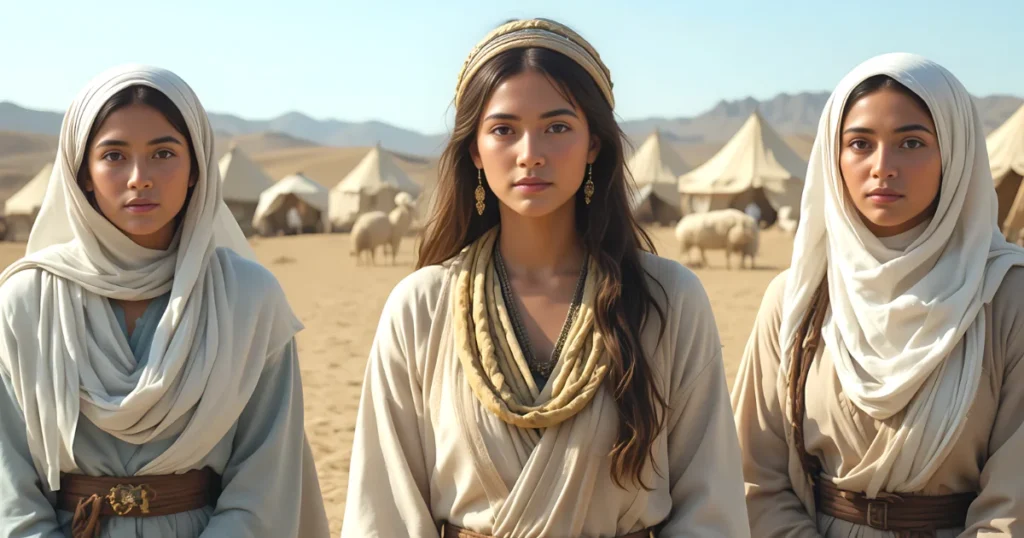
The lives of the matriarchs of the Bible and other women of the Old Testament reveal several important themes that appear throughout Genesis. Their stories are different, but together they show how God faithfully worked out His plan through ordinary people. As you continue this Scripture study, you’ll notice that the women of Scripture help connect creation, covenant, and redemption.
Faith and God’s Covenant
One of the strongest themes in Genesis is God’s faithfulness to His covenant family. Sarah, Rebekah, Leah, and Rachel—women who knew seasons of waiting, uncertainty, and despair. Yet God remained faithful to His promises, even when circumstances seemed impossible. Through their families, the covenant continued from Abraham to Isaac and Jacob, preparing the way for the nation of Israel and, ultimately, the coming Messiah.
Marriage, Motherhood, and Family
Genesis also teaches valuable lessons about biblical marriage and biblical motherhood. While the book records loving relationships, it also describes jealousy, favoritism, family conflict, and grief. Scripture does not exalt these fights as goals. Instead, it honestly shows the challenges real families face while reminding readers that God continues working despite human weakness. Mothers, wives, daughters, and servants had important roles in preserving the covenant line.
Grace, Failure, and Redemption
The women of Genesis were imperfect people who made both wise and sinful choices. Some acted in faith; others fought in fear, deception, or impatience. Even so, God’s grace remained constant. Their accounts point to God’s faithfulness, showing that His redemptive plan does not depend on perfect people but on His unchanging character. That truth continues to encourage believers today.
What the Women in Genesis Teach Christians Today
If you’ve ever wondered, “What can we learn from the women in Genesis?” The answer is found in their relationship with God. These women lived in different circumstances, yet their lives continue to speak to believers today. Some trusted God from the first; others came to faith through failure, loss, or long seasons of waiting. Together, they became examples of women of faith whose experiences still encourage Christians.
Genesis teaches us to trust God’s promises even when the future is unclear. Sarah reminds us to wait on God’s timing. Hagar shows us that God notices the overlooked. Rebekah demonstrates the importance of responding to God’s calling. Leah reveals that our value comes from God, not from the approval of others. Tamar shows us that God can redeem shattered situations.
Their stories also highlight obedience, courage, repentance, God’s grace, and lasting hope. Genesis is not the last of these lessons. They continue throughout Scripture and prepare readers for the faithful Women in the New Testament, including Mary Magdalene, Elizabeth, and Joanna, whose lives also point people to God’s saving work through Jesus Christ.
As you explore this guide, be sure to continue with our individual character studies. They examine each woman’s life, key Bible passages, historical background, and practical faith lessons in greater depth, helping you see how every woman fits into God’s unfolding story of redemption.
Frequently Asked Questions About Women in Genesis
Q: How many women are mentioned in Genesis?
There is no single official count because some women are named while others remain unnamed. Most Bible readers identify around 20 named women and several unnamed women, including Cain’s wife, Noah’s wife, Pharaoh’s wife, Abimelech’s wife, and Potiphar’s wife. If you include both named and unnamed figures, how many women are mentioned in Genesis depends on the counting method. This guide includes every lady introduced or mentioned in the novel.
Q: Which women in Genesis became part of the family line leading to Jesus?
Several women in Genesis are connected to the messianic lineage that ultimately leads to Jesus Christ. This includes Eve, by God’s promise in Genesis 3:15; Sarah, Rebekah, Leah, Tamar, and others whose descendants carried the covenant line forward. Their lives demonstrate how God faithfully preserved His redemptive plan across generations, despite human weakness and failure.
Q: Why are so many women in Genesis remembered for family relationships?
Genesis is a book of beginnings that traces the growth of families and the nation of Israel. This focus means there are numerous women introduced through their roles as the wife, mother, daughter, or sister. This is not to belittle the importance of these partnerships. Instead, they highlight biblical genealogy and show how God worked through families to fulfill His covenant promises and prepare the way for the coming Messiah.
Final Thoughts on the Women in Genesis
The women in Genesis remind us that God has always worked through ordinary people to accomplish His extraordinary purposes. Some are famous, others fleeting. But each has a role in the wider tale of creation, covenant, and redemption. Together, these women of Scripture reveal God’s faithfulness across generations and His commitment to keeping every promise He makes.
This guide is designed to introduce each woman and to show how her life fits into God’s unfolding plan. Every account provides important lessons on faith, obedience, courage, grace, and hope that still encourage believers today.
If a particular woman has captured your interest, continue with her full character study to learn more about her background, key Bible passages, historical setting, and practical faith lessons. You will find in-depth studies of many of these women, with more added over time.
We also invite you to study our growing collection of Women of the Bible articles, where each character’s story is examined in greater detail to help you grow in your understanding of God’s Word and His faithfulness throughout Scripture.










5 thoughts on “Women in Genesis: Every Woman, Her Story, and Biblical Significance”