

Who Was Zipporah in the Bible?
In the Bible, Zipporah is Moses’ wife and the daughter of Jethro, a priest of Midian. She is a Midianite woman known for a bold act in Exodus 4, where she saves Moses’ life. Moses’ wife Zipporah is also the mother of his two sons, Gershom and Eliezer.
If you’ve ever asked, “Who was Zipporah in the Bible?” her story may seem short, but it has real significance. She appears in a few key moments, yet each one matters. As one of the often overlooked women in Scripture, she stands out for her courage in a crisis.
Zipporah is not just a name on a list of women in the Bible. She steps into a life-or-death moment and acts quickly, while Moses does not. That moment in Exodus 4 can feel confusing at first, but it points to something deeper about obedience and responsibility.
Her story also offers a rare glimpse into family life around Moses. We see marriage, tension, faith, and hard decisions. Zipporah’s role may be brief on the page, but it speaks clearly about action, faith, and knowing when to step in.
Zipporah in the Bible: Quick Facts
When people ask, “Who was Zipporah in the Bible?” a quick look at her life helps clarify things. Among the Women of the Bible, her story is short but strong, and it stands out from many other female Bible characters.
- Name: Zipporah
- Meaning of Name: “Bird” (Hebrew origin)
- Known As: Wife of Moses
- Father: Jethro, priest of Midian
- Ethnicity / Background: Midianite
- Husband: Moses
- Children: Gershom, Eliezer
- First Appearance: Exodus 2
- Key Bible Passages: Exodus 2, Exodus 4:24 to 26, Exodus 18
- Known For: Acting quickly to protect her family in a critical moment
- Key Role: Zipporah in the Bible is remembered for stepping in during a life-threatening situation and carrying out an act tied to God’s covenant
- Time Period: During Moses’ exile in Midian and early Exodus events
- Notable Detail: One of the few women in Scripture who takes clear, decisive action in a crisis
If you’ve read about Sarah, Ruth, or Tabitha, you’ll notice something similar. Each woman shows faith in action, but Zipporah’s moment comes fast and under pressure.
The Meaning of the Name Zipporah in the Bible
The meaning of Zipporah in the Bible derives from a Hebrew word meaning “bird.” If you’re wondering what the name Zipporah means in the Bible, it points to something small, quick, and alert. That’s consistent with the one time we witnessed her acting without delay.
In Scripture, names often carry meaning, but they are not always explained directly. With Zipporah, the idea of a bird can suggest awareness and swift movement. In Exodus 4, she intervenes in a situation and acts at once. That response lines up with the image her name suggests, even if the Bible does not spell it out.
Like many women in the Bible, she gives a clue in her name, but her actions tell the real story. When you compare her with Rebekah, Rachel, or Phoebe, you see the same pattern. Names matter, but faith shows up in what a person does when it counts.
Where Is Zipporah Mentioned in the Bible?
If you’re asking, “Where is Zipporah mentioned in the Bible?” Her story appears in a few key places, mainly in Exodus. Each Zipporah in the Bible verse offers a brief yet meaningful glimpse into her life. Like many Bible stories about women, her account is short, but every scene matters. Among women in Scripture, she stands out for what she does at a critical moment.
Key Bible Passages About Zipporah
Exodus 2 (Zipporah Exodus 2)
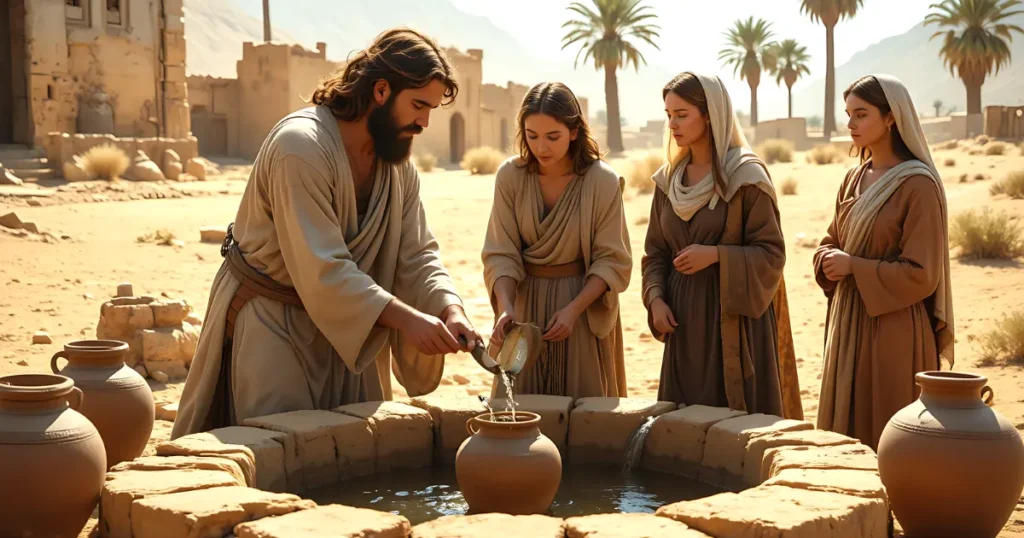
This chapter is where Moses meets Zipporah after fleeing Egypt. He helps her and her sisters at a well and is invited into their home. Her father, Jethro, later gives her up to Moses. This moment marks the beginning of their life together in Midian.
Exodus 4 (Zipporah Exodus 4)
This is the most intense part of her story. On the way back to Egypt, a crisis happens, and Zipporah acts quickly to protect her family. This moment shows her courage and awareness.
Exodus 18 (Zipporah Exodus 18)
Here we see a reunion. After some time apart, Zipporah returns to Moses with their sons, Gershom and Eliezer, bringing the family back together.
Zipporah is not named in Numbers 12, but the mention of a Cushite wife of Moses has sparked discussion about her background.
For more women in Scripture, see Rahab, Miriam, Naomi, Shiphrah, and Priscilla.
Zipporah and Moses: How They Met and Married
The story of Moses and Zipporah begins with a pivotal moment. After Moses fled Egypt for killing an Egyptian, he escaped to the land of Midian. Tired and alone, he sat by a well. There, he met Zipporah and her sisters as they came to draw water for their father’s flock.
Some shepherds tried to push them away, but Moses stepped in and helped them. That moment changed everything. When the women returned home and told their father, Jethro, he asked Moses to come and stay. As time passed, trust developed, leading Jethro to give Zipporah to Moses in marriage. This answers the question many ask: Who did Moses marry?
Their life in Midian was quiet compared to what came later. Moses worked as a shepherd, and Zipporah built a home with him in a foreign land. She later gave birth to their first son, Gershom. Moses said, “I have become a foreigner in a foreign land” (Exodus 2:22, NIV). That name is a testament to the way they both lived, away from their roots.
This part of the story shows a different side of biblical life. Among female Bible characters, Zipporah is not introduced with drama but with simple, real moments. Like Leah, Mary, and Lydia, her story begins in everyday life but leads to something much bigger.
What Did Zipporah Do in the Bible? (Her Defining Moment)
If you ask what Zipporah did in the Bible, the answer centers on one urgent moment. Her story is not built on long speeches or many chapters. It comes down to fast, decisive action that changes the outcome of a life-or-death situation.
In Exodus 4, Moses is on his way back to Egypt after being called by God. Everything seems set. Then, suddenly, the journey is halted by a crisis. The Scripture claims that the Lord challenged Moses in such a way that it put his life in danger. There is no lengthy warning. No time to think. This is where Zipporah steps in.
Without hesitation, she takes action in accordance with God’s covenant. She does something difficult, and she speaks straight to Moses. In that moment, Zipporah saves Moses. The danger passes as quickly as it came.
This event is the clearest answer to the question of what Zipporah did in the Bible. She saw the problem and took action, even though Moses did not. That tells us something important about Zipporah’s role in the Bible. She was no passive one. She was aware, bold, and willing to face a difficult moment.
Among the many stories of Bible women, hers stands out for its sharpness and directness. There is no buildup. A crisis and its answer.
When you compare her to women like Jael, Jezebel, Salome, and Hannah, you see different paths. But in Zipporah’s case, everything hinges on one moment when action mattered more than words.
Zipporah in the Bible: The Exodus 4:24–26 Event Explained
The meaning of Zipporah in Exodus 4 becomes clear when you walk through the scene step by step. In Exodus 4:24-26, Moses is on his way to Egypt. Then, without warning, the Lord confronts him, and his life is at risk. The text is short and direct, but the tension is real.
Why is Moses in danger? The issue stems from God’s covenant with Abraham. In Genesis 17, circumcision was provided as a sign of the covenant. Every male in the household was to follow it. At this moment, it seems Moses had not carried out the procedure for his son. That made him disobedient at a time when he was called to lead.
This is where the Zipporah circumcision story takes center stage. Zipporah watches what is happening, and she knows that time is of the essence. She steps in, performs the act herself, and touches Moses’ feet with what was required. The danger passes right away.
Why did Zipporah circumcise her son? Because she recognized that obedience to God’s command could not wait. Her quick thinking fixed the pact again.
She then says, “You are a bridegroom of blood to me” (Exodus 4:25, NIV). This phrase can feel strange, but it likely reflects the cost and seriousness of the moment. It ties Moses back to the covenant through blood, even in a tense and emotional setting.
The Exodus 4 meaning of Zipporah shows that obedience matters, even in private life. Among the Women of the Bible, Zipporah stands out here. She acts when it matters, even when the situation is hard to face.
You can also compare her story to that of women like Hagar, Eve, Elizabeth, and Esther, who each faced moments that required action and trust.

Why Did Moses Send Zipporah Away?
A question many readers ask is why Moses sent Zipporah away. The Bible does not give a direct reason, but the timing helps us understand. Before Moses stood before Pharaoh, the mission became intense and dangerous. Confronting Egypt’s ruler meant risk, pressure, and constant movement.
One likely reason is safety. Sending Zipporah and the children back to her father, Jethro, may have been a way to protect them while Moses faced conflict in Egypt. On another level is the burden of leadership. Moses was stepping into a public role under heavy pressure, and that may have affected family decisions.
If you’re wondering what happened to Zipporah in the Bible, she does not disappear from the story. In Exodus 18, she returns to Moses along with their sons. This shows the separation was not permanent. It was a pause during a critical season.
The text does not describe their emotions or conversations, but the situation feels real. You must take duty, risk, and family into account all at once.
You see similar tension in the lives of women like Deborah, Delilah, Bilhah, and Bathsheba, where personal life and larger events often collide.
What Happened to Zipporah After the Exodus?
Many readers wonder what happened to Zipporah in the Bible after the early Exodus events. In Exodus 18, we see a clear moment of reunion. Jethro brings Zipporah and her sons back to Moses in the wilderness. This shows that the family is back together after breaking apart.
After this point, the Bible is quiet about her life. There are no more direct mentions of Zipporah’s actions, words, or later years. That silence can feel surprising, especially after her strong moment in Exodus 4. But that’s not unusual. Many women in Scripture appear in key moments and then step out of the story without further detail.
We are not told how long she lived, when she died, or what her daily life looked like after the reunion. The narrative shifts to Moses leading Israel, and Zipporah remains in the background.
This reminds us to be careful not to assume more than the text gives. Her story is brief, but it still matters.
You see a similar pattern with women like Athaliah, Atarah, and Adah, where Scripture shares only what is needed for the larger account.
What Was Zipporah’s Background and Ethnicity?
A common question is, was Zipporah black in the Bible or, more broadly, what race was Zipporah in the Bible? The Bible does not use modern racial labels, so we need to stay close to what the text actually says.
Zipporah is identified as a Midianite. She is the daughter of Jethro, a priest of Midian. The Midianites trace back to Abraham through Keturah (Genesis 25:1-2). That places her within a wider family line connected to Israel, but still distinct in culture and location. Midian was a desert country, and that would have affected her life.
This is why it is better to describe her as a Midianite woman rather than force modern categories onto the text. The Bible focuses more on her role and actions than her physical features.
Some readers point to Numbers 12, where Moses is said to have a Cushite wife. This passage has sparked debate over whether it refers to Zipporah or another woman. The paragraph does not tell us her name; thus, it is an open question rather than a closed fact.
Zipporah’s identity reminds us that God often works through people outside the main group.
You can compare her with women like Ahinoam, Abital, and Apphia, who also appear briefly but still hold a place in the story.
Timeline of Zipporah in the Bible
Here is a simple timeline of Zipporah in the Bible, based on the key moments we see in Exodus. Her story is short, yet every step is part of a broader plan.
- Moses flees Egypt after killing an Egyptian and escapes to Midian.
- He meets Zipporah at a well, where he helps her and her sisters.
- Jethro gives Zipporah to Moses in marriage, and they begin life in Midian.
- They have children, including Gershom (later also Eliezer)
- In Exodus 4, Zipporah steps in during a crisis and protects her family.
- Moses sends Zipporah and the children back to Jethro before confronting Pharaoh.
- In Exodus 18, Zipporah returns to Moses with their sons, and the family is reunited.
After this, the Bible provides no further details about her life. Still, this timeline shows how her path runs alongside major events in Israel’s story.
You can compare her journey to that of women like Abigail, Abishag, and Anna, whose lives also intersect with key moments in Scripture.
Lessons from Zipporah in the Bible
When you look at the lessons from Zipporah in the Bible, one thing is clear. She acts when the moment demands it. In Exodus 4, there is no delay, no long discussion. She knows the danger, and she acts. That alone explains part of Zipporah’s importance.
First, she shows that faith is not just words. It is seen in action. Zipporah steps into a hard situation and does what is needed, even when it is uncomfortable. It reminds us that obedience is not always simple but that it is important.
Second, she understands responsibility. Moses had a calling, but something in his household was not in line. Zipporah recognizes it and takes responsibility in that moment. That shows us faith is not merely public. It starts at home.
Third, she shows how God can work through an outsider. As a Midianite woman, she was not from Israel, yet she plays a key role in a critical moment. This is a vivid example of the Women of the Bible that God’s work is not restricted by background.
A simple real life picture helps here. Think of a parent who steps in during a sudden emergency without waiting or second-guessing. That kind of action can alter everything. Zipporah’s moment feels just as real.
You see similar faith in women like Mary Magdalene, Martha, and Mary of Bethany, each responding in their own way.
FAQs About Zipporah in the Bible
Q1: How many children did Zipporah have?
Zipporah had two sons, Gershom and Eliezer. The Bible names both in Exodus. Their names reflect Moses’ life as a foreigner and God’s help in times of hardship.
Q2: Why is Zipporah called a “bride of blood”?
The phrase comes from Exodus 4 during a tense moment. It points to the act she carried out, which was tied to God’s covenant. It likely reflects the seriousness and cost of that moment, not a title used in everyday life.
Q3: Did Zipporah stay with Moses during the Exodus?
Not all the time, no. Moses sent her and the children back to her father before facing Pharaoh. Later in Exodus 18, she returns to Moses with their boys.
Final Thoughts on Zipporah in the Bible
Zipporah in the Bible may not have many verses, but her role is hard to ignore. She is Moses’ wife, a mother, and a lady who stepped up at the exact moment it meant the most. Her story is short, yet it carries weight.
Among women in Scripture, Zipporah stands out for one reason. She acted when others did not. She knew what to do in a moment of true peril and did it without delay. That type of faith isn’t loud; it’s strong.
Her life also reminds us that God works through people we might not expect. She was not from Israel, yet she played a key role in a pivotal moment in the story.
The takeaway is simple. Faith shows up in action, often in quiet, unseen moments.
If you want to keep learning, read more posts on Women of the Bible and see how each story adds something real and honest to the bigger picture.