

Introduction: Who Was Bithiah in the Bible?
Bithiah in the Bible (1 Chronicles 4:18) is briefly named as Pharaoh’s daughter and the woman Mered married. Scripture gives few details about her, and her identity should not automatically be merged with Pharaoh’s unnamed daughter who rescued Moses in Exodus 2.
That short mention makes Bithiah an interesting figure among the women of Scripture. Her story raises important questions about her marriage, her family, and her connection to Israel. It also helps explain why some later Jewish traditions connect her with Moses’ adoptive mother. As we look at what Scripture says, we’ll separate the biblical record from later tradition and consider what her brief appearance can teach us today.
Quick Facts About Bithiah
Known from Scripture
- Bithiah is named in 1 Chronicles 4:18.
- She is called Bithiah, daughter of Pharaoh.
- She is connected with Mered as his wife.
- She appears within the genealogical material of 1 Chronicles 4.
- Scripture gives only a brief direct account of her life.
Later Jewish tradition connects Bithiah with the daughter of Pharaoh who rescued Moses, but that identification goes beyond what Exodus directly says.
Her brief mention places her among the women in the Bible whose stories invite careful study. Unlike Miriam and Jochebed, who have clearer roles in Moses’ story, Bithiah appears only briefly in the biblical record.
What Does the Name Bithiah Mean?
The meaning of Bithiah is commonly understood as “daughter of Yah,” based on the name’s Hebrew form. “Yah” is a shortened form connected with the divine name of God. The name is therefore often understood as pointing to a relationship with God.
The Hebrew Meaning Behind Her Name
Bithiah is also associated with the forms Batya and Batyah in Jewish tradition. The meaning of Batya is commonly explained as “daughter of Yah” or “daughter of God.” Jewish sources connect these forms with the name Bithiah and develop additional traditions around her identity.
For biblical women, this distinction matters. A name can carry a meaningful idea without proving every later story attached to it. In Bible study, it’s important to separate what the name may mean from what Scripture says about Bithiah. This careful approach also helps when studying Women in the Old Testament, such as Naamah and Zillah.
Where Is Bithiah Mentioned in the Bible?
Bithiah is mentioned in 1 Chronicles 4:18. This is the only place Scripture directly names her as Bithiah. The verse identifies her as Pharaoh’s daughter and says that Mered married her. Compare 1 Chronicles 4:18 across translations.
Her Brief Mention in 1 Chronicles 4 Explained
The Bithiah reference in 1 Chronicles 4:18 appears within a larger section of family records connected with Judah. These genealogies may seem difficult to follow, but they preserve names, family relationships, and connections among people in Israel’s history.
The verse is especially notable because it identifies Bithiah as Pharaoh’s daughter and connects her to Mered through marriage. This gives us two important facts about her, even though Scripture doesn’t provide a longer account of her life.
The Bible story of Bithiah should therefore be handled carefully. Scripture doesn’t tell us everything about her background, faith, marriage, or later life. A trustworthy character study should stick to what the text says rather than fill the gaps with assumptions.
The wider genealogy also shows that her marriage became part of a family record. That makes her brief appearance significant, even though her personal story isn’t developed.
Why the Genealogy Matters to Her Story
The Bithiah Bible reference places her within a wider network of families and descendants associated with Judah. Mered is named as her husband, while the surrounding verses mention other family connections.
Translations differ somewhat in how they arrange and understand the surrounding genealogy. Because of this, it’s wise not to make firm claims about exactly which named children belong to Bithiah. The central point remains clear: Scripture names her as Pharaoh’s daughter and Mered’s wife.
This passage is different from the broader genealogical material found elsewhere, including Women in Genesis and the later accounts involving Women in the New Testament. Each passage needs to be read in its context.
Bithiah’s Marriage to Mered and Her Place in Scripture
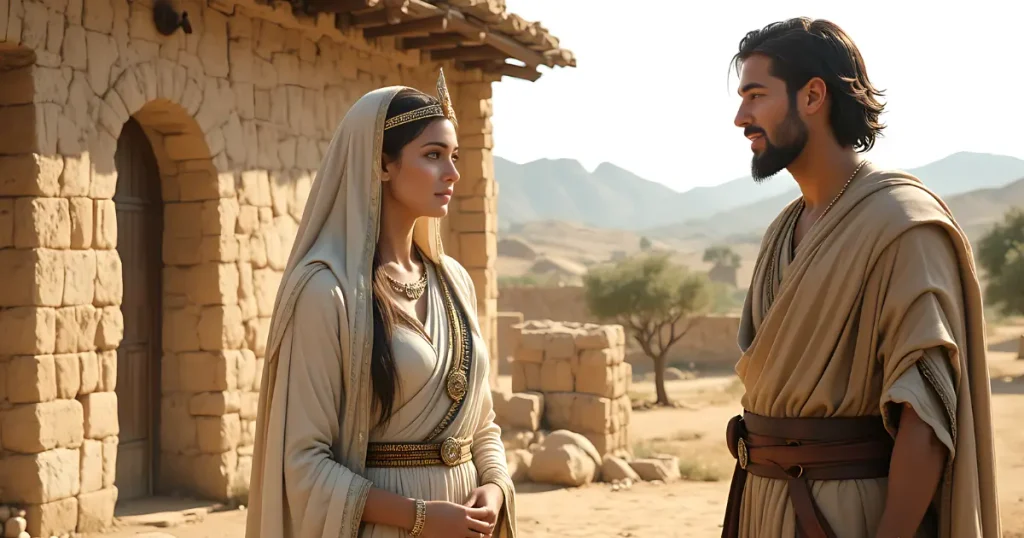
1 Chronicles 4:18 identifies Bithiah as Mered’s wife and calls her Pharaoh’s daughter, linking her to Mered through marriage.
Who Was Mered?
Who was Mered in the Bible? Mered appears in the family records of 1 Chronicles 4, within the genealogical material connected with Judah. Scripture provides us with limited information about him. His name appears alongside family relationships and descendants, not in a detailed personal account.
The passage becomes especially interesting because Mered married a woman identified as Pharaoh’s daughter. This makes their marriage a strange link in the biblical family records.
What Does Scripture Say About Their Marriage?
If you’re asking who did Bithiah marry, the biblical answer is Mered. She is described as Bithiah’s wife, and 1 Chronicles 4:18 connects the two directly.
The passage gives us no detailed account of their courtship, home life, or relationship. It simply records the marriage as part of the family history.
This also answers who Bithiah’s husband was in the Bible. Mered is the husband the Scripture speaks of. The marriage is notable because Bithiah was identified as Pharaoh’s daughter, while Mered appears within family records connected with Judah.
For a careful Scripture study, that distinction matters. We shouldn’t create details the text doesn’t provide. Like Puah, whose courageous actions are recorded in a short passage, Bithiah appears briefly, yet her place in the story of women in the Bible still gives us something worth examining.
Her connection with Mered also reminds us that biblical genealogies can preserve important relationships even when the surrounding story is brief. Her mention stands on its own, without requiring details about her life that Scripture never records.
Bithiah’s Place in the Genealogy of Judah
The Bithiah genealogy appears within the family records of 1 Chronicles 4. These opening genealogies help trace Israel’s history through family lines, with particular attention given to Judah and the line connected with David.
So, how is Bithiah connected to Judah? The biblical text connects her to these records through her marriage to Mered. Bithiah is called Pharaoh’s daughter, suggesting an Egyptian royal background, while Mered appears in the family records associated with Judah.
This raises another natural question: was Bithiah an Israelite? Scripture doesn’t directly answer that. Her identification as Pharaoh’s daughter tells us about her family background, but the passage doesn’t explain when or whether she became part of Israel by faith, marriage, or another means. We shouldn’t state more than the text supports.
The Bithiah and Mered relationship is therefore the clearest biblical link between her and Judah’s genealogical records. Later Jewish tradition adds claims about her religious identity, but we should keep those traditions separate from Scripture.
Like Salome, Pilate’s wife, and Sheerah, Bithiah reminds us that women in Scripture can appear in family records with only a few details, yet those details still have a place in the biblical story.
Was Bithiah the Pharaoh’s Daughter Who Rescued Moses?
Exodus 2 describes the Pharaoh’s daughter who rescued Moses, but Scripture doesn’t give her a personal name. She sees the child, feels compassion, and takes him into her household. Exodus never calls this woman Bithiah.
What Exodus Actually Says About Moses’ Rescuer
Exodus 2:5-10 tells us that Pharaoh’s daughter went down to the Nile, saw the basket among the reeds, and found the Hebrew baby inside. She knew that he was one of the Hebrew children, and she had sympathy for him. She then accepted him as her son, while Moses’ own mother nursed him.
The important point is that Exodus identifies her only by her position as Pharaoh’s daughter. It doesn’t provide the name Bithiah. Therefore, Scripture itself doesn’t establish that Bithiah and Moses’ rescuer were the same woman.
Why Later Jewish Tradition Calls Her Bithiah
The Bithiah Jewish tradition comes from later Jewish interpretation, not from the text of Exodus. Jewish writings identify Pharaoh’s daughter as Bithiah, or Batyah, and develop a fuller account of her character and connection with Moses.
Chabad also identifies Batyah with the woman who rescued Moses and explains the traditions surrounding her.
So, was Bithiah Moses’ adoptive mother? Jewish tradition says yes, but Exodus itself doesn’t give her that name. Likewise, the Bible doesn’t directly state, “Bithiah raised Moses.” The tradition adds this identification to the biblical account.
The Clear Answer for Bible Readers
The Bible names Bithiah in 1 Chronicles 4:18, but Exodus doesn’t name the daughter of Pharaoh who rescued Moses. Jewish tradition identifies these women as the same person. That distinction helps us read Scripture carefully while understanding the traditions surrounding Bithiah and Moses.
What Happened to Bithiah After the Bible Mentions Her
If you’re wondering what happened to Bithiah in the Bible, Scripture doesn’t give us a clear answer. After her brief mention in 1 Chronicles 4:18, the Bible doesn’t record when she died, where she lived, or what happened during the rest of her life.
We also aren’t given a detailed account of her later actions, faith, family life, or influence. And that silence matters. A careful Bible study should resist the temptation to turn assumptions into facts simply because readers are keen to know more.
So, what happened to Pharaoh’s daughter Bithiah? Beyond what Chronicles records, Scripture provides no further details about her. Her brief appearance is similar to other women whose biblical accounts contain only a few details, such as Atarah and Phoebe.
Later Jewish traditions preserve additional stories about Bithiah, including details about her life and identity, but those accounts come from later interpretation rather than the biblical text.
For Christian living and Christian faith, this story is a useful reminder: sometimes faithful Bible study means accepting what Scripture doesn’t tell us.
Why Is Bithiah Mentioned in 1 Chronicles?
We can’t know exactly why 1 Chronicles mentions Bithiah beyond what the text itself shows. The genealogies preserve people and family connections that form part of Israel’s larger history. In those records, Bithiah stands out because the text specifically identifies her as Pharaoh’s daughter.
Her mention also connects her to Mered through marriage, placing her within the family records associated with Judah. The text doesn’t explain her personal beliefs or tell us why the writer chose to include her by name. We should therefore avoid assigning motives that Scripture doesn’t give.
Still, her appearance is meaningful. A woman doesn’t need a long narrative to have a recognized place in the biblical record. Scripture preserves Bithiah through a brief family connection.
This is also true of other women in genealogical records, including Keturah and Keziah. Their mentions remind us that biblical genealogies aren’t simply lists of names. They preserve real people and family connections in Israel’s history.
For Christian faith, Bithiah’s brief appearance encourages careful reading. Scripture doesn’t need to tell us everything about a person for her place in its record to matter.
What Bithiah’s Brief Story Can Teach Us About Reading Scripture Carefully
When we ask what Scripture says about Bithiah, the answer is quite limited. That’s not a problem to solve. It’s a reason to read the passage with care. Bithiah, her family background, and later traditions can help us understand the wider discussion, but we shouldn’t treat them as facts Scripture itself doesn’t confirm.
Value What Scripture Actually Says
Good Scripture study starts with the words we have. In Bithiah’s case, that means recognizing what 1 Chronicles tells us and being honest about what it doesn’t.
Respect Biblical Silence
The Bible’s silence doesn’t permit us to create certainty. We can ask questions, but we should label reasonable possibilities as possibilities.
Know the Difference Between Scripture and Tradition
Later traditions can be interesting and may help explain how Jewish readers understood Bithiah. But tradition is not the same thing as biblical text. Keeping that distinction clear makes our study more trustworthy.
Notice Briefly Mentioned Women
Women don’t need long stories to matter in Scripture. A brief mention deserves attention without adding details that aren’t there. This approach helps when studying women such as Gomer and Dinah.
For Christian living, Bithiah’s brief record offers a simple lesson: let the Bible’s words set the boundaries of what we claim to know.
Frequently Asked Questions About Bithiah
What was Bithiah’s relationship with Pharaoh?
The Bible calls Bithiah Pharaoh’s daughter, but it doesn’t identify which Pharaoh her father was or give further details about their relationship. The title gives us some insight into her family background, but Scripture lacks enough information to draw a more certain conclusion.
Why is Bithiah’s story so brief in the Bible?
Bithiah appears in a genealogy rather than a longer narrative. If you’re asking where the Bible mentions Bithiah, the direct reference is 1 Chronicles 4:18. The Bible does not explain why her testimony is so brief; therefore, we should not add details to fill the void.
Can we learn more about Bithiah from Jewish tradition?
Yes. Jewish tradition gives a much fuller picture of Bithiah, especially by identifying her with Moses’ rescuer. These traditions can help readers understand how later Jewish communities remembered her, but they should remain distinct from Scripture itself.
Final Thoughts on Bithiah’s Place in the Bible
Bithiah in the Bible appears briefly, but the details Scripture gives are clear. She is named as Pharaoh’s daughter, and 1 Chronicles 4:18 connects her with Mered through marriage. Her account is part of a larger genealogy, not a detailed life story.
Later Jewish tradition gives Bithiah a much larger role by identifying her with Pharaoh’s daughter who rescued Moses. That tradition is worth knowing, but it should not be presented as though Exodus itself gives her the name Bithiah.
For readers who enjoy studying women of Scripture, her story is a particularly helpful reminder to stay close to the biblical text. Bithiah may have only a few words on record, but those words are worth careful attention. Read more posts on Women of the Bible to discover other women whose stories help us understand Scripture more fully.
The main lesson is simple: Bithiah’s story is short, but careful reading helps us see what the Bible says clearly and where later tradition adds to the story.