

Who Was Susanna in the Bible?
Who is Susanna in the Bible? Susanna was a faithful Jewish woman whose story appears in Daniel 13, often called Susanna and the Elders. The story of Susanna in the Bible recounts how two corrupt elders falsely accused her, how she remained faithful to God under pressure, and how Daniel’s wisdom ultimately vindicated her. Christians continue to see her story as an example of integrity and courage and of God’s justice in the face of injustice.
Among the many women in Scripture, Susanna stands out as a powerful example of faithfulness during a crisis. Although her story is not as widely known as those of Esther, Ruth, or Deborah, it offers important lessons about truth, character, and trust in God. Her account is found in Daniel 13, a chapter included in the Greek additions to Daniel and recognized in many Catholic and Orthodox Bibles.
The heart of Susanna and the Elders is a story of a woman who faced a devastating false accusation. Two respected elders abused their authority and attempted to force Susanna into sin. When she refused, they lied about her and brought charges that could have cost her life.
Just when it seemed that justice had failed, God raised the young prophet Daniel to investigate the case. His careful questioning exposed the elders’ false testimony and proved Susanna’s innocence. As we explore Susanna in the Bible, we will see why her story remains relevant today. It teaches believers to stay steadfast in their faith, to trust God in difficult situations, and to remember that He is the ultimate source of truth.
Quick Facts About Susanna in the Bible
For readers beginning a Scripture study of this remarkable biblical woman character, the table below highlights the most important facts about Susanna in the Bible.
| Fact | Details |
|---|
| Name | Susanna |
| Name Meaning | “Lily” or “Rose,” a symbol often associated with beauty and purity |
| Biblical Setting | Babylon during the Jewish exile |
| Main Passage | Daniel 13 |
| Husband | Joakim, a wealthy and respected Jewish man |
| Who Was Susanna in the Bible Married To? | Susanna was married to Joakim, whose home became the setting for the events recorded in Daniel 13 |
| Known For | Integrity, faithfulness to God, and courage under pressure |
| Relationship to Daniel | Daniel defended her by exposing the false testimony of the elders |
| Main Conflict | Two corrupt elders falsely accused her after she refused their sinful demands |
| Outcome of the Story | Daniel proved her innocence, and the elders received the punishment they intended for Susanna |
| Major Themes | God’s justice, truth, righteous suffering, faithful obedience, wise leadership, and trusting God in injustice |
| Biblical Category | One of the notable women of the Bible who demonstrated courage and moral integrity |
Susanna’s story is unique because it combines a personal trial with a powerful example of biblical justice. Like Abigail, who acted wisely in a dangerous situation, Susanna showed courage in a crisis. Her faithfulness also places her in the company of women such as Anna (Prophetess), who remained faithful to God amid severe circumstances.
As we continue through this study, we will see how Susanna’s character, much like Abishag, Huldah, and Susanna (the woman who supported Jesus’ ministry), points readers toward a life marked by faithfulness, integrity, and trust in God’s care.
Where Is Susanna Found in the Bible?
Many readers ask, “Where is Susanna in the Bible?” The account of Susanna appears in Daniel 13, a chapter often known as “Susanna and the Elders.” This remarkable story of a woman in the Bible tells how she faced false accusations and how God used Daniel to reveal the truth.
Daniel 13 Explained
Daniel 13 is not found in the traditional Hebrew text of Daniel. Instead, it appears in the Greek version of the Old Testament known as the Septuagint. Thus, the chapter appears in the Catholic and Eastern Orthodox Bibles, whereas in many Protestant Bibles it is placed in the Apocrypha.
Even though Christians differ on its canonical status, the story has been studied for centuries because of its themes of justice, wisdom, and faithfulness. It remains one of the most talked-about stories involving women in the Bible.
Placement in Scripture and Historical Transmission
The story takes place during the Babylonian exile and centers on a Jewish family living in Babylon. Susanna’s account was preserved through the Greek textual tradition and later included in the Latin Vulgate. This history explains why some Bible editions contain Daniel 13 while others do not.
Understanding this background helps people see why the story remains important in Christian faith discussions of integrity, truth, and God’s justice.
Key Verses About Susanna
“He married the daughter of Hilkiah, named Susanna, a very beautiful woman and one who feared the Lord.”
This verse introduces Susanna not primarily by her appearance but by her devotion to God. Her faith becomes the foundation of every decision she makes throughout the story.
“I am completely trapped. For if I do this, it will mean death for me; if I do not, I cannot escape your hands.”
Susanna was in an impossible circumstance. Even though the repercussions seemed dire, she chose to obey God rather than give in to sin.
“Then Susanna cried out with a loud voice and said, ‘O eternal God, you know what is secret and are aware of all things before they come to be.'”
Instead of relying on her strength, Susanna turned to God in prayer. Her answer shows deep trust in a time of injustice.
“And from that day onward Daniel had a great reputation among the people.”
After Daniel exposed the elders’ lies, justice was restored. The verse highlights both God’s vindication of the innocent and Daniel’s wisdom as a young leader.
Like Abital, Ahinoam, Adah, and Aholibamah, Susanna is part of the broader tapestry of biblical women whose stories help us understand faith, character, and God’s work throughout history.
Susanna and the Elders: The Complete Bible Story

The story of Susanna and the Elders is one of the most dramatic stories of a faithful woman in Scripture. This Bible story, Susanna and the Elders, combines courage, corruption, injustice, and divine intervention. It demonstrates how God sees the truth despite attempts by powerful people to conceal it, making it more than just a historical account. For those who wonder what happened to Susanna in the Bible, it is a memorable illustration of faith under pressure.
Susanna’s Life in Babylon
The story begins in Babylon during the Jewish exile. Susanna was married to Joakim, a wealthy and respected Jewish man. The community began to congregate at their house, and many people respected Joakim and his family.
Daniel 13:2 describes Susanna as “a very beautiful woman and one who feared the Lord.”
This is a crucial point. The story does not focus only on her appearance. It emphasizes how devoted she is to God. Her reverence for the Lord shaped her character and guided her decisions.
Susanna is unique among the many women in the Bible because of her dedication to morality. Like Bathsheba’s, whose story contains difficult lessons about power and accountability, Susanna’s account shows how others’ actions can test personal integrity.
People widely recognized her reputation for godliness. Yet her faith would soon face a severe challenge.
The Elders Plot Against Susanna
Two elders judged among the Jewish exiles. They held positions of authority and were trusted to uphold justice. Instead, they allowed sinful desires to control them.
Every day, they watched Susanna as she walked in her husband’s garden. Over time, their lust grew into an obsession. Rather than turning away from temptation, they secretly encouraged one another in their wrongdoing.
The story exposes a painful reality. Leadership positions do not automatically produce godly character. These elders used their influence for selfish ends rather than faithfully serving the people.
The elders confronted Susanna alone one day when she went into the garden to bathe. They demanded that she submit to them. If she did not, they threatened to accuse her of secretly meeting a young man.
Susanna faced a terrible choice. She may give in to their demands or remain true to God and suffer public shame. She chose obedience to God.
Her courage places her among memorable Biblical women who remained faithful despite intense pressure. Like Atarah and other lesser known women in Scripture, Susanna’s faithfulness is worthy of close examination.
False Accusation and Trial
When Susanna refused their advances, the elders carried out their threat.
They publicly accused her of adultery, a charge that carried serious consequences under Jewish law. The two men were respected judges, and many people believed their testimony without doubt.
This moment reveals one of the most heartbreaking parts of the story of Susanna and the Elders. An innocent woman stood accused while the guilty men appeared trustworthy.
The legal system relied heavily on witness testimony .<|join|>The legal system relied heavily on witness testimony. Since both elders told the same lie, their accusation seemed convincing.
Susanna had no witnesses to speak for her. Humanly speaking, the situation looked hopeless.
But she prayed to God instead of losing her faith. Even when others did not know the truth, she had faith that the Lord did.
This theme appears throughout Scripture. Many faithful servants of God experienced false accusations, suffering, or misunderstanding before the truth came to light.
Daniel Stands Up for Susanna
As the crowd prepared to accept the elders’ testimony, God raised a young Daniel.
And the Spirit of God came upon Daniel to speak. He challenged the proceedings and questioned whether the evidence had been properly examined.
Daniel requested that the two elders be questioned separately. The turning point of the story was just one simple decision.
He asked the first elder under which tree the alleged meeting took place. The answer was one.
Daniel then asked the second elder. He named another tree.
Their testimonies did not match.
The contradiction immediately revealed their deceit. What appeared to be a strong case against Susanna collapsed under careful examination.
Daniel’s actions provide one of the Bible’s clearest examples of wise investigation and fair judgment. Rather than accepting accusations at face value, he sought the truth.
This account, like the stories of Athaliah and Bilhah, serves as a reminder that human leadership can fail. Yet God remains sovereign and can raise faithful people to accomplish His purposes.
God’s Justice Prevails
Once the elders’ lies were exposed, the people recognized Susanna’s innocence.
The same punishment the elders intended for her was inflicted on them. Justice, at last, was done.
Daniel 13 presents a powerful picture of God’s concern for truth. The Lord heard Susanna’s prayer, recognized her suffering, and acted on her behalf at the correct time.
This conclusion explains why Susanna and the Elders is still such a relevant story for believers today. It teaches that integrity matters even when obedience is costly. It reminds us that God sees the secret sin. Most importantly, it shows that truth ultimately belongs to Him.
Susanna’s innocence was vindicated, corruption was exposed, and God’s justice prevailed. Her story continues to encourage readers who face unfair treatment, reminding them to trust the Lord even when circumstances seem impossible.
Historical Context of Susanna and the Elders
Understanding the historical context of Susanna and the Elders helps us appreciate why this story had such a strong impact on ancient readers. The account is set during the Babylonian exile, a period when many Jews lived far from their homeland but worked hard to preserve their faith, identity, and community traditions.
Life in Babylon
As a Jewish woman in Babylon, Susanna lived among a community trying to remain faithful to God’s laws while surrounded by a foreign culture. Families often gathered around respected leaders, judges, and elders who helped maintain order and settle disputes.
In many ways, these leaders carried tremendous influence. People trusted them to interpret the law fairly and protect the community’s welfare. This makes the acts of the two elders in Daniel 13 all the more startling. The guys who were charged with justice were the perpetrators of injustice.
For readers of Bible study and biblical history, this detail is important. The story is not only about personal sin. It also warns of the danger of corrupt leadership.
Ancient Legal Practices
The account reflects several principles found in Jewish law.
One key principle involved witness testimony. According to the Law of Moses, serious charges required multiple witnesses. This requirement protected innocent people from false allegations.
Deuteronomy 19:15 (NIV) says:
“One witness is not enough to convict anyone accused of any crime or offense they may have committed.”
This law promoted fairness by requiring evidence before judgment.
Another important principle addressed false testimony. Judges were instructed to conduct thorough investigations in Deuteronomy 19:18–19. If a witness was proven to be lying, the false witness was to be punished as the accused would have been.
This passage explains why the elders faced judgment after Daniel exposed their deception.
Capital punishment was likewise tightly regulated in ancient Israel. Because adultery was considered a serious offense, a false accusation could place an innocent person’s life in danger. The instance of Susanna demonstrates why truthful witnesses were necessary.
Why the Story Appealed to Ancient Jews
The story spoke to Jewish readers because it emphasized God’s protection of the innocent. The story spoke to Jewish readers because it emphasized God’s protection of the innocent. Many Jews living during and after the exile understood what it meant to face hardship, uncertainty, and pressure.
Susanna’s faith under trial reminded them that God sees hidden truths even when human courts fail.
Her courage also connects her to other remarkable women of Scripture. Like Deborah, who demonstrated wisdom and leadership, and Esther, who risked her safety for what was right, Susanna remained faithful when circumstances seemed impossible. Her story also provides a sharp contrast to figures such as Delilah, whose choices led others away from God’s purposes.
For generations of believers, Susanna’s account has remained a powerful reminder that integrity and truth matter and that God ultimately defends those who trust Him.
Why Is Susanna Found in Some Bibles but Not Others?
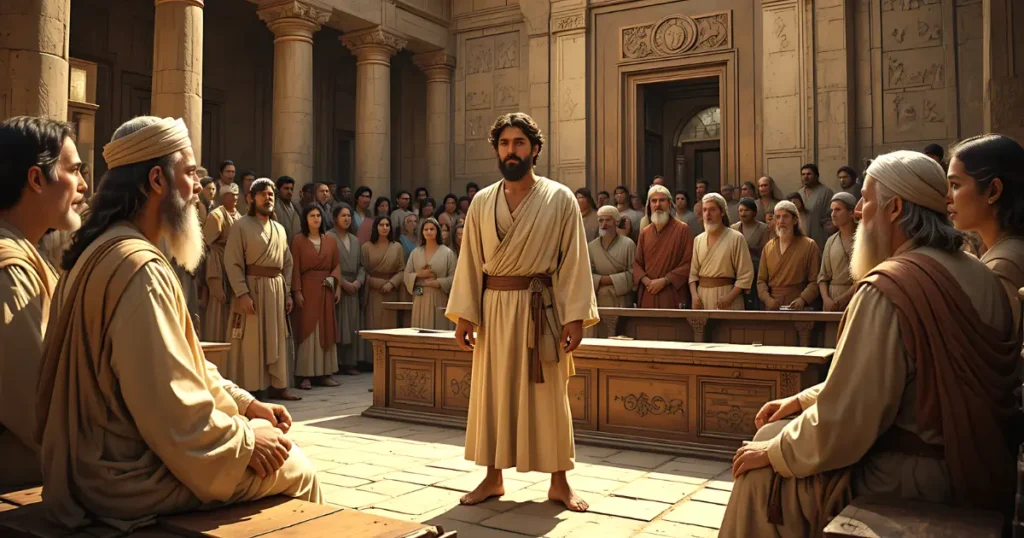
One of the most common questions readers ask is, “Is Susanna and the Elders part of the Bible?” Another closely related question is, why do some Bibles include Daniel 13 and others do not? The answer involves the history of biblical manuscripts and the different traditions that developed within Christianity.
Catholic and Orthodox Traditions
In Catholic and Eastern Orthodox traditions, the story of Susanna is accepted as part of Scripture. Daniel 13 is included among the Deuterocanonical Books, a group of writings preserved in the ancient Greek translation of the Old Testament known as the Septuagint.
Because these churches recognize the Greek additions to Daniel as inspired Scripture, the story of Susanna appears directly within the Book of Daniel. For many Christians in these traditions, Susanna stands alongside other faithful women of the Bible whose lives reveal God’s justice and faithfulness.
Protestant Traditions
Most Protestant Bibles follow the Hebrew Old Testament canon, which has no book of Daniel 13. As a result, the story is usually not included in the main text of Daniel.
However, many Protestant editions have historically placed Susanna in the Apocrypha, a group of ancient Jewish writings valued for historical and spiritual insight but not considered part of the Old Testament canon by most Protestant churches.
This difference explains why some readers find Susanna in their Bible while others do not.
Understanding the Difference
Although Christians disagree about the canonical status of Daniel 13, many still study the story because of its powerful themes. The account addresses justice, integrity, false accusations, courage, and God’s compassion for the innocent.
In that sense, Susanna stands beside many respected women in the Old Testament whose stories continue to strengthen faith. Readers who admire the trust of Hagar, the perseverance of Hannah, the obedience of Elizabeth, or the foundational role of Eve often find similar lessons in Susanna’s example.
In addition to providing insightful historical information about Jewish life during the Babylonian era, the story highlights the value of sage leadership and honest testimony.
For modern Christians, the central message remains meaningful regardless of denominational tradition. Susanna’s faithfulness under pressure, Daniel’s commitment to the truth, and God’s defense of the innocent continue to encourage believers facing unfair treatment or difficult circumstances.
Whether a Bible includes Daniel 13 in the main text or places it among the Apocrypha, the story remains one of the most memorable accounts of courage and justice associated with the women of the Bible.
How Does Daniel Play a Role in Susanna’s Story?
Many readers ask, “How does Daniel play a role in Susanna’s story?” Many readers ask, “How does Daniel play a role in Susanna’s story?” He is the main figure in saving Susanna from an unjust charge. While the elders used their authority to spread lies, the prophet Daniel stepped forward with courage, wisdom, and a commitment to truth.
Daniel’s Courage
The crowd was ready to accept the elders’ testimony. Challenging respected judges was risky, especially for a young man. But Daniel wouldn’t be silent if he thought an innocent woman was being condemned.
His courage reminds us that biblical faith is not merely a private affair. It also involves speaking up for truth and justice when others remain quiet.
Wisdom Beyond His Years
Daniel did not rely on emotion or popularity. Instead, he reasoned carefully. One reason his name jumps out is because of his role throughout Scripture. Even as a young man, he showed discernment born of fearing God.
The story presents Daniel as more than a clever investigator. It portrays him as someone guided by wisdom and a desire to uphold justice.
Examination of Witnesses
The turning point comes when Daniel investigates the elders separately. He asks each man which tree the supposed encounter with Susanna took place under. Their answers do not match.
One of the first examples of cross-examination in the Bible is this scene. Daniel reveals the witnesses’ deceit by separating them and contrasting their accounts.
The elders had relied on their status and influence. Daniel depended on truth.
Justice and Discernment
After the contradictory testimonies were revealed, the people recognized Susanna’s innocence. The guilty elders turned back the judgment meant for her.
Daniel’s actions show that discernment is essential in matters of justice. Daniel acted like Jael, who took swift action in a moment of crisis when truth was at risk. His example stands in direct contrast to destructive uses of influence elsewhere in Scripture, such as the narrative of Jezebel.
For modern readers, the account encourages careful judgment, honest investigation, and trust in God’s valuing of truth. In the broader story of Christian faith, Daniel becomes a model of wise leadership who defends the innocent and exposes corruption.
What Can We Learn From Susanna in the Bible?
Many readers ask, “What can we learn from Susanna in the Bible, Daniel?” Her story offers timeless lessons for Christian living. Although Susanna lived centuries ago, her experience speaks directly to modern believers who face pressure, unfair treatment, difficult choices, and questions about integrity. Among the many women in the Bible, she is one of the clearest examples of faithfulness in a crisis.
Integrity When Facing Pressure
One of the strongest lessons from Susanna’s story is the importance of maintaining integrity when no easy option exists.
The elders offered her what seemed like a way out. If she gave in to their demands, she could avoid public shame and danger. Yet Susanna refused because she cared more about honoring God than protecting herself.
Her choice makes her one of the most memorable biblical examples of integrity. She knew that obedience to God was important when it was costly to her personally.
Many believers face smaller versions of this same challenge today. Whether at work, school, or in relationships, integrity often requires choosing what is right over what is convenient.
Trusting God During False Accusation
Another powerful lesson involves trusting God in injustice.
Susanna found herself in a situation she could not control. Her accusers were bogus, and the people around her believed the lies. Yet she did not abandon her faith.
Instead, she cried out to God, trusting that He knew the truth.
Many Christians can relate to this experience. A person may be misunderstood, falsely criticized, or treated unfairly despite doing the right thing. Susanna reminds us that God sees what people don’t see.
Her example inspires believers to trust in God’s character even when circumstances seem dismal.
Standing Against Corrupt Leadership
The account also warns about the danger of corrupt leadership.
The elders were respected judges, but they abused their authority for selfish purposes. Their actions did not justify their position. They would be held accountable by God.
Susanna’s refusal to cooperate with wrongdoing demonstrates remarkable courage. She stands alongside other courageous women of the Bible who remained steadfast in the face of powerful opposition.
In different ways, women such as Mary Magdalene, Mary of Bethany, and Martha also remained faithful despite challenges and cultural pressures. Their stories remind us that true faith often requires courage.
God’s Care for the Innocent
Perhaps the greatest lesson is that God cares about fairness.
The Lord heard Susanna’s prayer, exposed the truth, and protected an innocent woman from a wrongful judgment. God’s timing might not meet our expectations, but His concern for truth never falters.
This theme appears throughout Scripture. From Mary, the mother of Jesus, to countless other faithful believers, God consistently works through people who trust Him.
Susanna’s story does not promise that every hardship will disappear immediately. It does, however, remind us that God sees every situation clearly. He is a God who knows the truth, values integrity, and is faithful to those who trust in Him.
For that reason, her story continues to inspire Christians seeking to live with courage, honesty, and unwavering faith.
Major Themes in Susanna and the Elders
The story of Susanna is more than a history lesson. It is rich with spiritual lessons that continue to speak to believers today. For anyone engaged in Bible study, the account highlights several important themes that appear throughout Scripture. These themes help explain why Susanna remains one of the most respected biblical women in biblical tradition.
Justice
One of the strongest themes is biblical justice. The elders appeared powerful, while Susanna seemed powerless. But corruption did not prevail; God did. The story teaches readers that real justice comes from God even when human systems fail.
Truth
The account also emphasizes the power of truth. Lies may triumph for a season, but they cannot triumph always. Daniel’s careful investigation revealed what really happened. This reflects God’s justice in the Bible, where truth ultimately triumphs over deception.
Courage
Susanna displayed remarkable courage when faced with an impossible choice. She refused to compromise her faith, even when her decision placed her reputation and life at risk. Her example is one of the most heroic of women in Scripture.
Like Miriam, Naomi, and Priscilla, Susanna trusted God during difficult circumstances rather than surrendering to fear.
Purity
Another major motif is purity. Susanna chose obedience to God over personal safety. Her commitment to righteousness demonstrates that faithfulness often requires sacrifice.
The story teaches that godly character is revealed not during easy moments but during times of testing.
Wisdom
Daniel’s role highlights the value of wisdom and discernment. He did not accept the claims at face value but instead carefully analyzed the evidence. His actions show that wise judgment requires patience, fairness, and a commitment to truth.
Accountability
Finally, the story teaches accountability. The elders were in authority, but not above the judgment of God. Their status could not protect them from the consequences of their actions.
This concept is present throughout all of Scripture. Whether studying Susanna, Phoebe, or other faithful servants of God, readers see that God values integrity and holds people responsible for how they use their influence.
Together, these themes of justice, truth, courage, purity, wisdom, and accountability make Susanna’s story a powerful example of righteous suffering and innocence vindicated through God’s faithful care.
Timeline of Susanna’s Story
The timeline below provides a simple overview of the major events in Susanna’s account from Daniel 13.
| Event | What Happened |
|---|
| Life in Babylon | Susanna lived in Babylon with her husband Joakim during the Jewish exile. She was known for her godly character and devotion to God. |
| Elders Observe Susanna | Two respected elders regularly saw Susanna in Joakim’s garden and became consumed by sinful desires. |
| Attempted Coercion | The elders confronted Susanna while she was alone and demanded that she submit to them. |
| False Accusation | When Susanna refused, the elders falsely accused her of committing adultery. |
| Trial Begins | The community believed the testimony of the elders, placing Susanna in serious danger. |
| Daniel Intervenes | God moved the young Daniel to challenge the verdict and investigate the case. |
| Elders Exposed | Daniel questioned the elders separately and uncovered contradictions in their stories. |
| Susanna Vindicated | Susanna’s innocence was proven, and justice was carried out against the dishonest elders. |
Susanna’s story demonstrates how God overcomes adversity, much like the journeys of Rachel, Rebekah, Ruth, and Rahab. Her timeline moves from danger and injustice to truth and vindication, reminding believers that God remains faithful even when situations seem hopeless.
Susanna and the Elders Summary
This summary of Susanna in the Bible highlights one of Scripture’s most powerful stories about integrity, justice, and faith. In the Bible story of Susanna and the Elders, Susanna was a godly Jewish woman living in Babylon with her husband, Joakim. Two respected elders became consumed by sinful desires and attempted to force her into wrongdoing.
When Susanna refused, the elders falsely accused her of adultery. They were trusted leaders, so the community initially believed their testimony. As a result, Susanna faced a severe and unjust punishment despite her innocence.
At this crucial moment, God raised forth the youthful prophet Daniel. Through careful questioning, Daniel exposed contradictions in the elders’ statements and revealed their deception. His investigation proved that Susanna had been falsely accused.
The story concludes with the public pronouncement of Susanna’s innocence and the judgment of the corrupt elders. This outcome demonstrates God’s concern for truth and justice.
Susanna is remembered, like Sarah, Shiphrah, and Salome, for her faithfulness amid adverse circumstances. Her story also serves as a contrast to the deception associated with Sapphira in the New Testament.
The lasting message is clear: God sees what others cannot see. Even when lies appear to prevail, truth matters, integrity matters, and God remains faithful to those who trust Him.
Conclusion: What Susanna’s Story Still Teaches Today
The story of Susanna and the Elders continues to speak to believers because its message is timeless. As we have seen, Susanna in the Bible was a woman of integrity who remained faithful to God even when it put her in danger. She faced false accusations, abuse of authority, and public shame, yet she refused to compromise her convictions.
Her story reminds us that truth does not always win immediately, but God never loses sight of it. But by the wisdom of Daniel and by God’s intervention, Susanna’s innocence was made known, and justice was done. This powerful account shows that the Lord sees every hidden circumstance and cares deeply about those who suffer unfairly.
For modern believers, Susanna’s example offers hope. Many people experience situations in which others misunderstand them, falsely accuse them, overlook them, or treat them unjustly. While the details may differ, the lesson remains the same: trust God, remain faithful, and do not abandon what is right simply because it is difficult.
Among the many inspiring women of Scripture, Susanna stands as a remarkable example of courage, purity, and perseverance. Her life encourages us to remain steadfast in our faith, even when circumstances seem to conspire against us.
If Susanna’s story has encouraged you, take time to explore more accounts of faithful women of Scripture. Each story reveals unique lessons about God’s character, His faithfulness, and the many ways He works through ordinary people for His purposes.
Read more character studies and devotionals here on Women of the Bible to continue growing in your understanding of God’s Word.
FAQs About Susanna and the Elders
Q1: Was Susanna a real person in biblical history?
There is some historical debate about Susanna. Catholic and Orthodox traditions generally view her as a historical figure, while some scholars see the story as a didactic narrative. Regardless of the debate, the account remains important because it teaches faith, integrity, courage, and God’s justice.
Q2: Why did the elders target Susanna?
The elders targeted Susanna because of sinful desire and moral corruption. They abused their positions of authority, and she rejected their approaches. The story warns that unchecked temptation can lead to deception, abuse, and injustice.
Q3: How is Susanna different from other women named Susanna in the Bible?
The Susanna in Daniel 13 is the woman in the story of Susanna and the Elders, in which Daniel defends her against false accusations. The Susanna mentioned in Luke 8:3 is a different person who supported Jesus’ ministry financially. They lived in different periods and played different roles in biblical history.