

Who Was the Shunammite Woman in the Bible?
The Shunammite woman in the Bible was a wealthy woman from Shunem whose story appears in 2 Kings 4 and 2 Kings 8. If you are wondering, “Who was the Shunammite woman in the Bible?” She was known for her hospitality, spiritual discernment, and strong faith during deep suffering.
In the story of the Shunammite woman in the Bible, she welcomed the prophet Elisha into her home, prepared a special room for him, later received a miracle son through God’s promise, and eventually experienced one of the most powerful resurrection miracles in the Old Testament when Elisha raised her child back to life. Years later, God also restored her family’s land after a famine in Israel.
The account of Elisha and the Shunammite woman stands out among many women in Scripture for combining faith, grief, courage, and restoration in a deeply personal way. Her words, “It is well” (2 Kings 4:26), continue to encourage Christians facing hardship today. She was not a queen, prophet, or military leader, yet her humble faith became part of God’s wider tale of redemption and hope.
Among the many women named in the Bible, the Shunammite woman remains one of the clearest examples of bold faith, biblical hospitality, and trusting God even when life feels impossible.
Important Facts About the Shunammite Woman
Who Was the Shunammite Woman?
If you are asking, “Who is the Shunammite woman in the Bible?” She was a wealthy and respected woman from Shunem who showed kindness to the prophet Elisha. Her story is set during the time of Elisha in the northern kingdom of Israel. Unlike many other women of the Bible, her personal name is never recorded, yet her faith and actions made her one of the most remembered women in Scripture.
She is first introduced as a woman with spiritual discernment. She identified Elisha as a “holy man of God” and opened her home to him. Her story is one of knowledge, charity, courage, and a constant faith, even in the face of loss.
Where Is Her Story Found?
The main understanding of the Shunammite woman in the Bible, 2 Kings, appears in two sections:
In 2 Kings 4, readers see her hospitality toward Elisha, the miraculous birth of her son, and the child’s resurrection after he dies suddenly. Her story continues later in 2 Kings 8 when her country is restored after a famine.
Her story is remarkable in that, among many female Bible characters, it weaves personal tragedy, miracles, prophetic ministry, and healing into a single continuous narrative.
What Was She Known For?
The Shunammite woman’s hospitality story is one of the clearest examples of Old Testament biblical generosity. She prepared food for Elisha and even built a small upper room for him with a bed, table, chair, and lamp.
She also became known for her faith in times of suffering. The story of the Shunammite woman’s son is deeply emotional because the child promised by God later died unexpectedly in his mother’s arms. Rather than give up, she went out to locate Elisha, knowing God could still operate in the situation.
Her story also includes divine restoration. God’s timing and providence returned her family’s property after years of being away during the famine.
Among the many stories of Bible women, her account stands out for showing both sorrow and hope side by side.
Why Is Her Story Important?
The lessons from the Shunammite woman in the Bible still speak to believers today. Her life is a lesson in trusting God when questions go unanswered, having courage through hardship, and in determination to seek treatment.
Her story also offers biblical hope during grief. She did not pretend her pain was small, yet she continued moving toward God’s prophet instead of away from him. That blend of honesty and faith is what makes her one of the best examples of a woman of faith in the Scriptures.
Quick Timeline of the Story
Here is a simple timeline from 2 Kings 4 and 2 Kings 8:
- Elisha visits Shunem
- The woman prepares a room for Elisha
- God promises her a son
- Her son suddenly dies
- Elisha restores the child to life
- A famine comes to Israel
- Her land is restored years later
If you enjoy studying faithful women in Scripture, you may also like the stories of Zilpah, Zipporah, Vashti, Aholibamah and Tabitha.
Key Bible Passages About the Shunammite Woman
The story of the Shunammite woman is mainly found in 2 Kings 4 and 2 Kings 8, two connected passages that show both God’s miraculous power and His long term faithfulness.
In 2 Kings 4:8-37, the focus is on the relationship between the woman and the prophet Elisha. This chapter tells how she welcomed Elisha into her home, built a room for him, received the promise of a son, and later experienced the heartbreaking loss of that child. The narrative reaches an emotional peak when Elisha prays, and God restores the boy to life. It contains one of the most important resurrection miracles in the Old Testament.
Then, in 2 Kings 8, the story continues years later. After a famine in Israel, the woman returns and appeals to the king for her property. God’s providence restores her land and income. This chapter is important because it shows that God’s care for her did not end after the miracle with her son.
Together, these chapters form one complete story of faith, grief, provision, and restoration. Among many women in the Bible, the Shunammite woman stands out because her account shows both private suffering and public restoration.
For more studies on faithful women in Scripture, explore the stories of Sheerah, Sapphira, Susanna, and Shiphrah.
Historical Background of Shunem and Ancient Israel

To fully understand the story of the Shunammite woman, it helps to know more about Shunem in the Bible and the culture of ancient Israel during Elisha’s ministry.
Many readers ask, “Where was Shunem located?” Shunem was a small town in the Jezreel Valley, located in the northern kingdom of Israel near Mount Gilboa and not far from Mount Carmel. It was an area of fertile farmland and major transport routes. Elisha often passed through this area, and the Shunammite woman often observed him as he passed by her home.
According to Encyclopedia Britannica, Shunem was an ancient Palestinian town mentioned several times in the Old Testament. Its position explains why travelers and prophets frequently passed through the area.
The Bible describes the Shunammite woman as wealthy, which was unusual for many women in ancient Israel. Her family had the means to build a special chamber above Elisha’s. In that culture, hospitality carried deep spiritual and social importance. It was an honor and a sign of trust to welcome guests, especially a prophet of God.
The “chamber on the wall” mentioned in 2 Kings 4 was likely a small rooftop guest room. By preparing this space with a bed, table, chair, and lamp, the woman showed consistent care for God’s servant, not just a one time act of kindness.
Prophets like Elisha also played a major role in Israel during this period. They were spiritual leaders but also messengers who warned monarchs, led the people, and demonstrated God’s might through miracles.
The famine mentioned in 2 Kings 8 was another important part of life in ancient Israel. Prolonged famines could drive families from their homes and land to seek survival. When the Shunammite woman later returned to appeal for her property, it showed how vulnerable even wealthy families could be during a national crisis.
For more studies on faithful biblical women, see the stories of Salome, Sarah, Ruth, and Rebekah.
Why Did the Shunammite Woman Build a Room for Elisha?
The story of the Shunammite woman’s room for Elisha begins with a simple but meaningful act of kindness. In 2 Kings 4:9-10, the woman told her husband:
“I know that this man who often comes our way is a holy man of God. Let’s make a small room on the roof and put in it a bed and a table, a chair, and a lamp for him.”
This small chamber on the wall became more than a guest room. It reflected her faith, generosity, and respect for God’s work through Elisha. She did not serve Elisha for recognition or reward. She simply wanted to help a man of God.
The phrase “holy man of God” shows how deeply she respected Elisha’s calling. She recognized the importance of his ministry and decided to help in practical ways.
The Meaning of Hospitality in the Bible
The Shunammite woman gives one of the clearest examples of biblical hospitality in the Old Testament. In the Bible, hospitality was not simply a nice gesture. It was viewed as an act of obedience, compassion, and honor toward God.
The Bible often connects hospitality with faith. People opened their homes to travelers, strangers, and servants of God because travel in the ancient world was difficult and dangerous.
In ancient Israelite culture, providing food, shelter, and rest was a serious responsibility. The Shunammite woman went beyond the minimum expectation by creating a permanent space for Elisha’s visits. Her deeds were a continuous commitment, not ephemeral compassion.
Among many Women of the Bible, her story stands out because her faith was expressed through everyday service. She did not preach in public or lead troops. By practical care, she worshipped God.
Even today, her example reminds believers that small acts of faithfulness can become part of God’s larger plan.
Why She Recognized Elisha as a Prophet
The Shunammite woman also showed strong spiritual discernment. Before any miracle happened, she recognized Elisha as a true prophet of God.
The Bible does not explain exactly how she knew, but her words suggest she observed his character, conduct, and consistency over time. She saw the signs of a miracle before she saw the signs of holiness.
That matters because biblical faith is not based only on dramatic signs. Often it begins with sensing God’s presence in the mundane moments.
Look for other examples of devoted women in Scripture, such as Rahab, Rachel, Phoebe, and Priscilla.
God Promised the Shunammite Woman a Son
One of the most powerful parts of the Shunammite woman’s story is the moment God promised her a child. In 2 Kings 4:16, Elisha told her:
“About this time next year,” Elisha said, “you will hold a son in your arms.”
For the Shunammite woman, her son was not simply a happy surprise. He was a miracle child, given in response to a direct promise from God after years of silent disappointment.
The Bible never says she asked Elisha for a son. In fact, her response shows caution and pain. She answered, “Please, my lord, I beg you, don’t mislead your servant!” (2 Kings 4:16, NIV). She said it meant she had already accepted the fact that she might never become a mother.
This moment matters because it reveals a deeply human side of faith. Sometimes people conceal anguish even when they trust God.
Why the Promise Seemed Impossible
In the Old Testament, children were often connected with family inheritance, security, and future hope. Yet the Shunammite woman had no son, and her husband was described as old.
That made the situation seem impossible from a human perspective.
Her story connects with many themes of biblical motherhood found throughout Scripture. Like Sarah and Hannah, she had seen God intervene in what appeared to be a terrible circumstance.
Still, the Shunammite woman stands apart because she did not publicly beg for a miracle. Then she silently served God first. Because of that peaceful trust, she is remembered as a true woman of faith.
Her experience also speaks to modern believers carrying private disappointments. Faith does not always mean pretending pain is gone. Sometimes it takes continuing to trust God with the ache.
Elisha’s Prophecy and God’s Timing
The birth of her son became one of the well known miracles of Elisha. But the story is not about Elisha himself. The miracle speaks to God’s might and perfect timing.
The child arrived exactly as Elisha had said. This indicated that God has not forgotten her future despite no change for years.
The story also teaches an important lesson about faith and obedience in the Bible. Before receiving the miracle, the Shunammite woman practiced generosity, hospitality, and spiritual sensitivity. Her deeds did not invite God’s blessing but were proof of a life already open to Him.
Today, her story remains a powerful example in Bible study of faithful motherhood, patience, and trusting God when circumstances seem impossible.
For more studies on faithful biblical women, explore the stories of Naomi, Mary of Bethany, Miriam, and Martha.
Why Did the Shunammite Woman Say “It Is Well”?
One of the most remembered moments in the story of the Shunammite woman in the Bible comes well after her son suddenly dies. In 2 Kings 4:26, when Elisha’s servant asked if everything was alright, she answered:
“Everything is all right.”
Many readers wonder why the Shunammite woman said, “It is well,” since this statement seems surprising amid deep grief. Her child had just died in her arms. But she did not despair at the circumstance until she reached the prophet, Elisha.
This moment became associated with the well-known phrase “all is well,” a Bible verse, though different Bible translations use slightly different wording. At its heart, the message is unchanged. In her anguish, she still trusted that God had the last word.
Among many Women in Scripture, the Shunammite woman stands out because her faith did not disappear during a crisis.
Was She Hiding Her Grief?
Some people wonder if the woman was denying reality or pretending she was not hurting. But the passage indicates more than this.
The Bible clearly shows her pain. She carried her dead son, laid him on Elisha’s bed, and ran to fetch the prophet. Her actions reveal urgency, heartbreak, and determination.
This was not emotional numbness. It was faith in suffering.
She refused to settle into hopelessness before seeking God’s help. Her response reflects what many believers experience during painful seasons, holding grief and faith together.
The story teaches an important truth about trusting God in hardship. Biblical faith is not the absence of sorrow. It is the choice to continue progressing toward God even when the circumstances appear insufferable.
The Hebrew Meaning Behind “It Is Well”
The phrase “it is well” is derived from the Hebrew word “shalom,” which conveys a deeper meaning than mere temporary happiness. It might signify tranquility, wholeness, completeness, or well being.
According to the Blue Letter Bible Hebrew Lexicon, the word often points to peace that comes from God rather than outward circumstances.
That gives greater meaning to this “all is well” moment in the Bible. The Shunammite woman was not suggesting that everything looks good. She was confirming God’s presence.
Her words continue to encourage Christians facing loss, illness, or uncertainty today. They reflect biblical hope during grief and an unwavering trust in God, even before the miracle happened.
Why She Went to Mount Carmel
After her son died, the woman traveled quickly to Mount Carmel, where Elisha was staying. This is significant because Mount Carmel had become a major center of prophetic ministry in Israel.
She did not stop to explain her pain to everyone around her. She went straight to the one she thought God could use.
Her journey shows remarkable persistence in prayer and action. She hung on to her faith and wouldn’t let it go.
The story reminds believers that real faith often keeps moving toward God before answers arrive.
For more studies on faithful women in Scripture, explore the stories of Mary Magdalene, Mary, Lydia, and Leah.
The Death and Resurrection of the Shunammite Woman’s Son

The most emotional moment in the Shunammite woman’s story comes when her promised child suddenly dies. In 2 Kings 4:18-20, the boy complained of a headache while working in the fields with his father. A servant took him back to his mother, and he died in her lap by midday.
The story of the Shunammite woman whose child died is one of the most heartbreaking scenes in the Old Testament because this was the same son God had miraculously given her.
Yet even in shock and grief, the woman remained remarkably faithful. She took the boy to the room she had made ready for Elisha, put him on Elisha’s bed, shut the door, and went at once to look for Elisha at Mount Carmel.
Her response showed courage and determination. She neither organized a funeral nor gave in to despair. She thought God could yet intervene.
This part of the story leads to one of the greatest accounts of a resurrection miracle in Scripture. Elisha came inside the house and prayed to the Lord, and the boy’s life was restored to him. The story of Elisha raising the Shunammite woman’s son reveals God’s authority even over death itself.
In 2 Kings 4:35, the child sneezed seven times and opened his eyes. The promised son became a child restored to life through God’s power.
Among the many stories of Bible women, this account stands apart for its combination of deep personal grief and miraculous restoration. It also shows the resilience of a mother’s faith in difficulty. Among many Women in Scripture, the Shunammite woman is remembered not only for receiving a miracle but also for continuing to trust God after tragedy struck.
Why Did Gehazi Fail to Raise the Child?
A lot of people ask, why did Gehazi fail to raise the child?
Before Elisha arrived, he sent Gehazi, Elisha’s servant, ahead with his staff. Elisha instructed him to place the staff on the boy’s face. But nothing happened.
The Bible does not give a direct explanation, but the passage highlights an important truth. Never was the power of God in the staff. The miracle would be God responding to prayer, not an object of ceremony.
The failure also increased the contrast between Gehazi and Elisha. On the surface, Gehazi obeyed the advice, but Elisha faced the situation with profound dependence on God.
This reminds readers that spiritual authority does not come from symbols alone. It is God himself.
Why Did Elisha Stretch Himself Over the Child?
Another common question is, why did Elisha pray for the child by stretching himself over the boy?
In 2 Kings 4:34, Elisha lay on the child, placing his mouth, eyes, and hands upon him. The child’s body began to grow warm.
This physical action may seem unusual today, but it reflected intense prayer and personal identification with the child’s condition. Elisha was not working magic. He shouted for God to return him to life.
The scene also carries important resurrection symbolism in the Bible. It points forward to God’s power to bring life where death seems final. Throughout Scripture, resurrection miracles portray God as the source of life and hope.
Elijah and Elisha Miracle Comparisons
The story also has strong links with the ministry of Elijah. In 1 Kings 17, Elijah similarly raised the widow’s son.
These parallels provide a significant basis for comparison with the Elijah narratives found throughout the book of Kings. Both prophets were working amid spiritually difficult times in Israel. Both cared for vulnerable families. Both showed God’s mercy in miracles.
The resurrection of the Shunammite woman’s son became another powerful miracle in the Old Testament that revealed God’s authority over suffering and death.
For more studies on powerful women in Scripture, explore the stories of Jezebel, Jael, Hagar, and Hannah.
The Shunammite Woman’s Appeal for Her Land in 2 Kings 8
Many Bible studies stop after the resurrection of the Shunammite woman’s son, but her story continues in 2 Kings 8. This often-overlooked section adds an important layer to her account by showing God’s care long after the miracle.
Before a coming famine in Israel, Elisha warned the woman to leave the land for several years. She obeyed and dwelt among the Philistines until the famine was over. But when she returned home, she discovered that someone had taken her property and livelihood.
This led the Shunammite woman to appeal to the king for land.
At the exact moment she arrived, Gehazi was telling the king about the miracles Elisha had performed, including the woman’s son’s resurrection. The king listened to her plea when Gehazi pointed her out, and he ordered that she be restored to all her land, including the profits from the fields.
Many readers ask, “Who restored the Shunammite woman’s land?
Humanly speaking, the king gave the order. But the timing obviously indicates God’s hand at work behind the scenes. The meeting was not random. The Scripture gives us another instance of God’s providence and care.
This story matters because it shows a fuller picture of land restoration in the Bible. God was restoring more than just her child. He also restored her future, her stability, and her inheritance.
Why This Overlooked Ending Matters
This final chapter is important because it reveals that God restores what is lost in more ways than one.
The Shunammite woman experienced grief, displacement, uncertainty, and financial vulnerability. But then God made provision again at an unexpected time, and her story concluded.
The passage also reflects God’s covenant faithfulness. Scripture demonstrates that God cares for people who trust Him during times of national distress and upheaval.
Many believers connect with this part of her story because restoration does not always happen quickly. Sometimes years elapse between loss and regeneration. The story of the Shunammite widow reminds readers that God’s activity often extends beyond the moment of crisis.
Her story becomes a picture of divine restoration, not only through miracles but also through God’s guidance in ordinary legal and daily struggles.
Among faithful women in Scripture, her account stands out because it combines personal faith with long term perseverance.
For more studies on faithful biblical women, explore the stories of Eve, Elizabeth, Esther, and Abigail.
Characteristics of the Shunammite Woman in the Bible
The characteristics of the Shunammite woman reveal why her story continues to encourage believers today. She was no public figure; she was no political force. Instead, her strength appeared through daily faithfulness, wise decisions, and trust in God during painful circumstances.
One of her strongest qualities was hospitality. She welcomed Elisha into her home and created a peaceful space for him to rest. Her kindness was considered steady, not performative. This simple act became part of a much bigger story of God’s provision.
She also showed strong spiritual discernment. She knew Elisha as a real man of God before any miracle took place. That awareness was spiritual wisdom and maturity.
Another important trait was persistence. She didn’t freeze in grief when her son died. She went to find Elisha and refused to leave without help. Her actions demonstrated courageous faith during one of the darkest moments of her life.
The Shunammite woman also displayed remarkable emotional strength. She knew sadness, uncertainty, the dislocation of famine, and the struggle in the courts over her land. Yet she continued to move forward in trust in God’s care.
Her story is also a picture of patient faith. She waited years for the kid she was promised and then waited again to recover from the hunger. Through every season, she continued trusting God’s timing.
Many people see her as an example of bold faith in the Bible because she approached difficult situations directly. She spoke honestly, acted wisely, and sought help when she needed it.
Here are several key traits seen in her life:
- Hospitality and generosity
- Spiritual discernment
- Persistence during hardship
- Wisdom in difficult moments
- Emotional resilience
- Faithful motherhood
- Trust in God’s promises
- Courage during suffering
Her story reminds believers that strong faith is often seen in ordinary acts of obedience long before miracles happen.
For more studies on complex and influential women in Scripture, explore the stories of Delilah, Deborah, Bilhah, and Bathsheba.
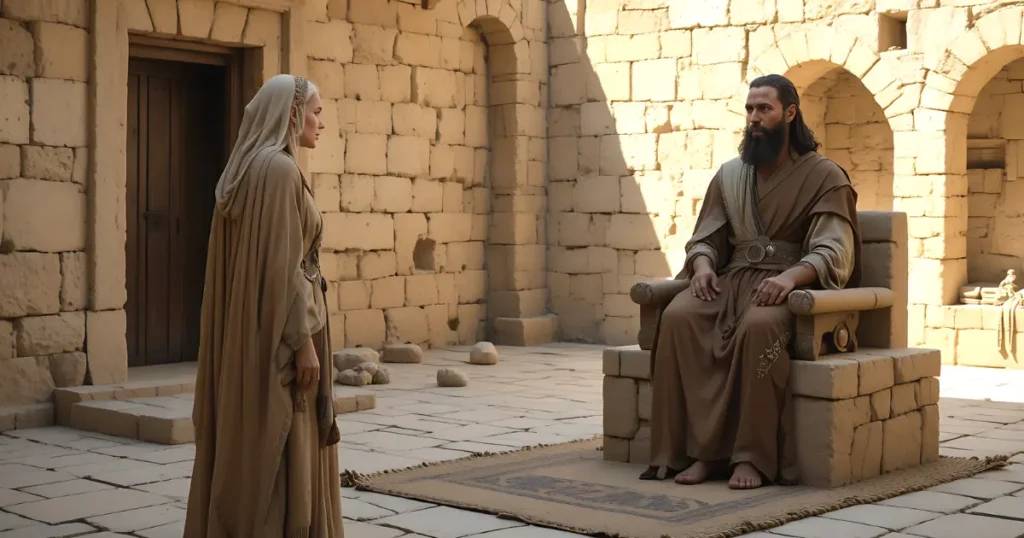
Lessons From the Shunammite Woman in the Bible
The lessons from the Shunammite woman in the Bible continue to encourage believers because her story reflects real human struggles alongside deep faith. She knew unanswered longing, abrupt grief, uncertainty in starvation, and eventual restoration. Through every season, she remained one of the clearest examples of a woman who trusted God even when life became painful and confusing.
Many people ask, what lessons can we learn from the Shunammite woman? Her story offers practical wisdom that still applies today.
Faith Does Not Remove Grief
One important lesson is that faith does not cancel human sorrow.
The Shunammite woman trusted God, yet she still experienced devastating loss when her son died. Scripture does not imply she was cold or unresponsive anywhere. She wept, searched for help, and carried deep pain.
Her story reminds believers that grief and faith can exist together. Having strong faith doesn’t mean pretending everything feels okay. It is to keep searching for God amid pain.
This truth matters because many Christians wrongly believe painful emotions are signs of weak faith. The Shunammite woman tells a different tale.
Hospitality Can Become Ministry
Another lesson comes through her hospitality.
She opened her home to Elisha, prepared a room for him, and cared for his practical needs. These activities may seem to be rather typical at first. Yet God used her kindness as part of a much larger story.
The Bible often shows that ministry begins with simple obedience. God’s work in someone’s life could be a meal, a place, encouragement, or kindness.
Among many Women of the Bible, the Shunammite woman teaches that faithful service behind the scenes still matters deeply to God.
God Works Through Persistence
Her story also teaches the value of persistence.
After her son died, she did not surrender to hopelessness. She traveled to Mount Carmel, sought Elisha personally, and refused to leave without an answer.
That persistence reflected trust in God’s power even before she saw the miracle.
Many believers today stop praying too soon because they feel answers are delayed. The Shunammite woman tells us that persevering faith continues to move toward God in tough seasons.
Restoration Is Part of God’s Character
The ending of her story in 2 Kings 8 reveals another powerful lesson. God gave her son back to her, and her farm, and nourishment after famine.
This part of the account points to an important biblical truth. God’s character includes restoration.
Sometimes restoration comes quickly. Other times it’s a long game across years. But the Shunammite woman’s life shows that God does not forget His people in times of hardship.
Her story continues to inspire believers who are waiting for healing, direction, or renewed hope.
For more studies on women in Scripture, explore the stories of Athaliah, Atarah, Adah, and Ahinoam.
Theological Themes in the Shunammite Woman’s Story
The story of the Shunammite woman is not only a personal account of loss and restoration. It also has major theological themes that show the character of God and His actions throughout Scripture.
One major theme in the Bible is God’s provision; He cared for the Shunammite woman in many ways. He provided a promised son, restored the child’s life after death, protected her family during famine, and later restored her land and income. Each stage of the story shows that God’s provision goes beyond material needs. He also provides hope, direction, and mercy during times of suffering.
Another important theme is prophetic ministry. Elisha served as God’s representative during a spiritually troubled period in Israel. God showed His power, compassion, and authority through Elisha. The narrative is a reminder that the biblical prophets were not simply messengers of caution. They also brought guidance, healing, and restoration to ordinary people.
The resurrection of the Shunammite woman’s son also carries themes that foreshadow resurrection in Scripture. This miracle attests to God’s dominion over death itself, even before Christ’s resurrection. The child’s restoration to life became a visible sign that death does not have ultimate control.
This theme appears repeatedly throughout the Bible. God brings life where situations seem hopeless. For many believers, the narrative is a reminder that God can still act in areas of pain, loss, or impossibility.
The account also highlights covenant faithfulness. Even during national instability, famine, and spiritual decline in Israel, God remained faithful to individuals who trusted Him. The Shunammite woman’s story reflects how God remembers His people across many years and changing circumstances.
Another important theological pattern is restoration. God restored her son, her home, and her future. This ongoing restoration points to a larger, broader truth that longs for renewal, healing, and redemption.
Among many female Bible characters, the Shunammite woman stands out for her story that combines personal faith with broader themes of life, restoration, and God’s power.
Her example continues to strengthen modern believers seeking deeper biblical faith during uncertain seasons.
For more studies on faithful women in Scripture, explore the stories of Abital, Apphia, Anna, and Abishag.
The Shunammite Woman Compared With Other Women of Faith
The Shunammite woman ranks among the strongest women of faith in the Bible because her story reflects trust, perseverance, wisdom, and courage in the face of suffering. Although her story is shorter than some other biblical narratives, her response to grief and uncertainty places her beside some of the most respected faithful women in Scripture.
Like Hannah, the Shunammite woman experienced the pain of childlessness before receiving a miracle son through God’s intervention. Both women also exhibited great faith throughout emotionally tough seasons.
She also shares similarities with Abigail. Abigail acted with wisdom and discernment during a crisis, and the Shunammite woman showed similar wisdom through her hospitality toward Elisha and her calm but determined response after her son died.
Her courage also connects with Esther. Esther approached a king to save her people, while the Shunammite woman later approached the king to seek justice and restoration for her land after famine. Both women showed courage in the face of uncertainty.
The Shunammite woman can also be compared to Miriam, who trusted God during difficult periods in Israel’s history. Both women saw God’s might at work through His people in times of national upheaval.
Among many Old Testament women, the Shunammite woman stands out because her faith remained steady through multiple seasons of life, hospitality, miraculous blessing, sudden grief, displacement, and restoration.
Her story reminds readers that strong faith is not limited to public leadership. Sometimes it appears quietly through endurance, obedience, and continued trust in God during personal suffering.
FAQs About the Shunammite Woman in the Bible
Q1: Is the Shunammite Woman the Same as the Shulamite Woman?
No. The Shunammite woman in 2 Kings 4 and 8 is different from the Shulamite woman mentioned in the Song of Solomon. Similar-sounding names, but distinct ladies in different biblical settings.
Q2: Why Did the Shunammite Woman Shut the Door?
After her son died, she placed him on Elisha’s bed and shut the door behind him (2 Kings 4:21). Many Bible teachers believe this showed faith, privacy in grief, and determination to seek God’s help before others interfered or lost hope.
Q3: What Does Shunammite Mean in the Bible?
“Shunammite” means a woman from Shunem, an ancient town in the northern kingdom of Israel. The Bible doesn’t tell us her personal name, therefore we know her by her hometown.
Q4: Why Did God Choose the Shunammite Woman to Perform This Miracle?
The Bible does not directly say why God chose her, but her story highlights faith, hospitality, spiritual discernment, and trust in God. Her life was a testimony of God’s power, compassion, and redemption.
Q5: What Does the Shunammite Woman Teach About Waiting on God?
Her story teaches patience and trust during uncertain seasons. For years, she waited for the promised child. Then she trusted God again after loss and starvation. Her life shows that waiting on God often requires steady faith even when answers are delayed.
Q6: How Does Her Story Encourage Christian Mothers Today?
The Shunammite woman encourages Christian mothers through her courage, persistence, and faith amid deep grief. She reminds believers that God sees their pain, hears their prayers, and remains faithful even in difficult family situations.
Conclusion: What the Shunammite Woman’s Story Still Teaches Christians Today
The story of the Shunammite woman in the Bible continues to speak to believers because it reflects real life faith through both joy and suffering. Her journey included hospitality, unanswered longing, miraculous blessing, heartbreaking loss, and eventual restoration. She was a woman who continued to turn to God through every season.
One of the strongest lessons from the Shunammite woman in the Bible is that faith does not mean life becomes easy. Her story shows the reality of pain, grief, waiting, and uncertainty. But it also demonstrates the strength of continuing to believe in God when things don’t add up.
Her words, “It is well,” still encourage Christians today because they point to confidence in God even before answers arrive. The Shunammite woman teaches believers about trusting God after loss, not by denying pain, but by bringing that pain honestly before Him.
Her life also reminds readers that God restores what is lost. Sometimes miracles restore. Other times, it comes slowly through God’s guidance, provision, and faithfulness. God is present in both circumstances.
Among many Women in Scripture, the Shunammite woman stands out because her faith remained steady through changing seasons. She trusted God in private acts of service, during family heartbreak, and through years of uncertainty after famine.
Her story still offers hope for anyone walking through grief, waiting, disappointment, or unanswered prayers today.
To continue studying faithful women in Scripture, explore more stories from our Women of the Bible series, and discover how God worked through ordinary women in extraordinary ways.